Last updated November 18, 2026






Free written scope consultation - allowances, timeline, and change-order rules on paper before a single trade is scheduled
Bathroom Remodeling Maintenance Schedule: What to Do and When
Most bathroom remodels show their first signs of failure within 18 months – not because the work was bad, but because no one told the homeowner what to do after move-in day. In Hialeah, that timeline compresses. Year-round humidity near 75%, water that runs hard with dissolved limestone, and salt air pushing inland from the coast all attack a new bathroom faster than the national averages contractors quote in their brochures. This guide gives you a written month-by-month and season-by-season maintenance schedule built for Hialeah homes specifically: grout and caulk intervals, hard water timelines, exhaust fan checks, and exactly where your responsibilities start and our 730-Day Done Right Promise begins. Print it, stick it inside a vanity door, and follow it.
Quick Answer
A bathroom remodel in Hialeah needs grout and caulk inspected every 3 months, hard water deposits removed every 2 to 4 weeks, and the exhaust fan performance checked twice a year. Re-caulk wet zones once a year before the rainy season, and have a professional assess any soft grout, loose tile, or reduced fan airflow immediately. Follow this schedule and a well-built bathroom holds up for 15 to 20 years before the first major refresh.
Styles & brands we work with
- Kitchen remodeling
- Bathroom remodeling
- Home additions & ADU
- Roofing
- Windows & doors
- Driveway & pavers
- Fence
Table of Contents
- Why Hialeah Bathrooms Age Faster Than the Rest of the Country
- The Monthly Schedule: What to Do Every 30 Days
- The Quarterly Schedule: Grout, Caulk, and What Cracking Really Means
- Hard Water Buildup: Timelines and the Cleaners That Void Warranties
- Exhaust Fan Checks: The Silent Cause of Mold Behind Walls
- The Seasonal Re-Caulking Calendar for South Florida
- The Annual Deep-Maintenance Day
- How the 730-Day Done Right Promise and Owner Maintenance Intersect
Why Hialeah Bathrooms Age Faster Than the Rest of the Country
Hialeah sits in one of the toughest climates in the country for interior building materials, and it has nothing to do with heat alone. Three conditions stack on top of each other here, and each one speeds up a different failure mode in your new bathroom.
Humidity. Miami-Dade County averages relative humidity in the mid-70s for much of the year, and a bathroom with a shower running is the wettest room in any house. Moisture that migrates behind tile and into wall cavities in Hialeah does not dry out the way it does in Arizona or Colorado. It lingers. Grout that stays damp grows mold at the joints, and caulk that stays damp loses adhesion from the back side first, where you can’t see it.
Hard water. Hialeah’s municipal water supply draws from the Biscayne Aquifer, which is rich in calcium and magnesium. That’s what leaves the white crust on your shower glass and faucets. Left alone, those minerals etch polished chrome, pit brushed nickel, and stain natural stone. The damage is cumulative and mostly permanent once it sets into a fixture surface.
Salt air and temperature swings. Homes closer to the coast see salt-laden air work its way into every gap. Meanwhile, Hialeah’s swing between cool dry winter mornings and humid summer afternoons expands and contracts caulk joints repeatedly. Caulk is flexible by design, but every season of expansion and contraction wears it thinner. Winter-to-summer movement is the biggest driver of caulk failure in South Florida, and it’s why a formula that works fine in Ohio fails here in two seasons.
None of this means your remodel is fragile. It means it needs a schedule. That’s the whole point of this guide.
The Monthly Schedule: What to Do Every 30 Days
Set a recurring reminder for the first weekend of every month. This routine takes 15 to 20 minutes and prevents the majority of expensive repairs we get called out to fix in Hialeah homes.
- Wipe down the shower and tub after every use, not once a month. A squeegee on the glass and a quick towel pass on the walls is the single most effective habit you can build. It removes minerals before they bind to the surface.
- Clean the showerhead and faucet aerators. Unscrew the aerator, soak it in white vinegar for 20 minutes, rinse, and reinstall. For a fixed showerhead on a swing arm, fill a plastic bag with vinegar, tie it around the head, and leave it for 30 minutes. This dissolves calcium buildup before it clogs flow.
- Run the exhaust fan for a full 20 minutes after your last shower of the day. Not 5 minutes. Twenty. This is the moisture-control number that matters most in Hialeah’s climate.
- Check beneath the sink for moisture. Run a dry paper towel along the supply lines, the P-trap, and the base of the faucet. Any dampness means a slow leak you need to address now, not later.
- Wipe the toilet base and look for staining. Rust-colored rings around the bolts or base can signal a failing wax seal, which is far cheaper to replace proactively than after water damage reaches the subfloor.
- Inspect the grout lines in the shower floor only. Shower floors take the heaviest water load of any surface in the room. If you see dark discoloration that doesn’t scrub out, note it for your quarterly inspection.
We tell every Hialeah homeowner the same thing: the monthly routine is the cheapest line item in your entire maintenance budget. Skipping it is what turns a $30 fix into a $3,000 tile repair.
The Quarterly Schedule: Grout, Caulk, and What Cracking Really Means
Four times a year, you need to look harder at the joints. That means grout lines and caulk beads in every wet zone: around the tub, at the base of the shower walls, around the shower pan, behind the toilet, and along the backsplash meeting points.
What to look for beyond visible cracking
Most people think a failing joint announces itself with a crack you can see. In Hialeah, the dangerous failures are the ones you can’t. Here’s what to actually check:
- Dark discoloration that returns after cleaning. Mold that keeps coming back in the same grout line means moisture is feeding it from behind.
- Grout that crumbles or feels sandy when you run a fingernail over it. This is a bond failure. Efflorescence (the white powdery haze on grout) is the visible symptom, and it means water is migrating through.
- Caulk that pulls away from one side while staying attached to the other. A clean release along one edge is a sign the joint is moving more than the caulk can absorb. In Hialeah’s temperature swings, this happens fast.
- Tiles that sound hollow when tapped. Walk the shower walls and tap each tile. A hollow tone means the thinset has separated from the substrate. That’s a professional call, not a caulk-and-move-on situation.
- A musty smell that persists despite cleaning. The most reliable early indicator of hidden moisture in a Hialeah bathroom. Trust your nose.
If any of the first two items show up, re-caulk or re-grout the affected joint within the month. If you find a hollow tile or a persistent smell, get a professional assessment. Water behind the wall in South Florida doesn’t dry, and the damage grows quietly.
When you’re ready to plan the next phase of your home – an adjoining guest bath, a tile refresh, or a new outdoor living space – Home Additions & ADU in Hialeah is where we pick up.
Hard Water Buildup: Timelines and the Cleaners That Void Warranties
Here’s a number that surprises most of our customers: on Hialeah’s water, mineral deposits start bonding to unprotected shower glass within 7 to 10 days of a single use pattern. It becomes visible cloudiness at 3 to 4 weeks. At 3 to 6 months, the scale hardens enough that it removes some glass coatings permanently. That timeline is faster than most cleaning guides assume, and it’s why hard water damage is the number one fixture-complaint category we see at the 18-month mark.
What hard water does to each surface
- Shower glass and doors: Cloudy film develops in 3 to 4 weeks. Left untreated, it etches into the glass and requires professional restoration or replacement.
- Chrome and polished fixtures: Water spots become permanent pitting if wiped with the wrong cleaner. This is where most warranty voids happen.
- Brushed nickel and oil-rubbed bronze: These finishes have a protective lacquer. Abrasive cleaners strip the lacquer, and once stripped, hard water goes straight into the metal.
- Faucet aerators: Clog with calcium scale every 2 to 3 months on Hialeah water. Soak or replace them on that cadence.
- Toilet bowls: Mineral rings form in 4 to 8 weeks. Clean them monthly with a non-abrasive descaler to prevent staining.
- Natural stone (marble, travertine): Etches in weeks with acidic cleaners. Only neutral pH products should touch it.
The cleaners that void your manufacturer’s warranty
Most fixture manufacturers specify “mild soap and water, then dry with a soft cloth” in their warranty terms. Using anything else can void coverage. Avoid these on any plated or finished fixture:
- Abrasive scrubbing pads (green scrubbers, steel wool, melamine sponges)
- Bleach-based cleaners on polished metal or stone
- Vinegar and citrus cleaners on natural stone
- Ammonia on chrome and lacquered finishes
- Any “scrubbing bubbles” style product that combines acid and abrasive
Read your fixture warranty paperwork before you spray anything on it. Manufacturers will deny a pitting claim the moment they see evidence of an abrasive or acid cleaner in the finish. When you want premium fixtures specified for hard-water markets, our Groundwork Construction Co. of Hialeah home page is the place to start, and we regularly specify Kohler and other brands with finishes that hold up to Hialeah water.
Exhaust Fan Checks: The Silent Cause of Mold Behind Walls
Your exhaust fan is the single most important piece of equipment for preventing mold in a Hialeah bathroom, and it’s the one almost nobody checks. Here’s why that matters.
A bathroom exhaust fan is rated in cubic feet per minute (CFM). A typical Hialeah bathroom needs 50 to 80 CFM to change the air enough to control moisture. Fans lose CFM output as dust and lint collect on the blades and in the housing. After two to three years of steady use, a fan can be running at 30 to 40 percent of its rated capacity and you’d never notice because it still spins and still sounds like a fan. You’re running your fan for 20 minutes a day and only pulling enough air to change the room once. Moisture sits on the walls and ceiling, seeps into grout and wall cavities, and grows mold behind the tile. By the time you smell it, you’re looking at a wall removal, not a fan replacement.
The tissue test
Twice a year, hold a single square of toilet tissue against the fan grill while the fan is running. If the tissue sticks flat to the grill and holds, the fan is pulling a healthy amount of air. If it flutters and falls, the fan is weak. Clean the grill with a vacuum brush, then re-test. If it still fails, the fan needs replacing.
- Twice a year: Remove the grill and vacuum the blades and housing.
- Twice a year: Run the tissue test.
- Every 3 to 5 years: Consider replacing the fan unit, especially if it was installed before your remodel. Fans age quietly.
- Continuously: Run the fan 20 minutes after every shower and always leave it on for 15 minutes after you leave the bathroom for the night.
If you’re noticing a lingering musty smell in Hialeah despite everything else in this guide, exhausted ventilation is the most likely culprit. Get a pro out to check CFM before you spend money on mold remediation.
The Seasonal Re-Caulking Calendar for South Florida
Caulk in Hialeah runs a different failure curve than caulk in most of the country. The moisture is constant, but the temperature swings are what really wear it. Between cool dry January mornings in the low 60s and humid August afternoons well into the 90s, your caulk joints move twice a year like clockwork. Here’s the tightest calendar for re-caulking a Hialeah bathroom.
- March (before rainy season): The most important re-caulk window of the year. Do all wet-zone joints before the summer moisture spike.
- August (mid-rainy season): Inspect and touch up any joints that show slight pulling. Do not wait until September.
- November (end of storm season): Full inspection of every joint, especially the shower pan perimeter and the wall-to-floor transition.
- January (dry season): The best window to fully replace caulk because it cures cleanly in dry air. If a joint is going to fail, force it now while the weather is on your side.
Which caulk formulas actually hold up in Hialeah wet zones
- 100% silicone: The gold standard for shower pans, tub surrounds, and any submerged or perpetually wet joint. It flexes with temperature swings and resists mold better than anything else. Not paintable, so plan the color.
- Siliconized acrylic: Fine for dry zones like backsplashes and vanity meeting points. It’s paintable and easier to tool. Do not use it in wet zones in Hialeah. It will mildew within a year.
- Polyurethane: Strong adhesion, high flexibility. Good for exterior and transition joints but overkill for most interior wet zones.
- Mildew-resistant silicone with a biocide additive: Worth the extra cost in Hialeah’s humidity. It buys time between re-caulks.
One more thing about re-caulking: remove the old caulk completely. You cannot successfully caulk over caulk in a wet zone. The new bead will fail in months because it didn’t adhere to the substrate. When we re-caulk a Hialeah bathroom, the removal takes more time than the application.
The Annual Deep-Maintenance Day
Once a year, set aside a full afternoon and work through this list top to bottom. We recommend late October or early November in Hialeah, after the rainy season and before the dry-season inspection window.
- Deep-clean the shower surround and grout lines. Use a pH-neutral grout cleaner, not vinegar or bleach on cement grout. Let it dwell for 20 minutes, scrub with a soft brush, rinse thoroughly.
- Inspect every caulk joint with a flashlight at an angle. You will see failures this way that you can’t see straight on.
- Remove and soak the showerhead and every aerator. Same vinegar routine as monthly, but this time also clean the threads and use plumber’s tape on reassembly if there’s any seepage.
- Remove the exhaust fan grill and do a full cleaning plus tissue test. Consider scheduling a professional CFM check if you have any doubts.
- Check the toilet for stability. Rock from side to side with light pressure. Any movement means the wax seal is compromised and needs replacing before it leaks.
- Test the toilet fill and flapper. Add a few drops of food coloring to the tank and wait 15 minutes. If color reaches the bowl without flushing, the flapper is leaking.
- Inspect the vanity. Open every drawer, check the bottom panel for water staining, and look under the sink base for signs of past leaks.
- Check the door and drawer hardware. Tighten loose screws, oil metal hinges, and check that cabinet doors still align – a strong sign of foundation movement if they’ve shifted.
- Inspect the tile grout for hairline cracks, especially in floor tiles near the toilet and tub. Floor tile cracks in a Hialeah home often indicate moisture in the substrate or settling.
- Log every issue you found. Keep a written record. When you call a professional, this list saves time and money.
How the 730-Day Done Right Promise and Owner Maintenance Intersect
Our 730-Day Done Right Promise is one of the longest workmanship guarantees in the residential construction space. If something we installed or built fails because of how we did the work, we make it right. Full stop. But it’s a workmanship guarantee, not a maintenance guarantee, and the distinction matters for how you protect your coverage.
What the 730-Day Done Right Promise covers:
- Grout and caulk failure caused by installation error
- Tile loosening from improper thinset application or insufficient substrate prep
- Plumbing leaks traced to workmanship at connections we installed
- Fixture failures that stem from improper installation rather than the fixture itself
- Exhaust fan installation issues affecting performance
What voids coverage or falls outside the 730-Day Done Right Promise:
- Damage from abrasive or acid cleaners that eat finishes
- Caulk failure from deferred maintenance after the first year
- Grout deterioration from never being cleaned or resealed as scheduled
- Mold growth from a fan that was never cleaned and dropped below functional CFM
- Damage from ignoring an obvious leak or soft tile for months
We don’t mention this to create fine print traps. We mention it because the homeowners who call us at month 22 with water damage in a wall almost always have one thing in common: they never opened the maintenance schedule. Our 730-Day Done Right Promise sits on top of a schedule that we explain at project handoff, in writing, including the specific re-caulk months that matter for this climate. And when our team comes through the door, those technicians are background-checked, uniformed, and arrive with the products specified and priced upfront. No surprises, no change orders.
If your remodel is coming up, our Driveway & Pavers in Hialeah team regularly coordinates with our bathroom crews on whole-exterior-plus-interior refreshes. And for homeowners mapping out exterior boundaries around a new bathroom addition, Fence Installation in Hialeah is where we install Bufftech and Jerith systems that handle salt air and hurricane-season wind equally well.
Common Mistakes to Avoid
- Caulking over old caulk. The new bead adheres to the old caulk, not the wall, and fails within 3 to 6 months in Hialeah’s humidity. Always strip the old caulk completely, re-prime if needed, and apply fresh.
- Using vinegar or bleach on cement grout. Vinegar slowly dissolves the grout you’re trying to protect. Bleach kills surface mold but does nothing about the moisture feeding it. A dedicated pH-neutral grout cleaner, used per the label, does the job without the collateral damage.
- Ignoring the exhaust fan entirely. Hialeah bathrooms have some of the highest ambient humidity in the country. A fan that runs buts pulls half the CFM it once did can’t keep up, and the mold grows behind the tile where you can’t see it until remediation costs thousands.
- Running the fan for 5 minutes after a shower. Most people do. The correct number is 20, and that number really matters in South Florida heat and humidity.
- Using abrasive scrubbing pads on chrome and plated fixtures. This strips the finish and voids the manufacturer’s fixture warranty. On Hialeah’s hard water, the mist that feels like it works leaves you with a scratched chrome faucet 6 months later.
- Skipping the food-coloring flapper test once a year. A silent toilet leak wastes water and, worse, can produce a slow drip from the base that seeps into the subfloor over months. Fifteen seconds once a year catches it.
- Assuming any re-caulk job is fine to defer to next season. In Hialeah’s climate, “next season” is when the joint fails and moisture gets behind the tile. The window between “small caulk job” and “tile removal” is 6 to 8 months, not years.
See the difference
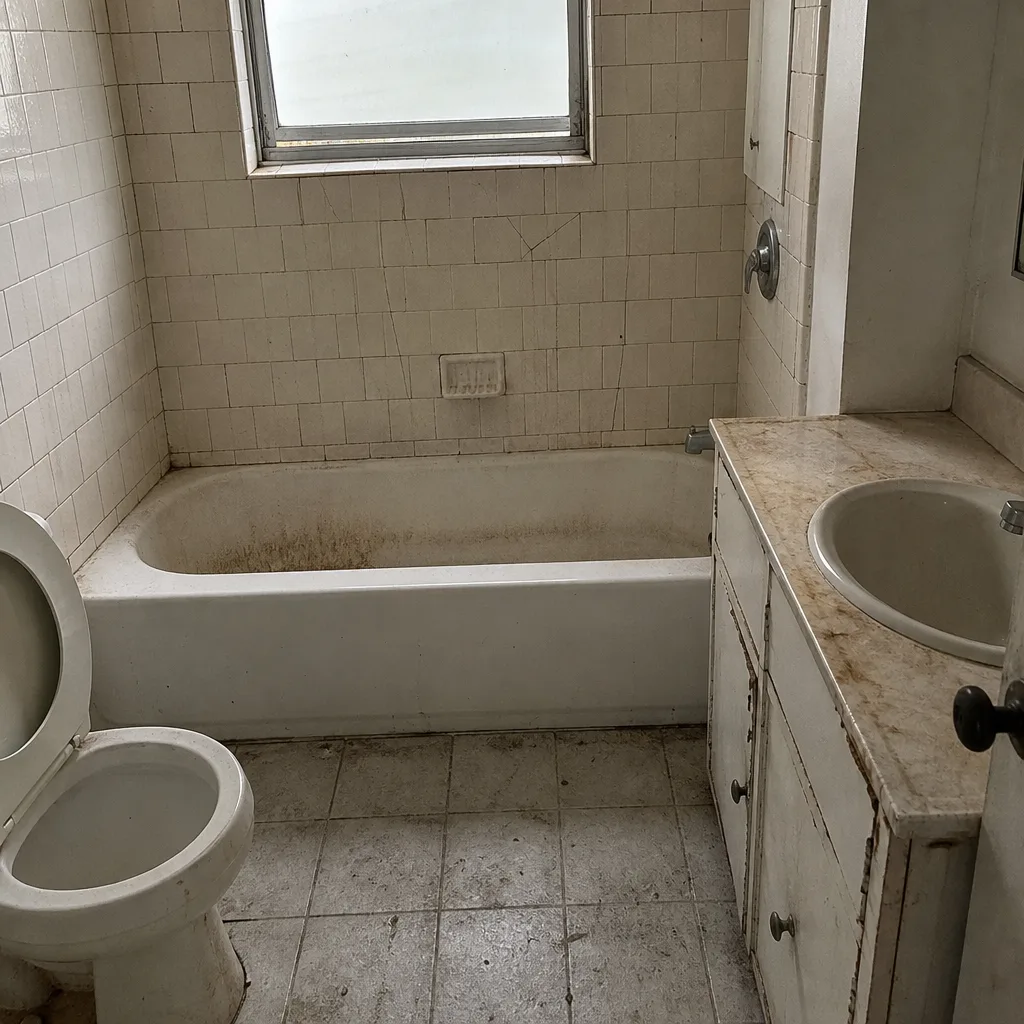 Before
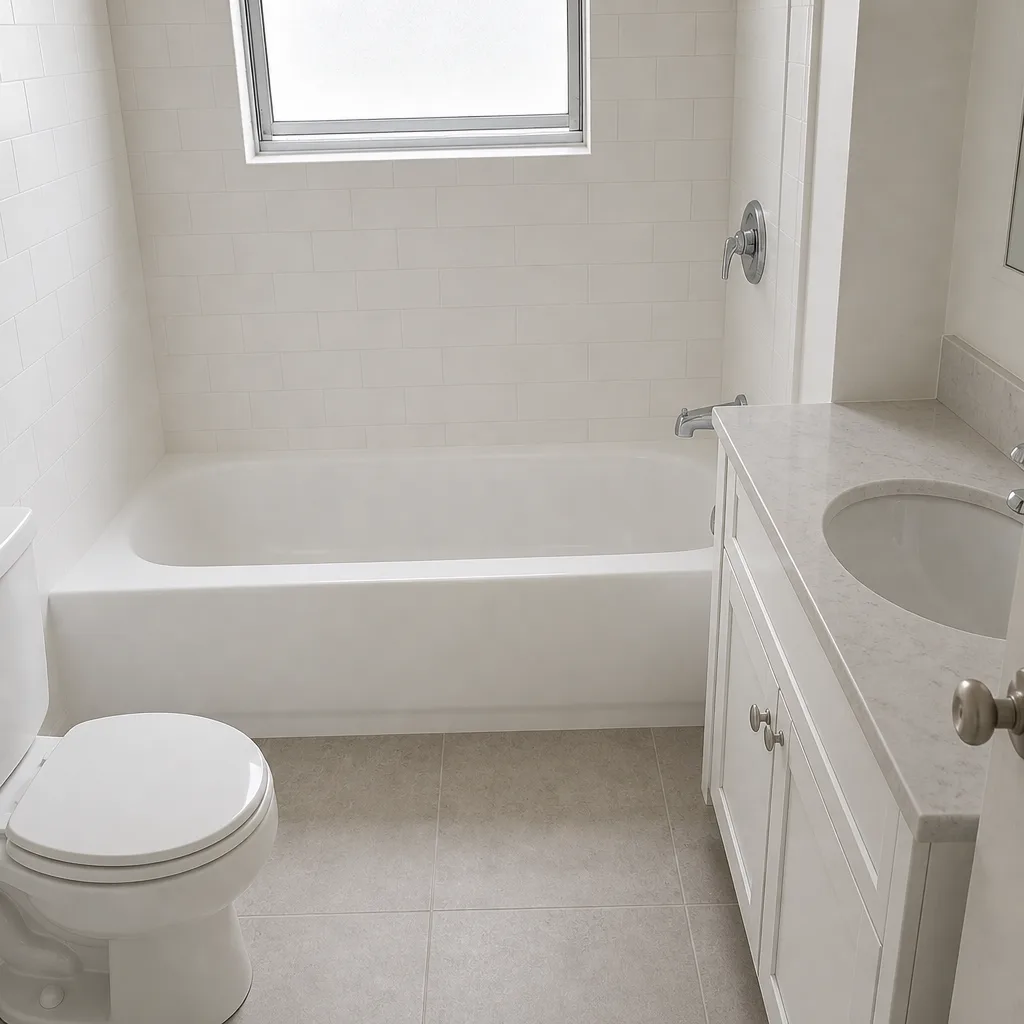 After
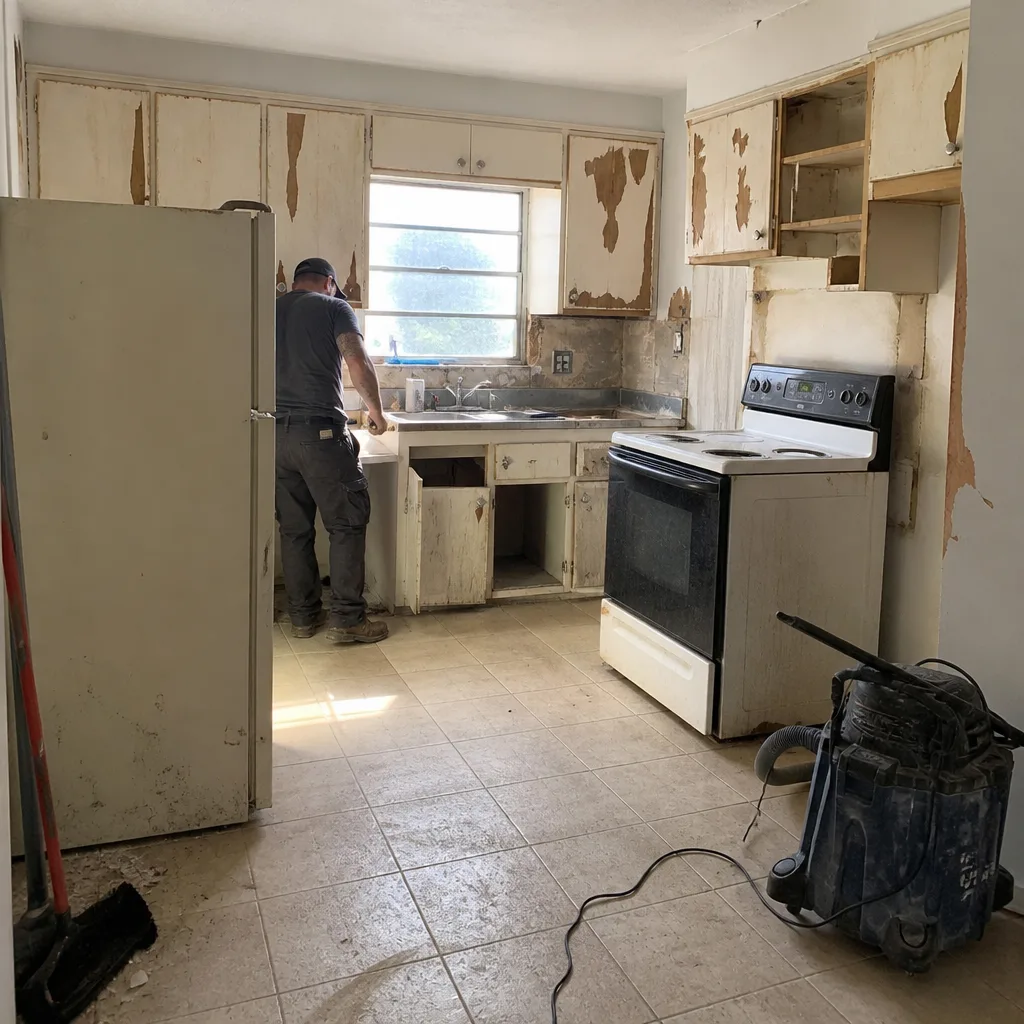 Before
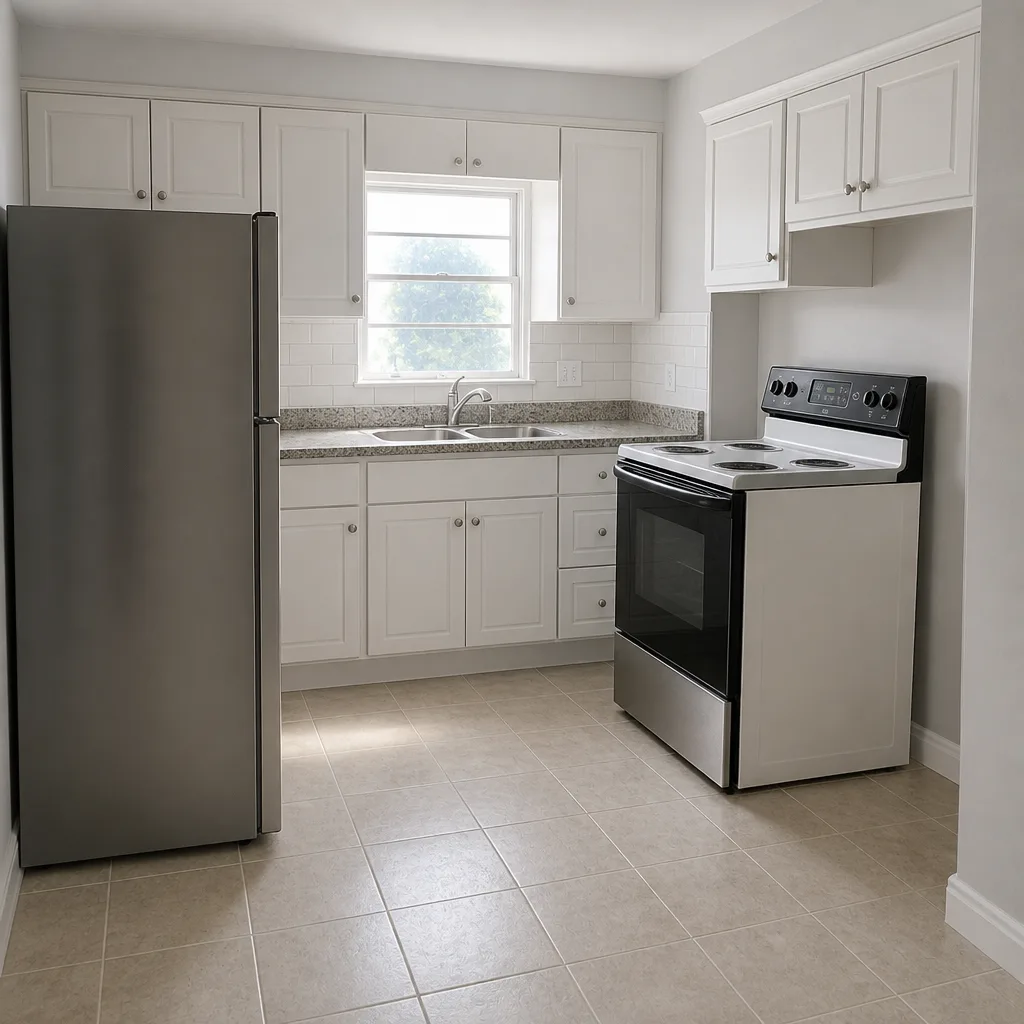 After
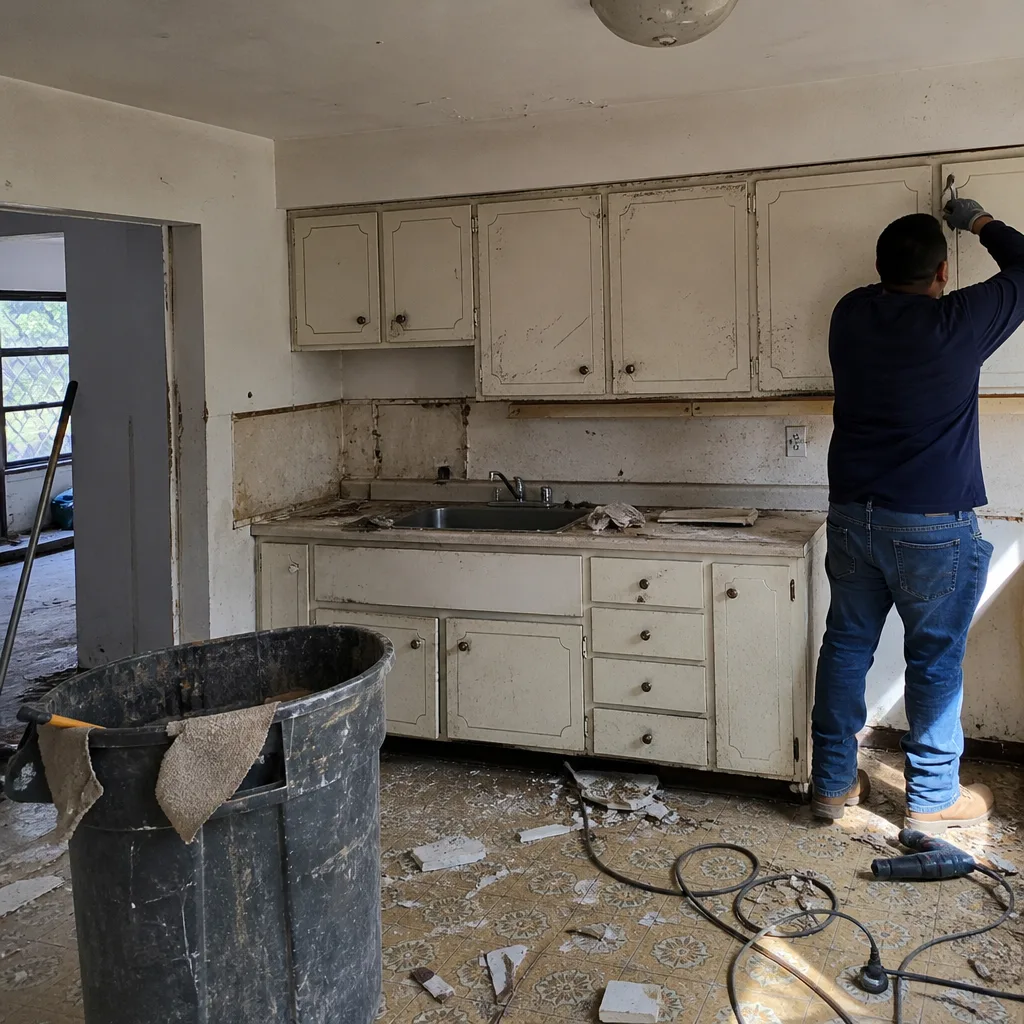 Before
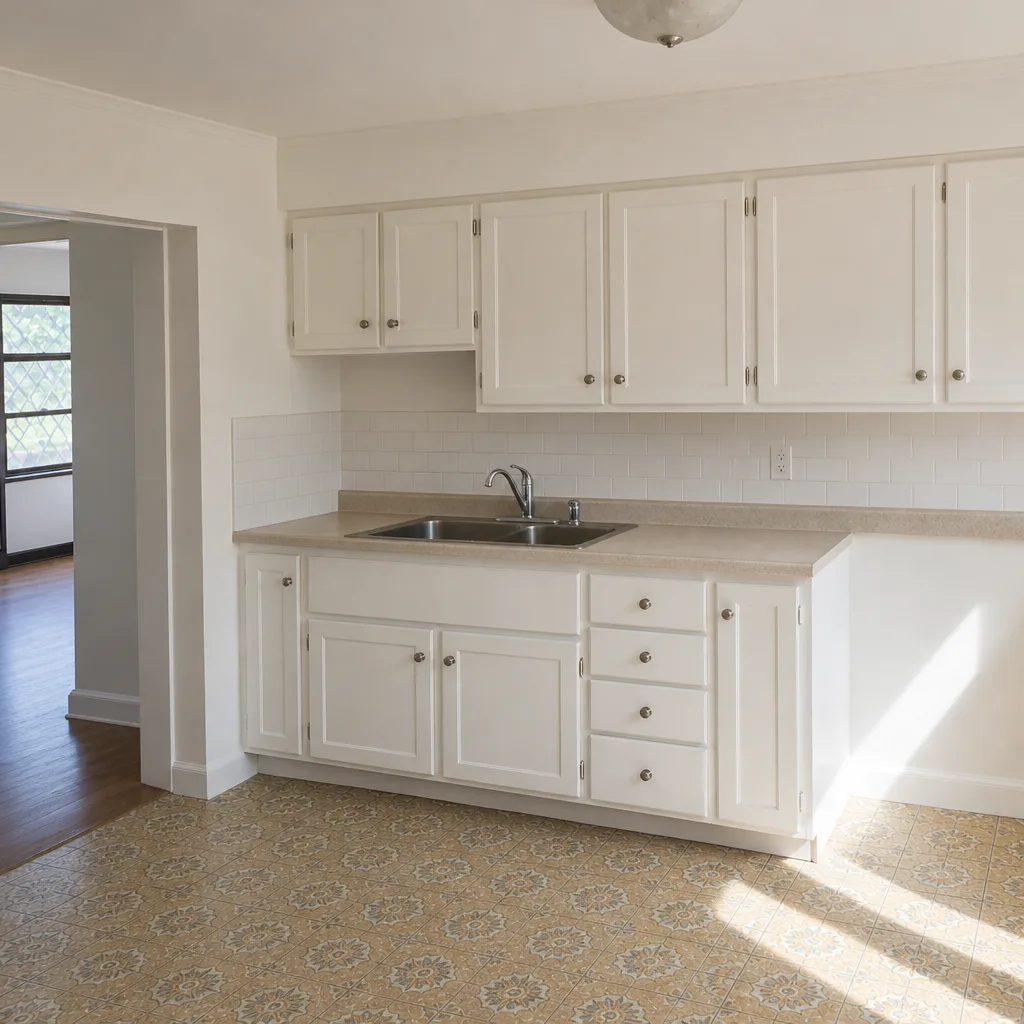 After
When to Call a Professional
Some issues in this guide you should absolutely handle yourself: monthly wiping, aerator soaks, caulk touch-ups, food-coloring tests. Others need a pro in a different way than a handyman can provide. Call a professional immediately if you find any of the following: a bathroom floor that feels soft underfoot, tile that sounds hollow when tapped, a persistent musty smell after remediation, water stains on the ceiling below a second-floor bathroom, a shower pan that moves when you step on it, or caulk that fails twice in a single joint within 12 months. Those are signs of a substrate or installation issue, not a caulk issue. Groundwork Construction Co. of Hialeah offers free estimates in Hialeah, backs every project with our 730-Day Done Right Promise, and answers the phone 24/7 with a real person – call (888) 418-7102.
Frequently Asked Questions
Every 12 months in wet zones like the shower pan perimeter, tub surround, and wall-to-floor transitions. Hialeah’s temperature swings between winter mornings and summer afternoons move caulk joints more than in most U.S. climates, which is why annual re-caulking is standard here even for high-quality silicone. Do it in March before the rainy season for the best cure. Call (888) 418-7102 for a free estimate if you need help with a full re-caulk.
A persistent musty smell after cleaning almost always means moisture is trapped somewhere you can’t reach, most often behind tile, in the wall cavity, or in the shower pan. In Hialeah’s humidity, that smell returns within days if the moisture source isn’t addressed. Have a professional check the exhaust fan’s CFM output, inspect the shower pan for any movement, and look for grout discoloration that returns. Call (888) 418-7102 for a free estimate on an assessment.
Run the tissue test: hold a single square of toilet tissue against the grill while the fan runs. If the tissue sticks and holds, the fan is pulling strongly enough. If it flutters and falls, your fan’s CFM output is below what your bathroom needs. A fan installed 5 years ago in a Hialeah home can lose 40 to 50 percent of its rated CFM without anyone noticing. Replace the fan, or call us for an assessment at (888) 418-7102.
Abrasive scrubbers (green pads, steel wool, melamine sponges), bleach on polished metal, vinegar or citrus on natural stone, and ammonia on chrome. Most fixture warranties specify mild soap and water, then dry with a soft cloth. Manufacturers will deny a finish-pitting claim if they see evidence of an abrasive or acid cleaner. Read the warranty card before you spray anything. Call (888) 418-7102 for a free estimate on fixture replacement if your finish is already damaged.
Yes, in a specific way. The 730-Day Done Right Promise covers workmanship failures for two full years. It doesn’t cover damage from deferred maintenance: caulk that failed because it was never re-caulked, grout that deteriorated from acid cleaners, or mold that grew because the fan was never cleaned. Do the maintenance, document what you did, and the promise applies in full. Call (888) 418-7102 to review your specific project’s coverage.
Fifteen to twenty years before the first major refresh, if you follow this maintenance schedule. That’s roughly a third shorter than the same remodel in a cooler dry climate, because Hialeah’s humidity, hard water, and salt air each independently accelerate material aging. The single biggest variable is not the quality of the tile or the fixture. It’s whether the homeowner ran the exhaust fan, cleaned the grout, and re-caulked on schedule. Call (888) 418-7102 for a free estimate on a maintenance inspection or a full remodel plan.
The Bottom Line
A bathroom remodel in Hialeah is a 15-to-20-year investment only if you protect it. The schedule is not complicated: monthly wiping and aerator soaks, quarterly grout and caulk inspections, monthly hard water removal, twice-yearly exhaust fan checks, annual re-caulking before the rainy season, and one deep-maintenance afternoon every fall. Skip any element of that and the timeline compresses fast in this climate. We build every bathroom to last, back it with our 730-Day Done Right Promise, and give every Hialeah homeowner a written schedule at handoff so they can protect what they paid for. If your bathroom needs a professional look, call (888) 418-7102 for a free estimate. We answer live, 24/7.
Written by the team at Groundwork Construction Co. of Hialeah.