Last updated November 18, 2026


Free written scope consultation - allowances, timeline, and change-order rules on paper before a single trade is scheduled
Bathroom Remodeling Warning Signs Every Homeowner Should Know
By the time you see water damage from a bad bathroom remodel, the contractor is gone, your warranty claim goes nowhere, and you’re pricing a full redo. The warning signs were almost always visible in week one. In our experience across Hialeah, the costly failures rarely start on demo day. They start in the sales conversation, in the contract language, and in the first few days of work, when the walls are still open and nobody has anything to hide yet. This guide walks through what to look for at each stage: the low-bid proposal that’s missing waterproofing, the crew that shrugs at hidden rot, the permit “just to save you money,” and the grout cracks that show up a year later. Read it before you sign anything.
Styles & brands we work with
- Kitchen remodeling
- Bathroom remodeling
- Home additions & ADU
- Roofing
- Windows & doors
- Driveway & pavers
- Fence
Quick Answer
The biggest bathroom remodeling warning signs are a low bid with no waterproofing specification, vague allowances that hide quality cuts, no payment milestone schedule, a contractor who suggests skipping permits, and evasive answers when hidden water damage shows up during demo. Each of these transfers risk from the contractor onto you. Catch them before work starts and you save yourself a rebuild.
Table of Contents
- Contract Red Flags You Can Spot Before Work Starts
- What’s Missing From a Low-Bid Proposal That Will Cost You Later
- On-Site Warning Signs During Demo
- The Waterproofing Skip: How to Verify the Membrane Was Installed
- Permit Avoidance Tells and Why They Matter
- Post-Remodel Signals That Work Was Done Wrong
- Hialeah-Specific Risks Homeowners Should Know
- Common Mistakes to Avoid
- When to Call a Professional
- Frequently Asked Questions
Contract Red Flags You Can Spot Before Work Starts
The first warning sign is almost always on paper, before a single tile is pried off. In our experience, the proposal is where quality gets quietly removed. A contractor who’s going to cut a corner in the walls usually cut the corner on paper first. The homeowner just didn’t read closely enough to notice.
Here’s what an honest bathroom proposal in Hialeah should include, and what to check line by line:
- A named waterproofing system. Not “waterproofing included.” A specific product and method: Schluter Kerdi, RedGard, Wedi board, or a liquid-applied membrane applied to a thickness spec. If the proposal doesn’t name it, they haven’t decided yet what they’re going to do.
- Allowances with dollar figures. “Tile allowance: $6 per square foot” is a real number you can compare. “Standard tile” is a placeholder and a future change order.
- A milestone payment schedule. Money should follow work completed, not calendar dates. A deposit before first delivery plus draws at defined milestones protects you. A 50% down payment before anyone has ordered material does not.
- A change order procedure in writing. Anyone can add scope mid-project. The question is whether you get to approve it in writing before it becomes a bill.
- A written workmanship warranty. Vague language like “warranted against defects” hides fine print. A serious warranty names its term, what it covers, and who honors it.
One more check: the countertop and vanity brand. If a bid says “quality cabinetry” without naming the manufacturer, they haven’t picked one. A real proposal names it: KraftMaid, Kohler fixtures, a specific model for the vanity. Brand partners mean you’re choosing quality, not whatever’s available at a discount the week of install.
What’s Missing From a Low-Bid Proposal That Will Cost You Later
When a bathroom reno in Hialeah comes in $8,000 under every other bid, the proposal isn’t honest. It’s incomplete. In our experience, the missing pieces cost more than the savings every single time. Homeowners end up paying for them in change orders, or in a rebuild two summers later.
Here’s what a stripped-down low bid typically leaves out, and roughly what each gap costs if it has to be added later:
- Waterproofing membrane in the shower and wet walls. Retrofitting this costs a full shower rebuild – typically triple the line-item cost if it had been included.
- Subfloor and backer board replacement. Bids assume the subfloor is sound. It almost never is on a 40-year-old Hialeah home with a slab.
- Moving electrical or plumbing to current code. “Reuse existing” looks cheap until the inspector fails it.
- Exhaust fan and ducting. No exhaust fan in a Hialeah bathroom means mold growth within a year. Not optional in this climate.
- Permit fees and inspection scheduling. A bid that excludes permits is a bid that leaves you responsible for the paperwork and the legal exposure.
- Demo and debris haul-off. Sometimes itemized separately, sometimes magically forgotten, always billed later.
One number to keep in mind: on a Hialeah bathroom remodel, a low bid that’s missing waterproofing, permits, and a proper subfloor replacement typically adds $6,000 to $12,000 in change orders before the job is done. The “cheap” contractor isn’t cheaper. They just spread the cost out over the months after you sign.
The alternative is boring and accurate. A written, line-item quote with upfront pricing, a specific number for every category, and no change orders unless you approve them. That’s what “the number you see is the number you pay” actually means. Homeowners in Hialeah deserve to see that document before they commit.
On-Site Warning Signs During Demo
Demo is the first real test of a contractor’s character. In a Hialeah bathroom – especially in older homes around the Hialeah Park and Palm Springs neighborhoods, or anything built before 1990 – it’s nearly guaranteed the crew will find something behind the wall nobody planned for. A soft subfloor. Water stains on the studs. A shut-off valve seized from mineral buildup. The reaction to that discovery is the single best signal you’ll get about how the project is going to go.
Here’s what a serious contractor’s demo day looks like:
- Takes photos of anything unexpected before touching it, so you can see what they saw.
- Explains it in plain language, not trade jargon, and tells you how much it changes the timeline and price.
- Puts the change in writing for your approval before doing the work.
- Brings in the right trade (a framer, a plumber) rather than letting a tile setter improvise it.
Now the warning signs, which are just as specific:
- “It’s fine, we’ll tile right over it.” Rot under a shower pan doesn’t fix itself under tile. It decays.
- No photos of the exposed studs. If you can’t see what was behind the wall, you can’t verify what happened there.
- Hourly-rate change orders for hidden conditions. Open-ended billing for a problem the contractor knew about as a category of risk – that’s a way to bill unlimited hours without scope protection.
- Crews who shrug at puddles or smell. Musty earth smell or standing water in the subfloor is a project-killing discovery. Any contractor who waves it away is telling you how they’ll handle the next problem too.
Here’s the thing to remember. Hidden damage is a discovery, not a failure. The contractor isn’t responsible for what was behind the wall. They’re responsible for how they handle it. A crew that treats the discovery with care is telling you something good about the rest of the job.
The Waterproofing Skip: How to Verify the Membrane Was Installed
If you only read one section of this guide, read this one. In our experience as a Hialeah contractor, skipped or improperly installed waterproofing is the single most common cut corner in bathroom remodeling. It’s also the most expensive to discover after the fact, because by then it means a full tear-out of the shower or wet floor to fix.
Waterproofing is a thin layer – sometimes a sheet, sometimes a liquid-applied coating, sometimes a board with a bonded membrane – that sits between the tile and the framing. Tile is not waterproof. Grout is porous. The membrane is what keeps water away from lumber, drywall, and the wall cavity. When it’s missing, you get a slow leak that shows up as soft drywall, bubbling paint on the other side of the wall, or a full mold issue, usually 12 to 24 months after the remodel is “complete.”
You cannot see the membrane after tile is installed. So verify before tile goes up. Here’s what to do:
- Ask to see the waterproofing stage in person. Before any tile is set, there should be a specific moment in the schedule where the membrane is exposed. Ask to be present for it. A serious contractor will be happy you care.
- Ask for the product name and spec. “Schluter Kerdi” or “RedGard at spec thickness” are real answers. “Standard waterproofing” is not.
- Photograph the covered walls yourself. Ask the crew to take photos if you can’t be there. You’re building a record for your own warranty claim if you ever need one.
- Check for shower pan continuity. The most common mistake is waterproofing the walls but skipping the transition where the wall meets the floor pan. That seam is where water gets in.
- Ask about the flood test. For a mortar shower pan, ANSI standards call for a flood test – the pan filled with water and left for 24 hours to check for leaks – before tile. If the contractor doesn’t know what you’re asking about, that’s the warning sign.
Hialeah humidity makes this a bigger deal, not smaller. A shower that’s fine in a dry climate will grow mold within a year in South Florida if the waterproofing has a gap. The climate here is not forgiving, and neither is the slab-on-grade many Hialeah homes sit on. Water has nowhere to go but into the wall.
Permit Avoidance Tells and Why They Matter
A contractor suggesting you skip the permit “to save money” is transferring risk from themselves onto you. That’s the entire transaction, and no other warning sign matters as much after it’s happened. Once the work is done without a permit, the legal exposure is yours. The contractor collected their check and moved on.
Here’s what actually happens when you remodel a bathroom in Hialeah without a permit:
- Resale problems. A buyer’s inspector will spot unpermitted work, and most lenders won’t loan against it. You either discount the sale or pay to tear it out at the buyer’s insistence.
- Insurance exposure. A water damage claim from unpermitted plumbing can be denied. Your policy assumes permitted, inspected work.
- Code violation fines. Hialeah’s building department can issue citations for unpermitted construction, and retroactive permitting is far more expensive than doing it right.
- No inspection. The whole point of the permit is the inspection – someone with a checklist verifying plumbing, electrical, and framing before walls close.
Warning tells to watch for:
- “We don’t need a permit for a bathroom.” You almost always do, especially if you’re moving plumbing, electrical, or framing.
- “Pulling the permit will slow this down two months.” A faster bad job is still a bad job.
- “We know a guy at the city.” This should sound like a threat, not a reassurance.
- “Cash price under the table and no paperwork.” Every homeowner reading this knows where that ends up.
A serious contractor pulls permits, schedules inspections, and hands you the signed-off documentation when the job is done. If that’s a burden for them, they’re in the wrong business. On the projects we handle through Groundwork Construction Co. of Hialeah home remodeling, we pull the permits and pass the inspections – that’s the standard.
Post-Remodel Signals That Work Was Done Wrong
The worst warning signs show up after the contractor is gone, when you think the job is finished and the final check is clear. These are the quiet signals that work was done wrong. Catch them early and you have a shot at a warranty claim. Miss them for six months and you’re looking at a rebuild.
Here’s what to check in the first 12 months after a bathroom remodel in Hialeah:
- Grout cracking in year one. Grout cracks are almost always a subfloor or backer board issue, not a grout issue. If the subfloor wasn’t rigid enough or the backer board wasn’t installed at the right grid, the tile flexes. That shears the grout.
- Doors that don’t close after winter. In South Florida the “winter” swing is milder, but the same principle applies – if humidity changes and the door stops fitting, the frame wasn’t anchored properly, or the door was hung on a warp. Also a warning sign for a drywall crack appearing at the header above the door.
- Bubbling paint or soft drywall on the wall behind the shower. The single clearest sign of a waterproofing failure. Take it seriously.
- Musty smell that won’t leave after cleanup. Mold growth needs 48 hours of moisture. A persistent smell means water is where it shouldn’t be.
- Water stains or a loose toilet after six months. A slow wax ring failure means the flange was set wrong.
- Caulk lines that look gappy or inconsistent. Cosmetic, but a tell – if the detail work is rushed, so was the concealed work.
- Tile that sounds hollow. Tap it gently with a plastic tool. Hollow sound means hollow thinset, which means a future loose tile.
Any of those signs is a warranty conversation, not a “wait and see.” And to be clear, this is why a serious contractor’s warranty matters. A one-year warranty is basically just long enough to cover the first grout crack. A 730-Day Done Right Promise covers the years when the real evidence shows up. That’s the difference between a modest warranty and a real one.
Hialeah-Specific Risks Homeowners Should Know
Hialeah isn’t Miami Beach or Coral Gables, and its bathroom remodeling risks are shaped by its own housing stock and climate. If you’re remodeling here, some specific conditions deserve attention that a suburban contractor from out of market might miss entirely.
Hialeah’s older neighborhoods – Hialeah Park, Palm Springs, Hialeah Acres, the stock around the Hialeah-Miami Dade College campus – have a lot of homes built between 1950 and 1985. Those homes were built before Florida’s modern waterproofing standards, and their bathrooms routinely share walls with the closet or hallway on the other side. When a Hialeah bathroom leak goes undetected, the damage shows up in the adjacent closet – soft drywall, mildew smell on clothes – not in the bathroom itself. That’s why we tell homeowners to check both sides of the wall before blaming the paint.
Two more Hialeah-specific things:
- The slab-and-humidity combination. Most Hialeah homes sit on a slab, not a crawl space. Water that gets under the shower pan has nowhere to drain. It pools, and it wicks up the wall framing. This makes waterproofing failures more severe here than in homes with a crawl space underneath.
- Post-storm insurance check work. After hurricane season, demand spikes and less careful contractors pop in to fill it. Watch for a contractor who can’t tell you what their waterproofing spec is, or who’s eager to work without a permit because they’re busy. Hurricane-adjacent scarcity is the single best market for bad bathroom work. Right after a storm is when the worst bids show up.
If you’re also planning related work, the same local contractor relationships matter. Fence work after a storm, driveway pavers, or a home addition need the same due diligence. A Hialeah contractor connected to all four trades at once is a better bet than four separate contractors each with their own paperwork trail. If you’re in the middle of a bigger project, our team handles Fence Installation in Hialeah, Driveway & Pavers in Hialeah, and Home Additions & ADU in Hialeah alongside bathroom work. One contract, one warranty, one accountable party.
Common Mistakes to Avoid
- Signing the lowest bid because it’s the lowest bid. In our experience, the low bid on a Hialeah bathroom is the bid that omitted waterproofing, subfloor, and permits. The extras arrive in change orders, and they total more than the gap between bids.
- Skipping the permit to “save money.” The permit is a fraction of the project cost. The fine, the retroactive permitting, and the resale hit are not. There’s no scenario where skipping the permit is a smart move.
- Not asking to see the waterproofing before tile. You get one chance to verify. After tile goes up, the only question left is how bad the damage is. Ask to see the membrane stage or ask for photos.
- Paying a large deposit before any material is delivered. Money should follow work. A 30-50% deposit before first delivery means the contractor has less at stake than you do if the job stops halfway through.
- Hiring after a storm without a fixed-price scope. Scarcity pricing is fair. Open-ended pricing isn’t. Get a written line-item scope, even after a hurricane. Honestly, especially after one.
- Treating a 1-year workmanship warranty as adequate. Bathroom failures show up at 18-24 months, right after the warranty expires. A 730-Day Done Right Promise covers the years when the real evidence appears.
- Letting the crew handle hidden damage on a handshake. Rot, mold, and failed subfloor repairs should be documented in writing before they’re covered up. If it’s not on paper, it never happened – at least not to the contractor’s insurance.
When to Call a Professional
Some of these warning signs you can spot yourself, and that’s the point of this guide. But once you’re past the surface – a waterproofing question in a wall that’s about to close, a suspected bad job from a contractor you already paid, uncovered rot during a demo, or a Hialeah bathroom that’s showing mold growth – you’re past the point where a homeowner’s own checklist is enough. Those are the moments to call someone who can walk the site, look behind the tile, and tell you in writing what’s actually happening.
We’ve handled both rescue work (uncovering a failed waterproofing job) and full bathroom remodels across Hialeah. If you need someone to look at your project – before, during, or after – Groundwork Construction Co. of Hialeah offers free estimates in Hialeah – call (888) 418-7102. A live person answers, day or night, not a voicemail. The team is background-checked, arrives in uniform, and every project is covered by our 730-Day Done Right Promise: if it’s not done right, we make it right. Our technicians have up to 12 years of experience, and we’ll show up with a written line-item scope before you commit a dollar.
Frequently Asked Questions
A typical full bathroom remodel in Hialeah costs between $14,000 and $35,000 depending on size, layout changes, and finish level. A cosmetic refresh (new tile, fixtures, and paint without moving plumbing) can come in closer to $10,000-$14,000. Any bid below $8,000 for a full gut is a signal that waterproofing, subfloor, or permits are missing from the scope. Call (888) 418-7102 for a free line-item estimate – the number you see is the number you pay.
Yes, and you should. Ask to be present when the waterproofing membrane is exposed, photograph the walls yourself, ask the contractor to name the product and spec, and confirm that a flood test was done on a mortar shower pan. Any contractor who’s hesitant about showing you the stage has a reason for the hesitation. It’s a reasonable request, and a serious contractor will welcome it.
You own the risk. Unpermitted work can be cited by the city, may be denied by your insurance if there’s a water damage claim, and will complicate any future sale because buyers’ inspectors and lenders will require it to be brought up to code. The permit cost is a small fraction of the project budget – skipping it is never a real savings. Call (888) 418-7102 for an estimate that includes the permit pulled and inspection passed on our end.
A full bathroom remodel typically runs 3 to 5 weeks of active work. A cosmetic refresh can be 1 to 2 weeks. If a contractor quotes you 10 days for a full gut, you’re either getting an incomplete scope or someone is going to rush the waterproofing. Ask for a written schedule with defined milestones before you sign, and expect it to be updated in writing if hidden conditions add days.
No waterproofing specification. If the proposal doesn’t name the membrane product and method for the shower and wet walls, the contractor either hasn’t decided yet or is planning to skip it. Missing waterproofing is the single most common cut corner and typically triggers a full rebuild within 24 months. Call (888) 418-7102 for a written proposal that names every product and every stage.
Stop the work and get everything in writing. If plumbing or electrical is exposed, a re-inspection is the next step. Photograph what you can see, request a written change order for any scope addition, and don’t approve extra work without a fixed number. If the contractor won’t cooperate, a second opinion from a licensed contractor is worth the time. Call (888) 418-7102 and we’ll walk you through what to look for. Estimates are free.
The Bottom Line
Bathroom remodeling warning signs are rarely dramatic. They’re quiet, on paper, and easy to skip past. A missing waterproofing spec. A bid that saves $8,000 by omitting permits. A crew that shrugs at hidden rot. Grout cracking in year one. The homeowner who learns to read those signals saves themselves a rebuild; the one who doesn’t ends up paying for it twice. Every one of these signs is checkable before the walls close, and most of them can be settled with a direct question and a written answer. Do that. It’s a five-minute conversation, and the answer tells you everything.
If you want that conversation with a Hialeah team that answers the phone live at (888) 418-7102 – a team that pulls the permits, names the waterproofing, and stands behind the work with a 730-Day Done Right Promise – call today for a free estimate.
Written by the team at Groundwork Construction Co. of Hialeah.
See the difference
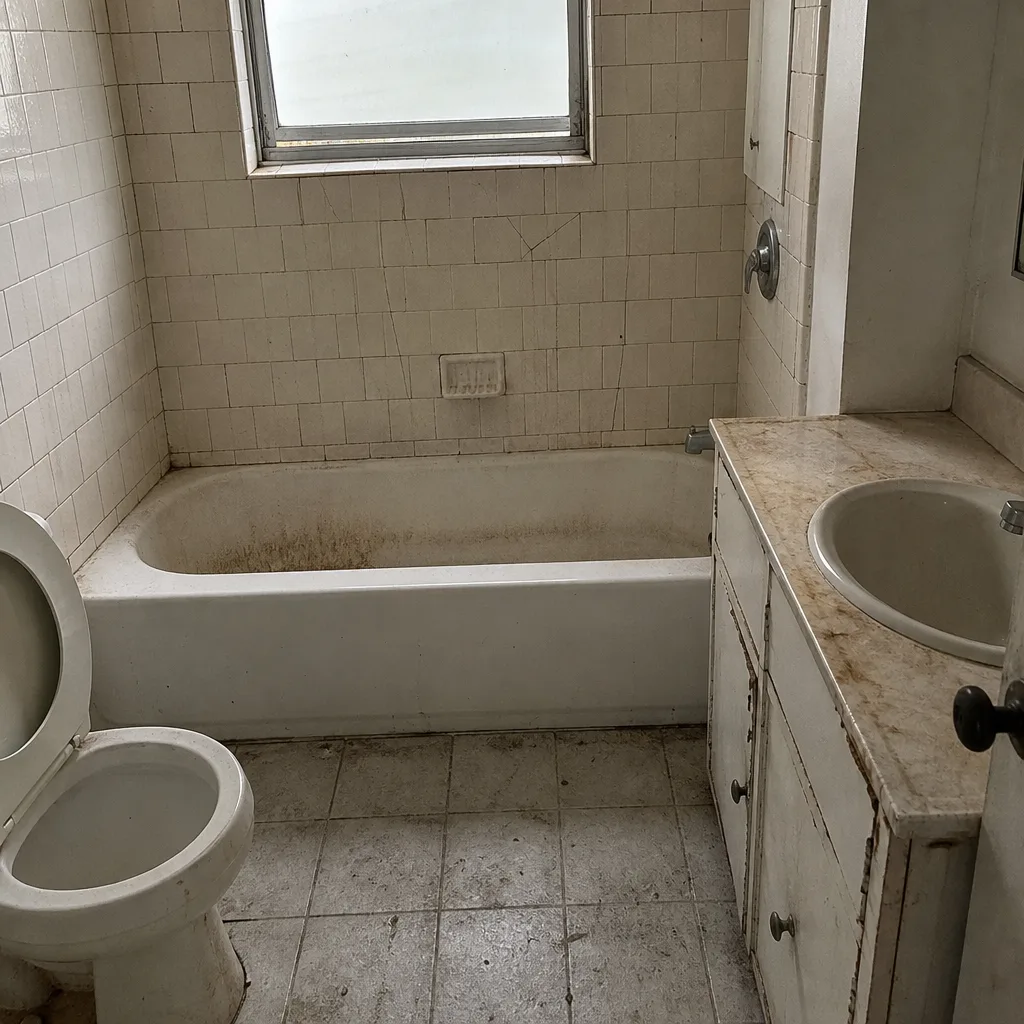 Before
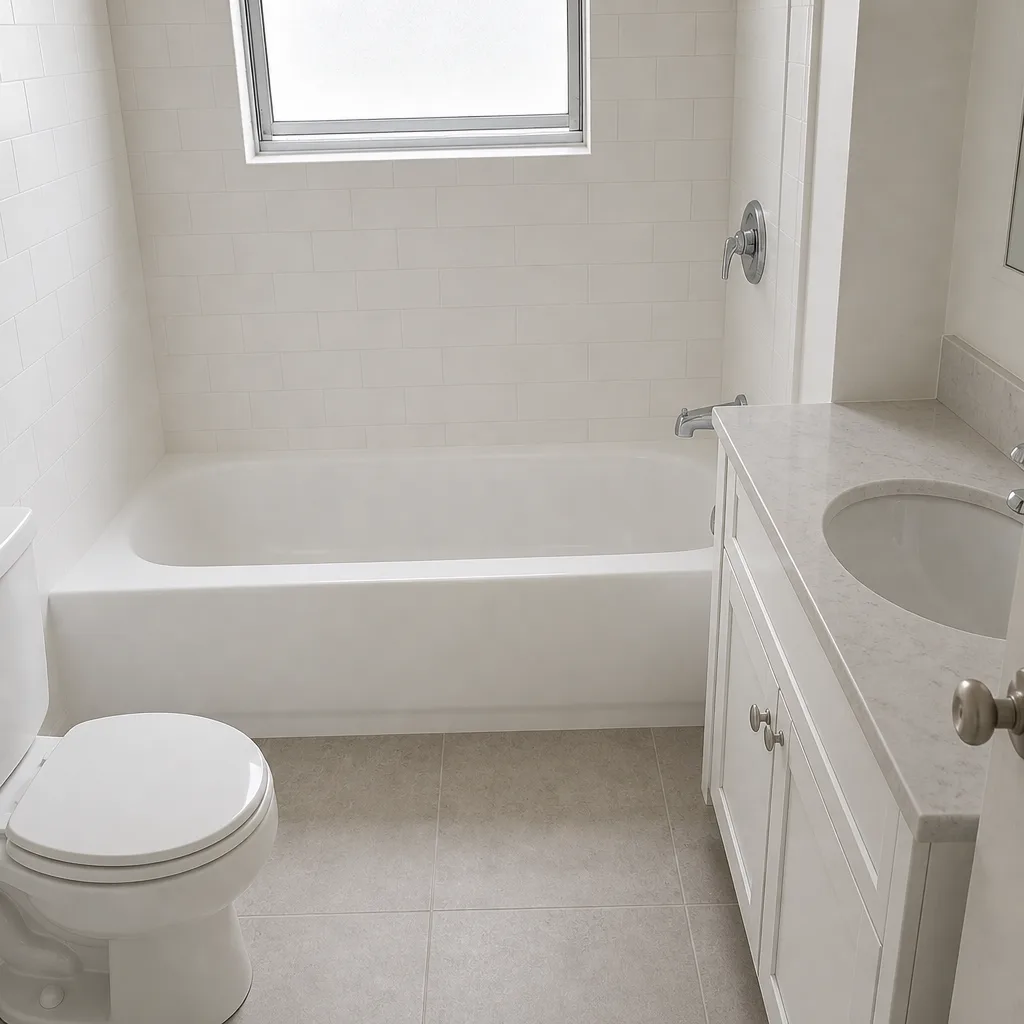 After
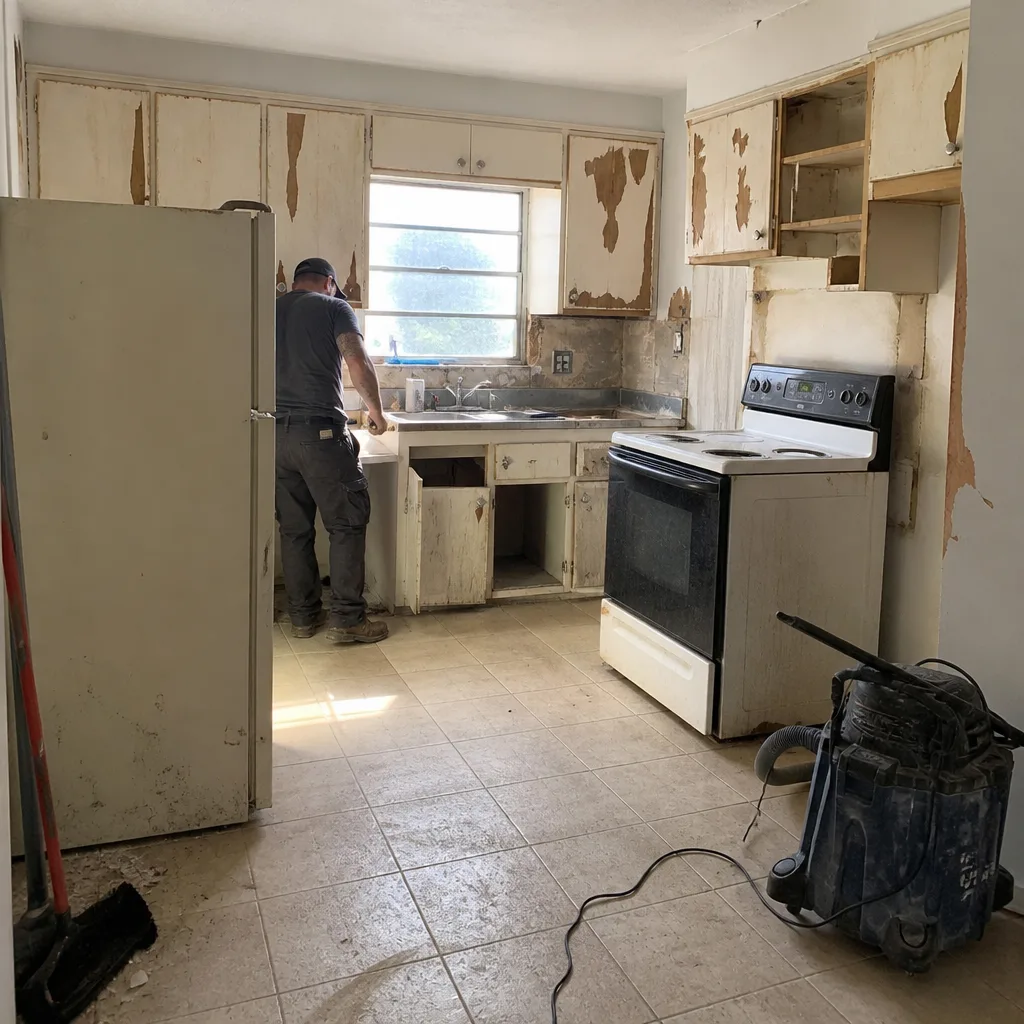 Before
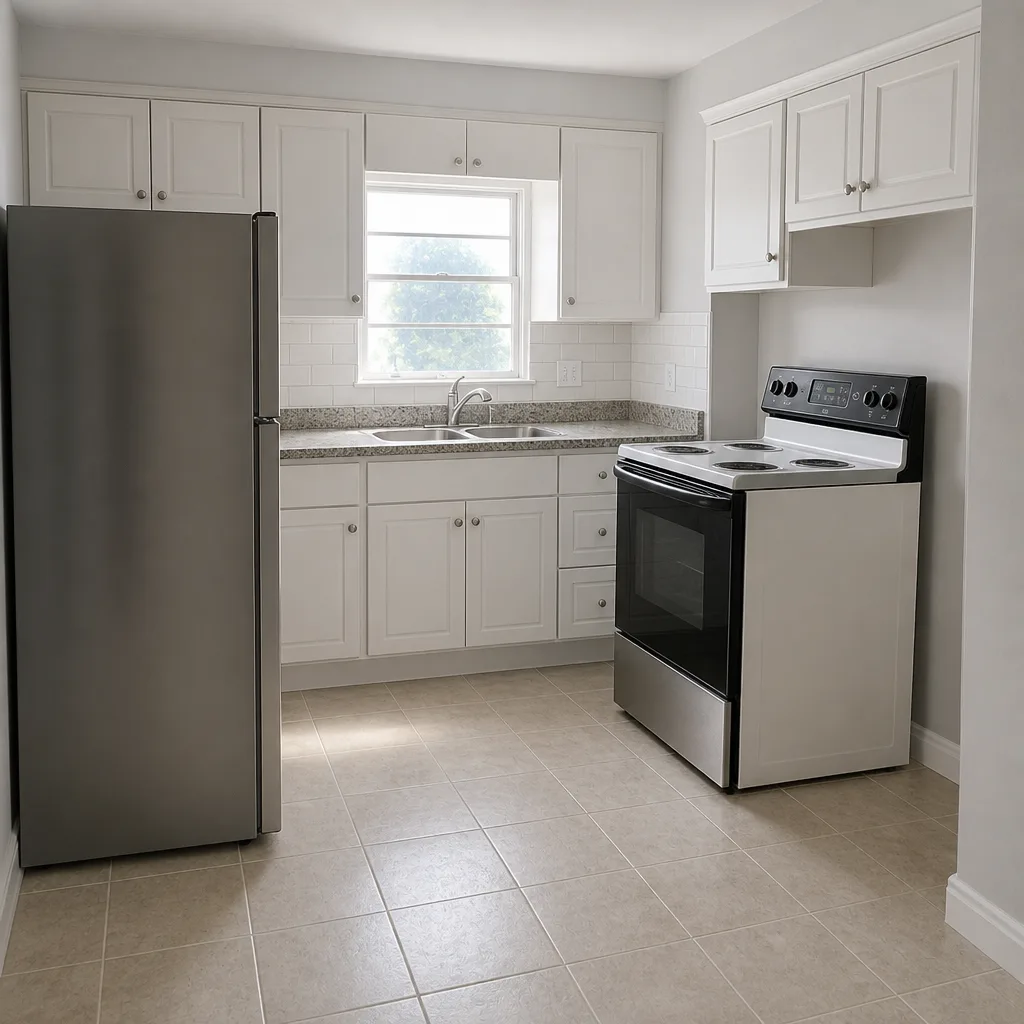 After
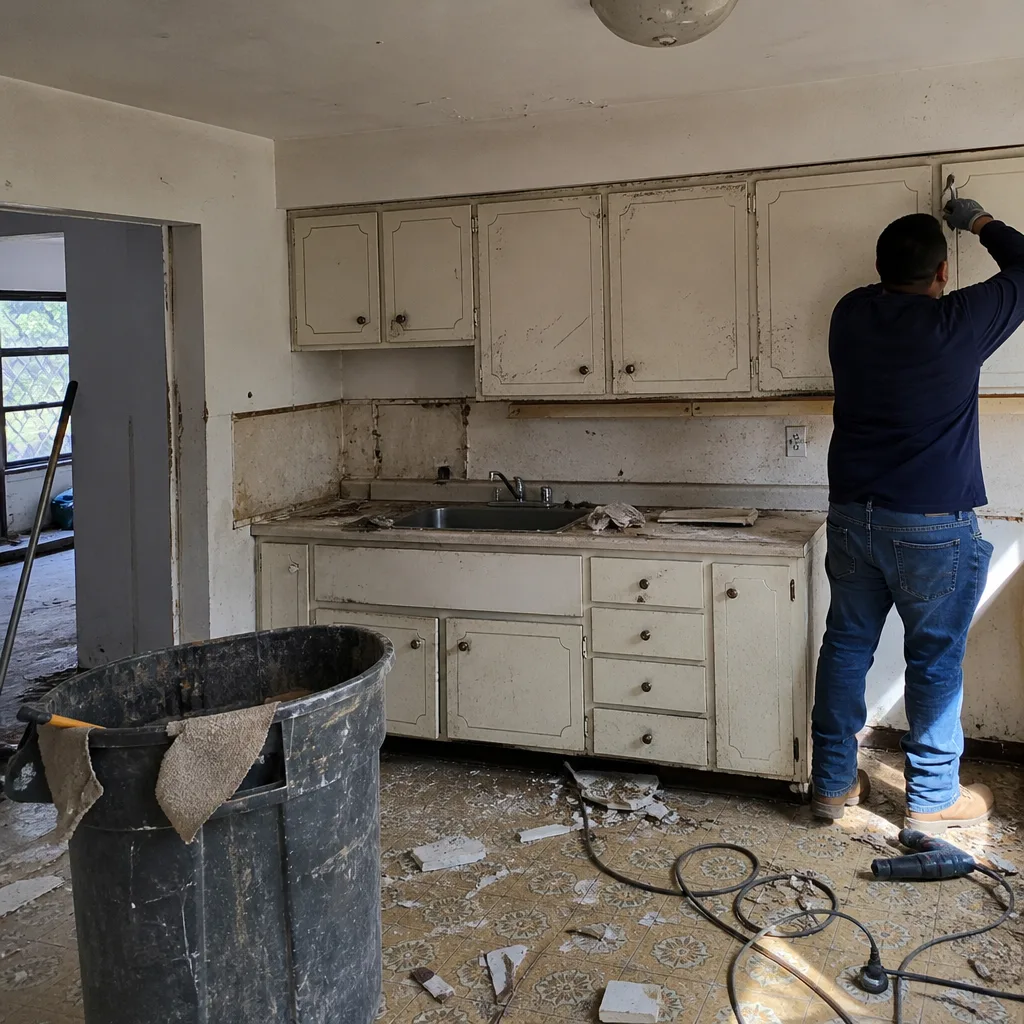 Before
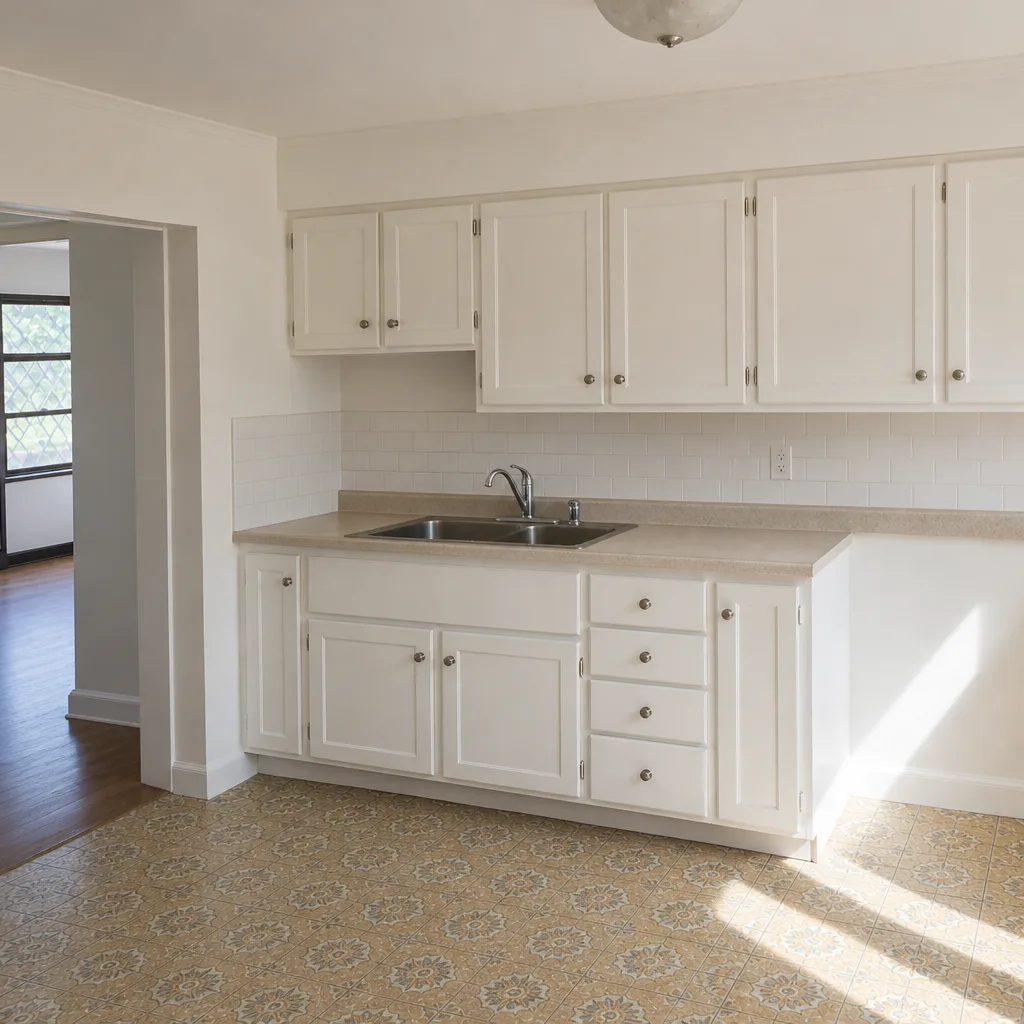 After