
Free written scope consultation - allowances, timeline, and change-order rules on paper before a single trade is scheduled
Styles & brands we work with
- Kitchen remodeling
- Bathroom remodeling
- Home additions & ADU
- Roofing
- Windows & doors
- Driveway & pavers
- Fence
See the difference
 Before
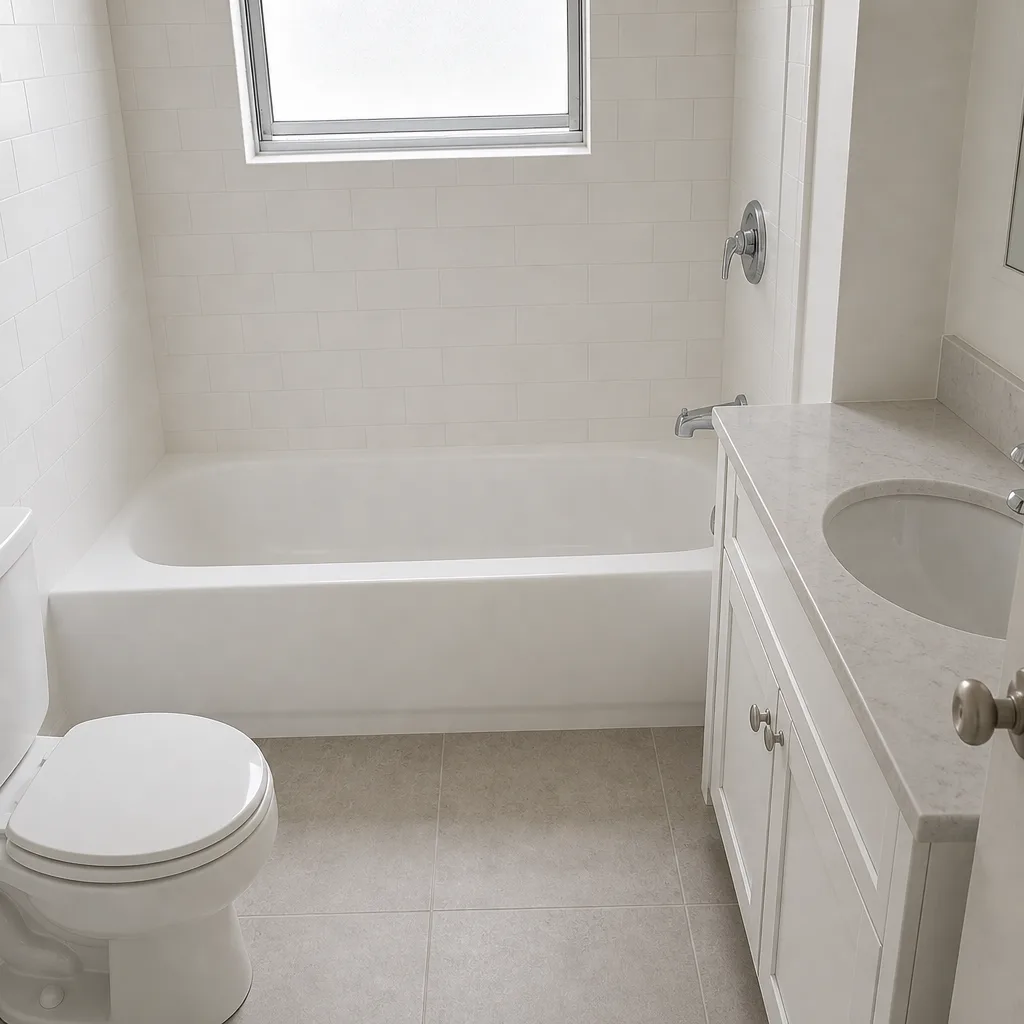 After
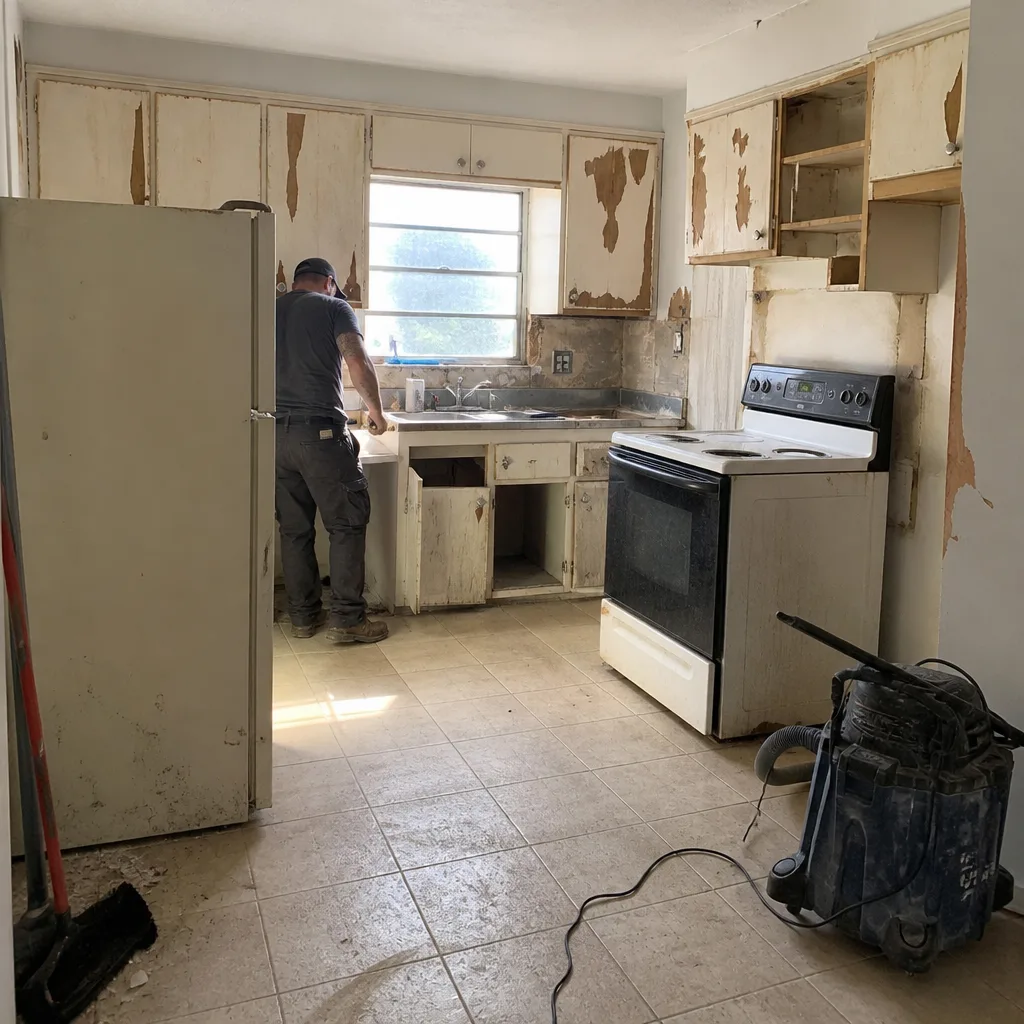 Before
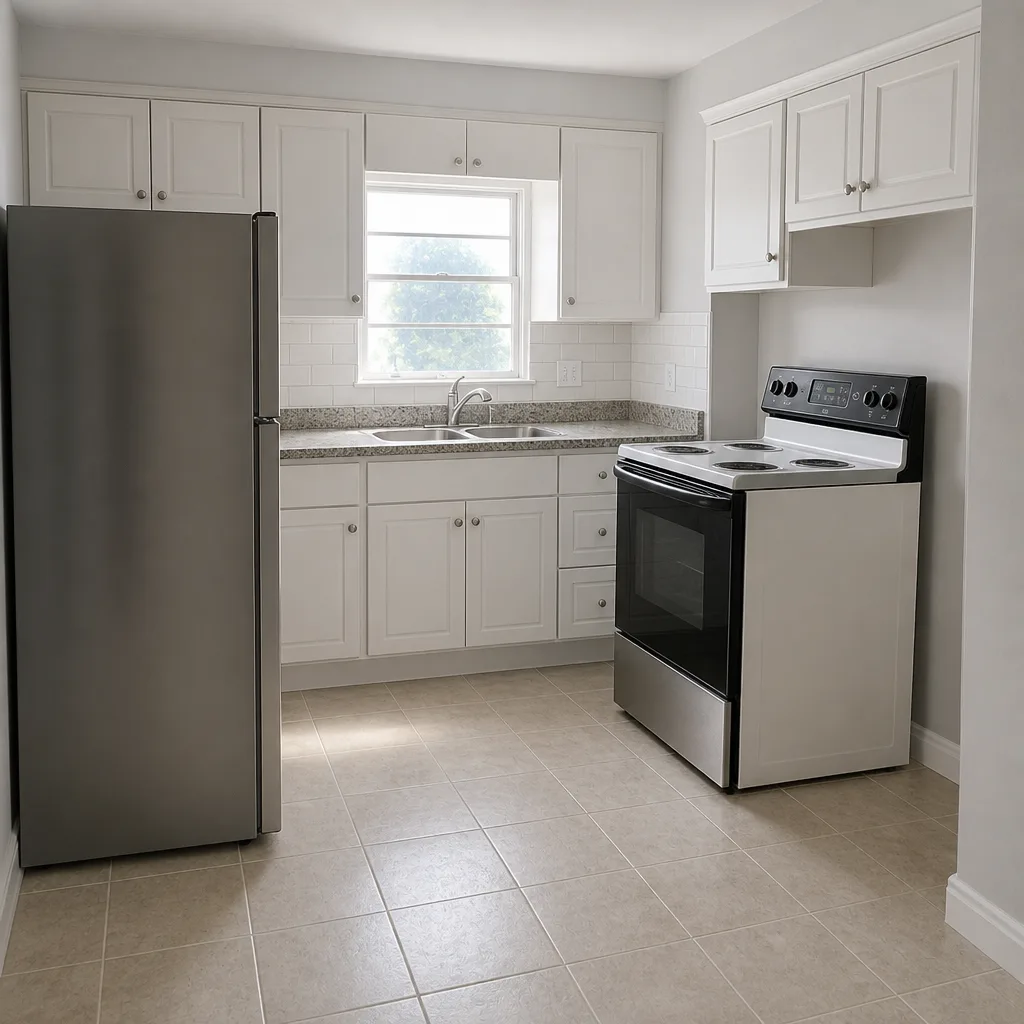 After
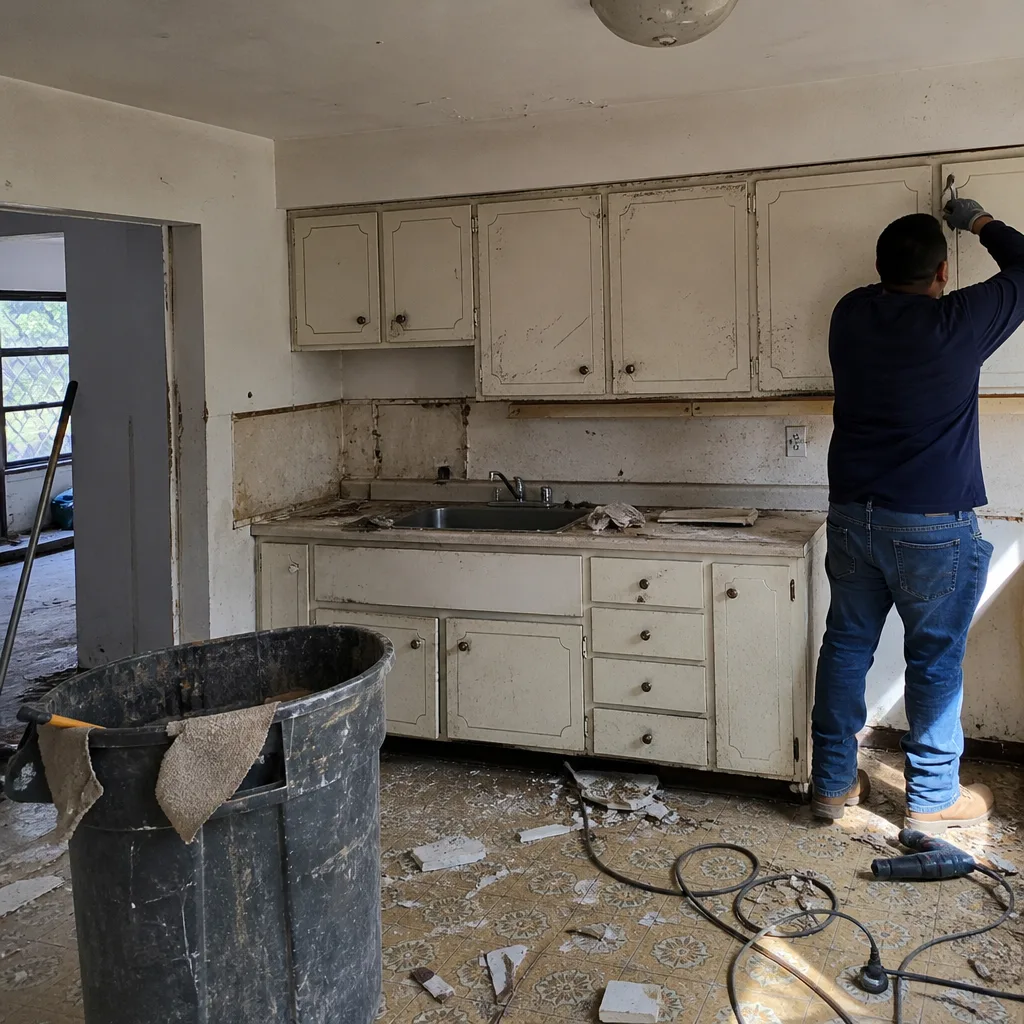 Before
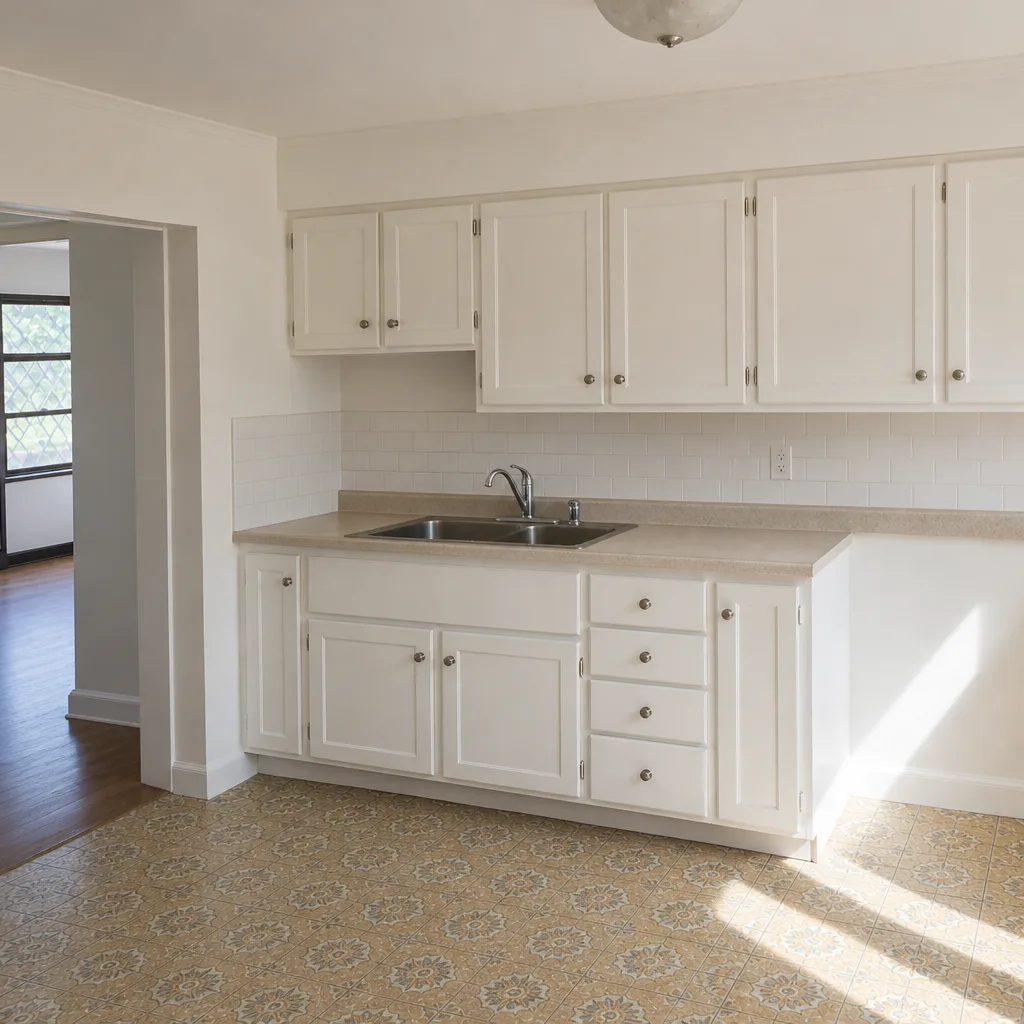 After
How Thick Should a Concrete Driveway Be in Hialeah, FL?
Four inches is the code minimum for a residential concrete driveway, but in Hialeah we specify at least 5 inches with #4 rebar on 18-inch centers. That extra inch is not padding. Our technicians have up to 12 years of experience pouring in South Florida, and the four-inch slabs we’re called out to inspect in Hialeah are the ones cracking at three to five years. If you want a straight answer on your own slab, call (888) 418-7102 and we’ll talk through it with no pressure.
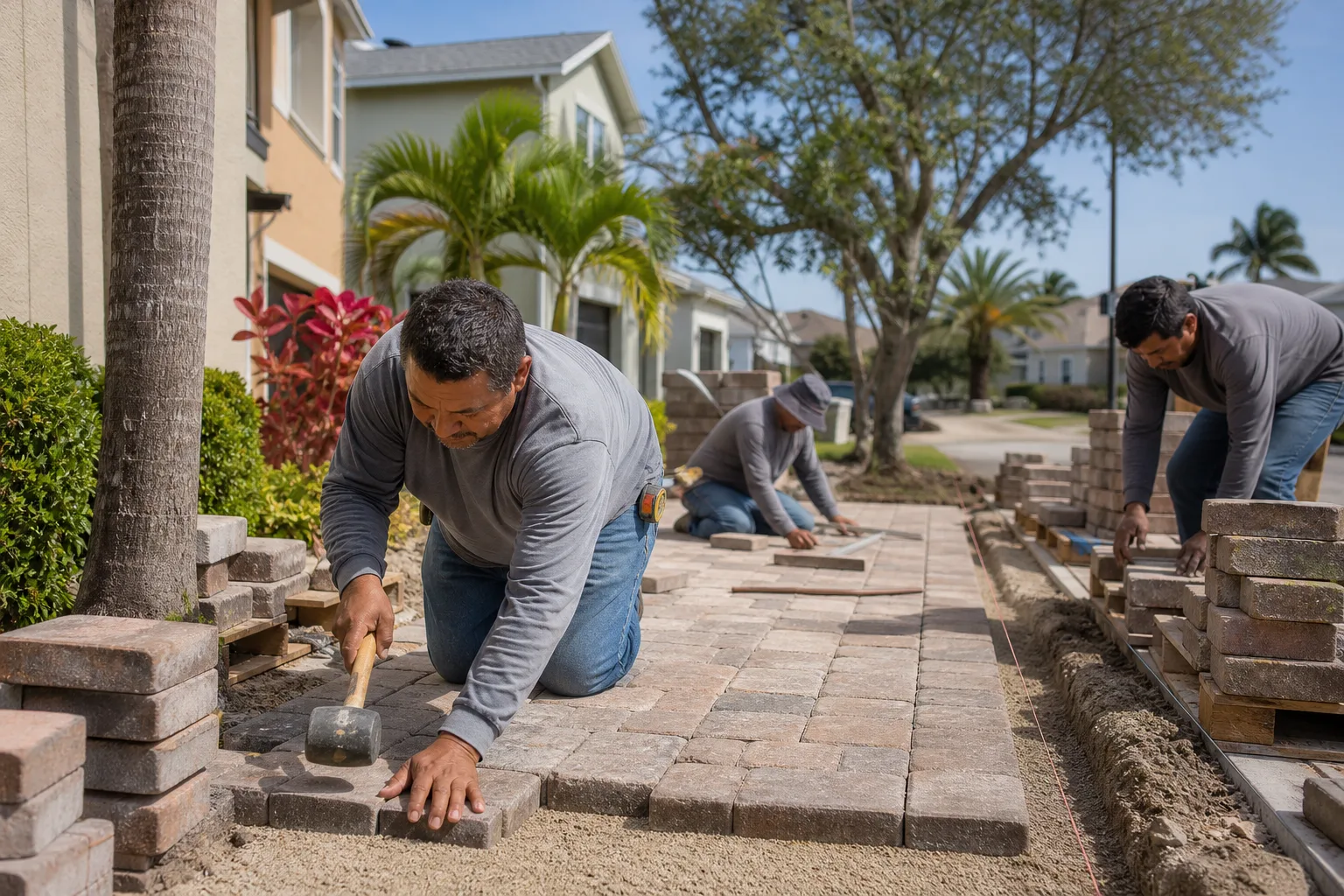
Why 4 Inches Isn’t Enough for a Hialeah Driveway
Walk any block in Hialeah and you’ll see the pattern. The typical house is a 1950s to 1970s single-story CBS structure, and the driveway is original or one repour old. Most of those driveways were poured at four inches because that’s what the code allows. Then the ground starts working on them.
Miami-Dade’s expansive clays swell when the wet season arrives in June and shrink back through the dry months. That seasonal movement is small – fractions of an inch – but it happens twice a year, every year, under a slab that has almost no tensile strength once a crack starts. A four-inch slab cracks. It’s not a matter of if. The question is whether it’s a hairline in year four or a fault line you can put a finger in by year six.
There’s a second load problem most homeowners don’t think about until it’s too late. That’s the propane delivery truck, the moving truck, the concrete supplier that backs up to your carport because the alley is too tight. A four-inch residential slab is engineered for cars and light trucks. Give it a loaded three-axle service vehicle on a hot August afternoon and you’ll find out exactly how thick it really is.
- 4 inches – code minimum, fine for a parked sedan, risky in Hialeah soil over a 20-year horizon
- 5 inches – our standard residential spec for Hialeah, handles occasional heavy vehicles
- 6 inches – for driveways that see regular delivery traffic, RVs, or trailers
- 7-8 inches – thickened edges at the CBS apron and structure transition
Rebar or Wire Mesh? The Answer Depends on What’s Under It
Wire mesh is the cheapest reinforcement on the market, and it’s what most bargain quotes include. Here’s the honest problem: mesh only helps before the concrete cracks. Once a crack opens in expansive soil – and it will – mesh does almost nothing to keep the slab from separating. The two halves move independently and you get a lip you trip on every time you back out.
#4 rebar on an 18-inch grid behaves differently. It’s a continuous structural cage through the slab. When the crack happens, the rebar holds the slab together, keeps the fault from opening, and distributes load across the whole grid. You still get a crack line, but you don’t get a displaced slab.
For anything that meets an existing structure – which is nearly every Hialeah driveway – rebar is what we quote. Mesh shows up on shed slabs and sidewalks. Not on the surface that carries a truck.
What the Ground Is Doing Beneath Your Slab
Thickness on its own doesn’t save a pour in Hialeah. The water table sits high here, especially in low-lying pockets of the city, and concrete placed directly on saturated subgrade cures differently. The base stays wet longer, the mix weakens from the bottom up, and the slab that tests hard on top is soft where it meets the ground. Add six inches of concrete over bad prep and you’ve just bought a thicker slab that will still fail.
What saves the pour is the layer you never see:
- Subgrade prep – remove the topsoil and organic material, compact, and confirm drainage away from the house
- Base course – compacted crushed stone, typically 4 to 6 inches, so the slab sits on a stable platform, not mud
- Vapor barrier – heavy poly sheeting under the slab to keep groundwater from migrating up through the concrete
- Control joints – cut or formed at set intervals so cracks happen where you can’t see them, not across the middle of the driveway
None of this shows up in a bargain bid. All of it is included in our Driveway & Pavers work, and it’s the reason we can back a slab with the 730-Day Done Right Promise instead of a verbal handshake.
The Transition Point Where Most Hialeah Driveways Fail
Look at where your driveway meets the house. That’s the CBS apron or the garage slab, and it’s where a huge share of driveway failures begin. The apron is fixed and structurally tied to the house. The driveway wants to move with the soil. Between them sits a joint that takes all that differential movement on its own.
We thicken the slab at that edge to 7 or 8 inches and tie it into the structure properly, so the transition absorbs the movement instead of tearing. Do that at the front and you’ll skip most of the failures we’re called out to fix. Skip it and you’ll be looking at a failed joint within five years, especially on Hialeah lots where the carport was expanded informally and the apron was never square to the drive.
That’s a common situation here. Hialeah runs on multigenerational, owner-built expansion, and a lot of the rear rooms, carports and enclosed garages behind these CBS homes were added informally over the years. When we quote a driveway replacement, we always ask what’s changed since the slab went in. Sometimes the honest answer is that we need an as-built survey before we can line up a new drive with what’s actually there.
What Your Driveway Should Cost – and What’s Actually in the Number
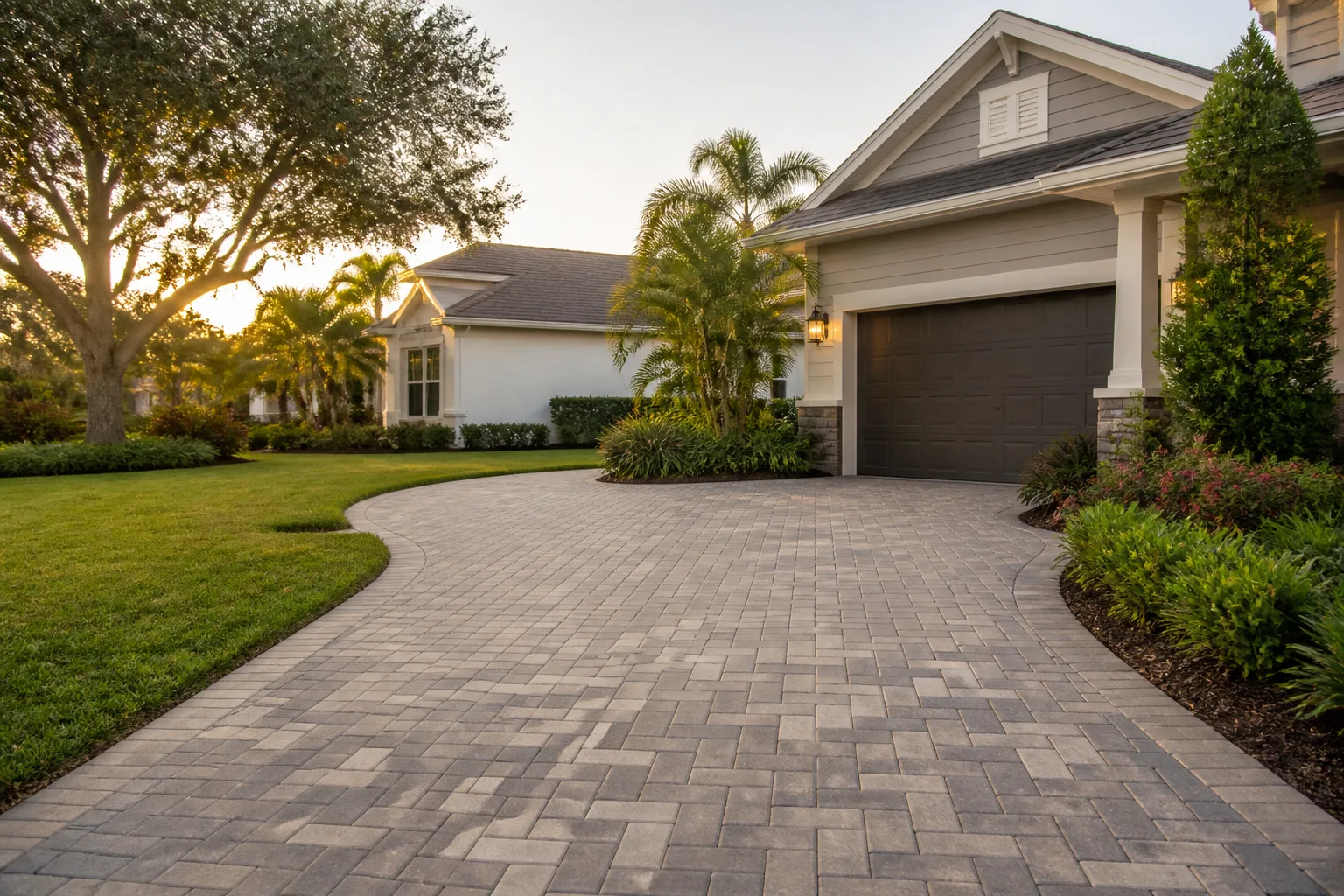
Concrete driveway installation in Hialeah runs $4,500-$12,000 depending on square footage, thickness and prep. That’s our real range, not a teaser. A full driveway replacement lands at $5,000-$14,000 when demo and haul-off are included. If you’re considering pavers instead, paver driveway installation runs $7,000-$18,000 for the same footprint, with Techo-Bloc or Cambridge Pavers laid on a properly compacted base.
| Line item | Hialeah price range |
|---|---|
| Concrete driveway installation (5″ with #4 rebar) | $4,500-$12,000 |
| Full driveway replacement (demo + haul-off + repour) | $5,000-$14,000 |
| Paver driveway installation | $7,000-$18,000 |
| Driveway sealing | $250-$700 |
Here’s the part that separates an engineered bid from a code-minimum one: our upfront pricing itemizes the spec. You see the slab thickness, the reinforcement type and grid, the base course depth, the vapor barrier, and the thickened edge at the apron, all written into the quote before we touch a shovel. On projects over $10,000, we apply $1,000 off, and 0% financing for 18 months is available if you’d rather spread the cost. The number you see is the number you pay.
Every pour we do is backed in writing by the 730-Day Done Right Promise. If the slab isn’t right, we make it right. That’s a long guarantee for a driveway, and it only works because the spec underneath it is right too.
Frequently Asked Questions
At least 5 inches with #4 rebar on 18-inch centers is what we recommend for a Hialeah residential driveway, above the 4-inch code minimum. Expansive Miami-Dade soil, occasional heavy service vehicles, and a high water table all argue against going thinner. Call (888) 418-7102 for a free estimate – we come out, look at your soil and your load, and quote the right thickness in writing.
No – a 4-inch slab is not engineered for a loaded three-axle truck and it will crack or displace under one. Service vehicles hit residential driveways far more often than most homeowners expect in Hialeah, and a 5-inch slab with rebar handles that load without trouble. If your delivery traffic is regular, we’ll quote 6 inches and tell you why.
Rebar, by a wide margin, for anything poured over Hialeah’s expansive clay. Wire mesh provides almost no tensile strength once a crack starts, and the ground here guarantees the crack. #4 rebar on an 18-inch grid holds the slab together after the crack, so you get a hairline instead of a heave. Call (888) 418-7102 and we’ll walk you through what your specific lot needs.
Concrete driveway installation in Hialeah typically runs $4,500-$12,000, and a full replacement with demo and haul-off is $5,000-$14,000. That range covers the 5-inch slab, rebar, compacted base and thickened edge. Call (888) 418-7102 for an exact quote – estimates are free and priced upfront.
Talk to Someone Who Pours These Every Week
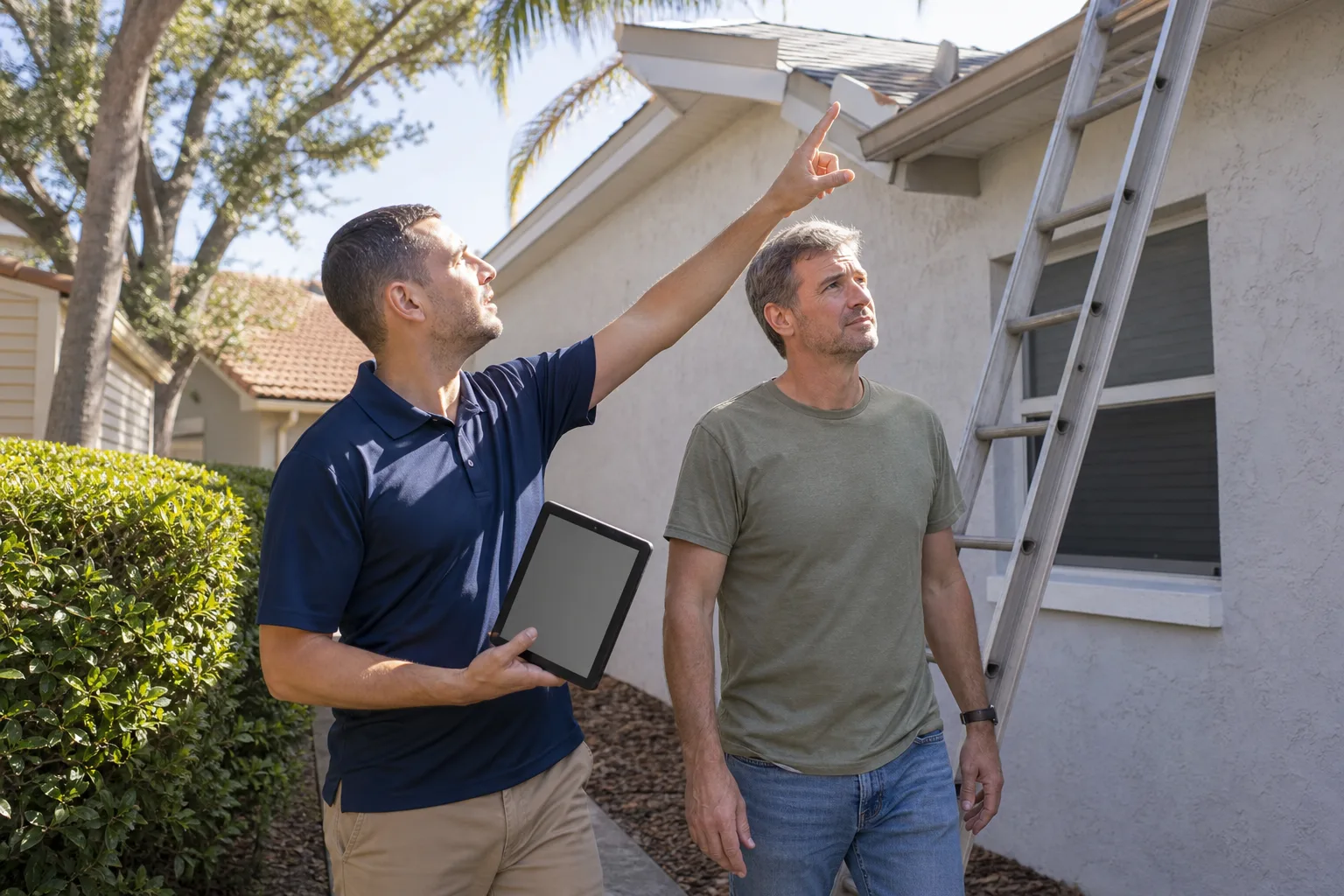
If you’d rather have it looked at than guess, Groundwork Construction Co. of Hialeah offers a no-pressure assessment across Hialeah. We’ll check your subgrade, your transition at the house, and the load your driveway actually carries, then quote a spec you can read line by line. Call (888) 418-7102 – a real person answers, any hour, and the estimate is free.
Written by the team at Groundwork Construction Co. of Hialeah, serving Hialeah, FL.