Last updated November 18, 2026
Free written scope consultation - allowances, timeline, and change-order rules on paper before a single trade is scheduled
Fence Installation Maintenance Schedule: What to Do and When
Most fence maintenance advice is written for a climate that Hialeah doesn’t have. Painting a wood fence here in August, with humidity sitting above 85%, almost guarantees the finish peels or blisters within a few months, no matter what the label on the can says. The moisture trapped under a fresh coat has nowhere to go. We’ve watched fences that were “maintained” on a national calendar fail years before neighbors who barely touched theirs.
What follows is a maintenance schedule built around Hialeah’s actual conditions: the May-to-October wet season, the hard dry stretch from November to April, salt air moving in off the coast, and hurricane prep that has to start before the first June storm forms. You’ll get a month-by-month calendar, a pre-storm inspection checklist, material-specific tracks for aluminum, vinyl, wood and CBS, and the hardware and soil checks that catch failures early.
Quick Answer
In Hialeah, fence maintenance runs on a two-season rhythm: prep and repair structural issues during the dry season (November to April), and limit wet-season (May to October) work to cleaning, vegetation control, and hardware inspection so finishes and repairs cure properly. Wood gets inspected and sealed in the dry months, vinyl and aluminum get washed and hardware-checked quarterly, and every fence gets a full structural check in April before hurricane season opens on June 1.
Styles & brands we work with
- Kitchen remodeling
- Bathroom remodeling
- Home additions & ADU
- Roofing
- Windows & doors
- Driveway & pavers
- Fence
Table of Contents
- Why Hialeah Fences Need a Different Calendar
- The Month-by-Month Hialeah Maintenance Calendar
- Pre-Hurricane Season Fence Inspection Checklist
- Material-Specific Maintenance Tracks
- Salt Air Corrosion: What to Watch on Hardware
- The Post-Rainy-Season Soil Check Around Posts
- When to Paint, Stain, or Seal in Hialeah
- Common Mistakes to Avoid
- When to Call a Professional
Why Hialeah Fences Need a Different Calendar
Hialeah sits in one of the more punishing fence environments in the country. Average relative humidity runs above 70% most of the year and pushes past 85% through much of the wet season. UV intensity is high enough that a fence finish takes an annual beating that a fence in the Midwest reaches in four or five years. Add salt-laden air moving in from the coast and you get a triple threat: moisture that wants to soak in, sun that wants to dry and crack surfaces, and a salt film that quietly eats at anything made of steel.
The result is that the standard advice – “stain every two to three years, power wash annually, check your posts annually” – underserves fences here. A wood fence in Hialeah may need re-sealing closer to every 12 to 18 months. Steel fasteners that would last a decade in a dry climate can show visible corrosion in Hialeah within two or three wet seasons.
What makes Hialeah distinctive is the interaction between the seasons. The wet season drives moisture into wood and compacts soil at the post base. Then the dry season pulls that moisture out fast, causing wood to shrink and soil to shift. Repeat that cycle a few times and the small cracks open wider, the gaps between panels grow, and a post that was solid begins to work its way loose.
For homeowners in neighborhoods like Hialeah Gardens, Palm Springs, and Miami Lakes, the practical response is to time structural work to the dry months and keep wet-season work minimal so finishes cure and inspections catch problems before the next storm. If you’re planning a new fence and want it built to suit local conditions from day one, see our Fence Installation in Hialeah page.
The Month-by-Month Hialeah Maintenance Calendar
This calendar assumes a mixed or wood fence and notes where materials diverge. Treat it as a starting framework and adjust to your fence’s age and condition. Material-specific detail is in the tracks below.
- January – Full inspection and post check. Walk the entire fence line and look for lean, rot at the base, and loose panels. This is the driest month, so it’s the best time to pull and reset a problem post if one needs it.
- February – Deep clean and repaint or stain window. Humidity is low, so a finish applied now will cure properly. Wash the fence surface, let it dry for two to three days, then apply the finish in the afternoon after dew has burned off.
- March – Hardware and hinge check. Tighten all fasteners, replace any that show rust, and lubricate gates. Do this every March and September.
- April – Hurricane season prep. Run the pre-storm checklist below. Any post that shifts when tested gets repaired or reset before May.
- May – Trim vegetation and clear the fence line. Vines and shrubs touching the fence trap moisture and hide damage. Cut everything back 12 inches.
- June to September – Wet-season watch. Monitor for mildew, algae, and loose hardware after each heavy rain cycle. Hand-wash with a mild detergent when you see buildup. No painting or sealing in this window.
- October – End-of-wet-season soil and post check. After the last seasonal rains, probe the soil around each post for heaving or soft spots (see the post-rainy section below).
- November – Seasonal cleanup and minor repairs. Replace loose pickets, touch up hardware, and clear the base of debris.
- December – Plan next year’s finish cycle. If your wood fence is more than 18 months from its last seal, schedule the next application for February.
For driveways and hardscape that share a border with your fence line, keep an eye on how pavers and the fence base interact; see our Driveway & Pavers in Hialeah page for how hardscape meets fence lines and how proper grading keeps water moving away from the fence base.
Pre-Hurricane Season Fence Inspection Checklist
Hurricane season opens June 1 and runs through November 30, with the statistical peak in August and September. The April inspection is the one that decides whether your fence survives the season intact. A fence panel that flexes slightly under normal wind can peel off like a sail in a 60-mph gust if the fastenings are loose or the posts are undermined.
Run these checks in this order:
- Post integrity, side to side. Stand next to each post and push it firmly in both directions, then toward and away from the fence line. A solid post should not move more than about a quarter inch. Any movement means the post is losing grip in the soil and needs to be reset, braced, or replaced before June.
- Panel fastenings. Wiggle each panel and check every fastener. On wood, look for fasteners that have backed out or left rust streaks. On vinyl and composite, check the top and bottom rails for screws that have worked loose. On aluminum, check panel-to-post brackets and caps.
- Gate hardware. The gate is the most stressed part of any fence. Check hinges for wear and looseness, check the latch for alignment, and make sure any spring or self-closing mechanism still functions. A gate that doesn’t latch properly becomes a wind sail that whips and tears its own hinges in a gust.
- Top rail and cap integrity. Walk the full length and look for sagging top rails, missing caps, or shifted pickets. Anything visibly asymmetrical after normal weather suggests a structural issue below.
- Base and soil condition. Check the soil around each post. A post sitting in a soft spot, a dip, or next to a downspout that dumps water against the fence line is a post that will fail first. Redirect runoff before the rains come.
If you’re planning an entirely new fence or adding a section before storm season, an April decision beats a July one; our Fence Installation in Hialeah team can walk the line with you and give a written estimate.
Material-Specific Maintenance Tracks
One schedule does not fit all fences. Aluminum, vinyl, wood, and CBS block fences have different failure modes and need different intervals. Here’s how the Hialeah calendar breaks out per material.
Aluminum Fence Track
- Monthly: Rinse with a garden hose to remove salt and pollen film, especially on coastal-facing sides.
- Quarterly: Check post caps, panel brackets, and gate hinges for corrosion and tightness.
- Annually (January): Full wash with mild detergent and a soft brush. Check for pitting or white powdery corrosion on the finish.
- Every 3 to 5 years: Touch up any scratched or chipped finish with matching touch-up paint before corrosion sets in.
Vinyl Fence Track
- Quarterly: Wash down with a garden hose and a mild detergent to prevent mildew and dirt staining. Vinyl in Hialeah gets a green algae film quickly during the wet months.
- Annually (April): Check panel-to-rail connections and posts for movement. Vinyl expands and contracts with heat, so fasteners can work loose over time.
- After each storm: Check for cracked or displaced panels and popped caps. A missing cap allows water into the post top and shortens the post’s life.
Wood Fence Track
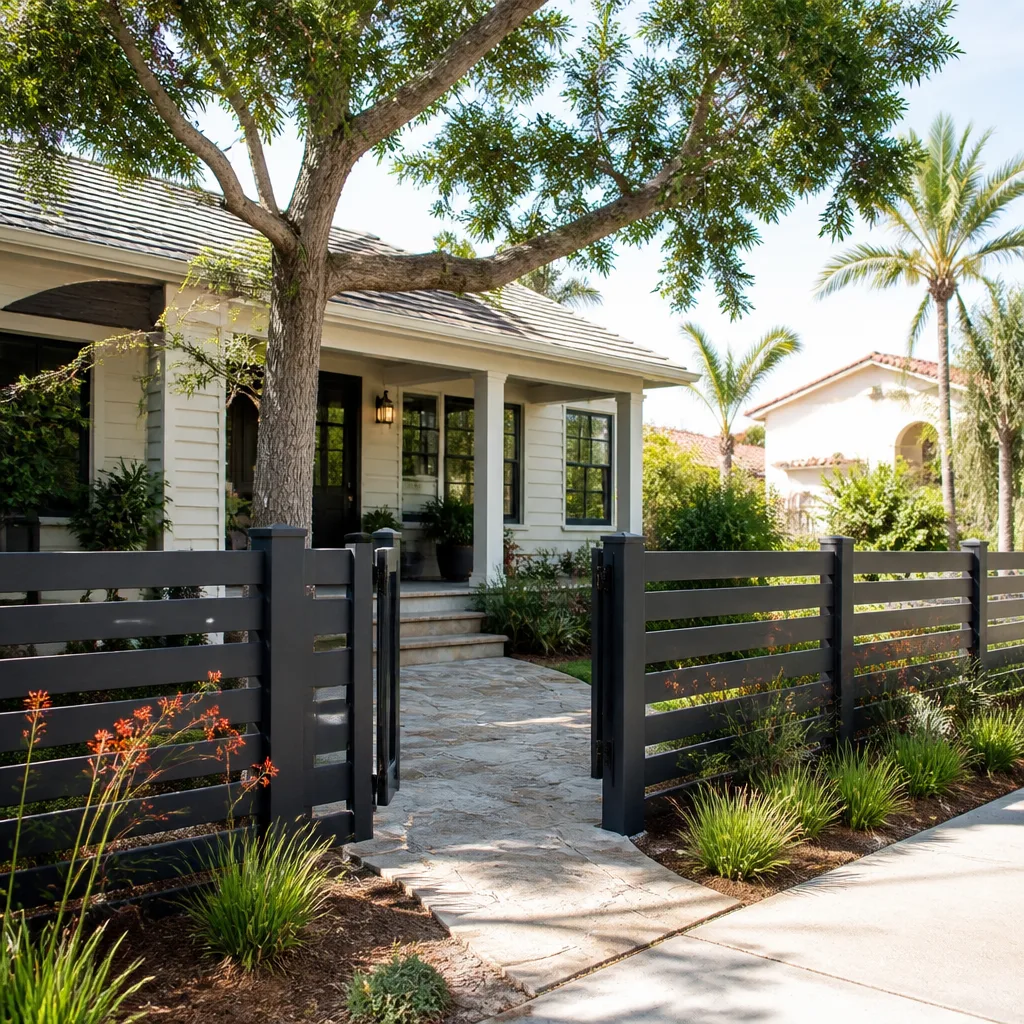
- Every 12 to 18 months: Clean and re-seal. Hialeah’s UV and humidity shorten the usual two-to-three-year interval.
- Quarterly: Inspect for rot at the bottom of posts and the base of pickets; both sit where moisture lingers longest.
- Annually (January): Check for popped or backed-out nails and screws. Replace with coated or stainless steel exterior fasteners.
- Every 2 to 3 years: Replace any pickets that show soft wood on the inside, even if the outside still looks solid.
CBS (Concrete Block and Stucco) Fence Track
- Annually (dry season): Inspect stucco and paint for cracking, chipping, or efflorescence (white mineral deposits). Both signal water intrusion.
- Every 3 to 5 years: Repaint or reseal the stucco surface to keep water from working into block and reinforcing steel.
- After hurricanes: Check wall alignment, cap tightness, and any hairline cracks. A hairline crack in stucco becomes a rusting steel reinforcement problem if water gets in.
If your property also has a home addition or ADU in the works and the fence line will change, coordinate it early – we cover planning and layout in our Home Additions & ADU in Hialeah guide.
Salt Air Corrosion: What to Watch on Hardware
Corrosion is the number one hidden failure for Hialeah fences, and the single most common thing homeowners miss. The reason is simple: the corrosion happens on the fasteners and hardware first, not the visible fence surface. By the time a panel falls off in a storm, the fastener that failed may have been weakened for two seasons.
What to look for:
- White or gray powder on steel hardware. This is early zinc oxidation. It’s easy to miss on a galvanized or zinc-plated bracket.
- Orange-brown rust streaks below a fastener. This is active rust. On a wood fence, the rust leaks down the face of the fence, easy to see. On vinyl or aluminum, check the joint line where hardware meets rail.
- Pitting on gate hinges. Hinges are the most exposed hardware on any fence and the first to fail. Run a fingertip along the knuckle; any rough surface or flaking means it needs replacement.
- Corrosion inside post caps. Pull a cap and look inside. Many fence post caps trap moisture against the top of the post or cap plate. Corrosion under a cap can go years undetected.
The replacement spec matters more than the brand. For Hialeah, we recommend 304 stainless steel hardware as the baseline, and 316 stainless for anything within about a mile of the coast. If you use coated or galvanized steel, use hot-dipped galvanized (HDG), not electroplated. The coating thickness on HDG is roughly five to ten times thicker, which is the difference between a two-season life and a ten-season life. Fence screws should be stainless or HDG specifically rated for exterior use; interior or drywall screws have no business on a fence in this climate.
Big-box fence kits typically ship with electroplated or plain zinc hardware. On a Hialeah fence, upgrade the hardware at install time, not after the first rust shows. If you’re replacing a fence section, ask what fasteners the crew is using. A quality fence like ours from Groundwork Construction Co. of Hialeah goes in with appropriate exterior hardware from day one.
The Post-Rainy-Season Soil Check Around Posts
The soil around each post is where most fence failures actually originate, and it’s the check that almost no homeowner does. In Hialeah, the wet season soaks the ground from May through October. The soil around a set post can saturate, compact under added weight, and then shift as the water recedes. If the post hole wasn’t backfilled with proper gravel and compacted material, or if the soil around it has eroded, the post is quietly working loose.
How to check, in October or November:
- Walk the base. Look at the soil around each post. A soft, spongy area with water pooling suggests a clay-heavy or poorly drained backfill. A dip next to the post suggests soil settling.
- Probe with a screwdriver. Push a long screwdriver into the soil at the base of each post. If it goes in easily for several inches, the soil is saturated. If you hit hard gravel quickly, the backfill is likely fine.
- Push test. Grip each post and apply light pressure in four directions. Any movement beyond a very slight flex is an early failure signal.
- Check for heaving cracks. Look for cracks in the soil or pavement adjacent to the post. Cracks suggest the post has been lifting or settling through wet-dry cycles.
If you find an issue in October, you have a dry-season window to fix it properly (reset the post, re-compact the backfill, or replace a rotted post) before the next rainy season. Wait until spring and you’re looking at an emergency repair in a saturated yard in the middle of a storm cycle.
When to Paint, Stain, or Seal in Hialeah
This is the single biggest source of fence finish failure in Hialeah, and it’s the reason we start this guide with that point. Finish products need a moisture-free surface and moderate humidity to cure correctly. Above roughly 85% relative humidity, a water-based stain or sealer takes far longer to dry. In some cases it never fully cures before the next rain, and the finish peels or blisters within months, regardless of brand quality.
The specific Hialeah application windows:
- Best window: December through March. Lower humidity, more consistent sun, fewer rain events. Aim for a stretch of three to four days with no rain in the forecast.
- Marginal window: November and April. Workable, but check the dew point and humidity daily. Don’t apply on a day when humidity is trending up.
- Locked-out window: May through October. Wet season. Don’t apply oil-based or water-based finishes during this window. If the fence needs a finish, wait.
Two application details matter in Hialeah specifically: apply on an afternoon when the morning dew has fully burned off, and stop applying at least four hours before sunset so the finish has time to skin over before evening humidity rises. Total dry time before a rain-ready window varies by product; read the label and add 24 hours for the extra humidity. For surface prep, Sakrete products are reliable for filling post holes and minor base work around a fence line.
Common Mistakes to Avoid
- Painting or staining in the wet season. The most expensive mistake in Hialeah. One finish applied in July can fail within six months and cost you the whole application twice over. Always wait for the dry season.
- Skipping the April storm inspection. A loose post or a panel with two backed-out fasteners looks like nothing in calm weather. It becomes a lost fence section in a storm. Do the April check every year.
- Using plain zinc or interior fasteners on exterior fences. Hialeah’s salt air eats through plain zinc hardware in a few seasons. Use 304 or 316 stainless, or hot-dipped galvanized.
- Letting vegetation grow against the fence. Vines and shrubs trap moisture and hide the exact damage you need to catch early. Keep a 12-inch clear zone.
- Ignoring the soft spot around a post. A post set in poorly drained soil is a post that will lean within a few years. Fix the drainage and the backfill before the post needs replacing.
- Power-washing wood at high pressure. High-pressure spray drives water into the wood grain and raises whiskers that shorten the life of the finish. Use low pressure and a detergent, then let it fully dry before sealing.
- Ignoring a single weeping rust spot on a hinge or bracket. A small rust spot on a hinge is the early warning that a much bigger hardware failure is coming. Replace the hardware early.
See the difference
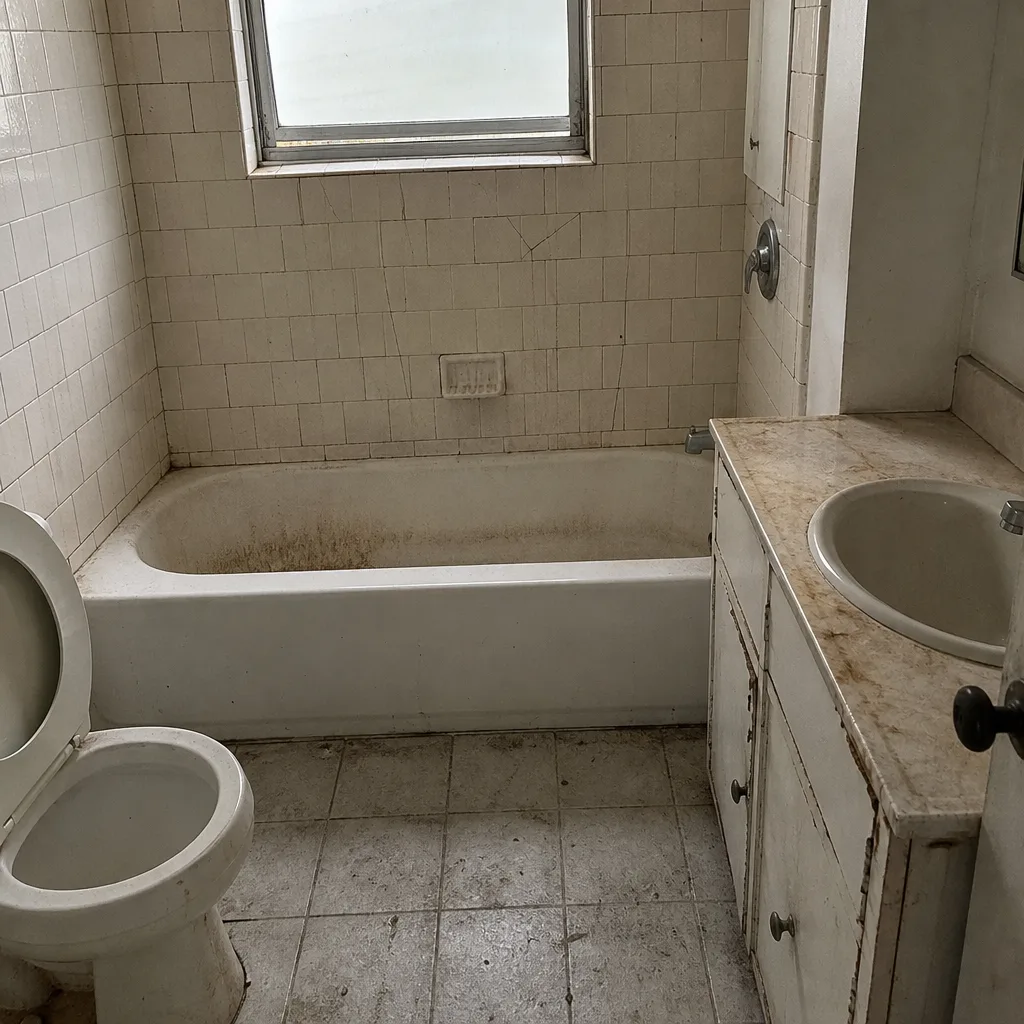 Before
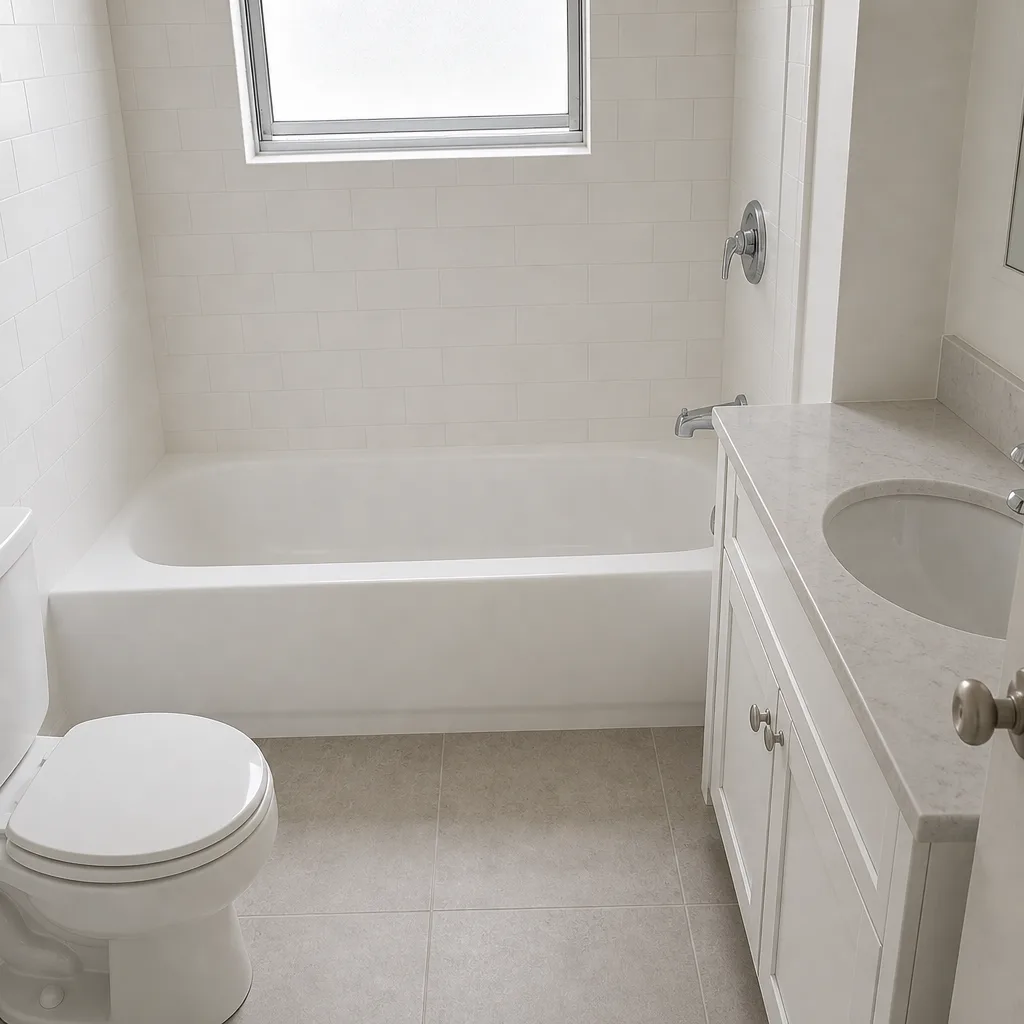 After
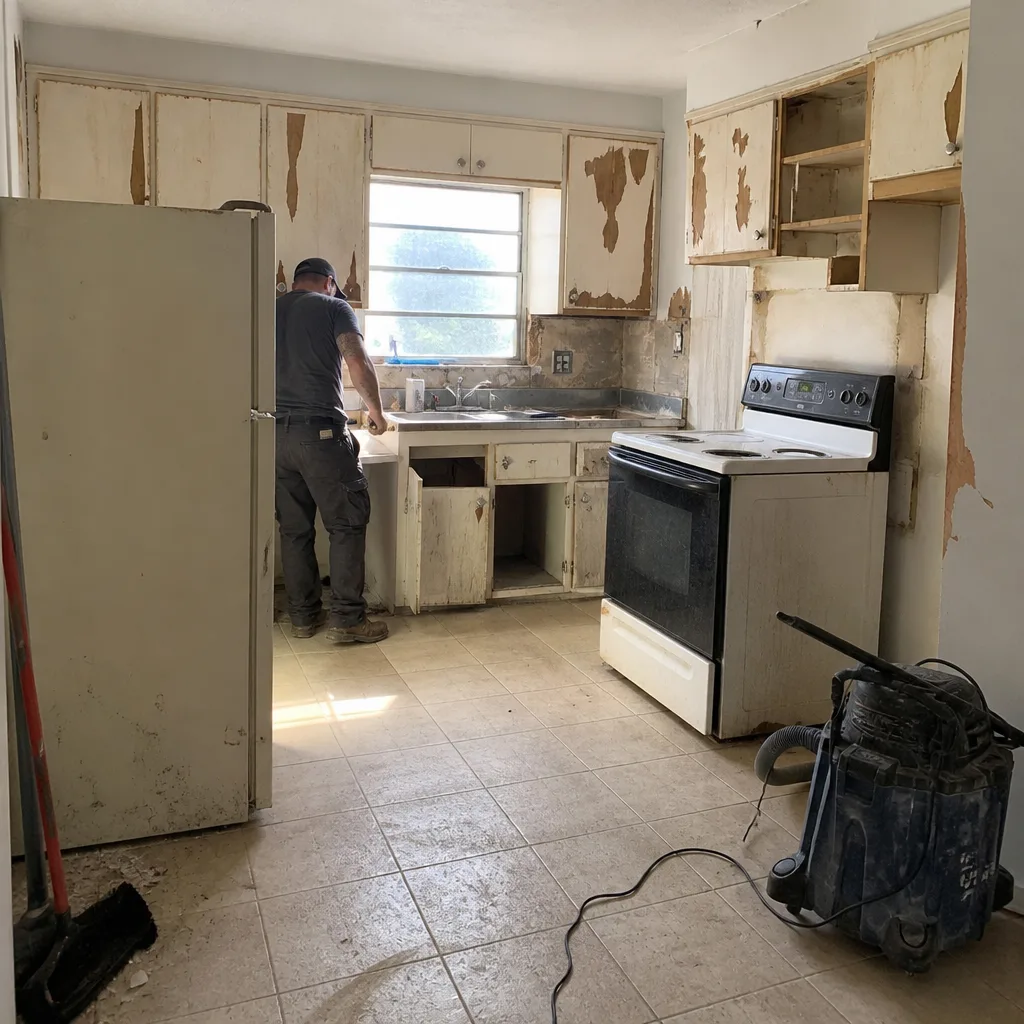 Before
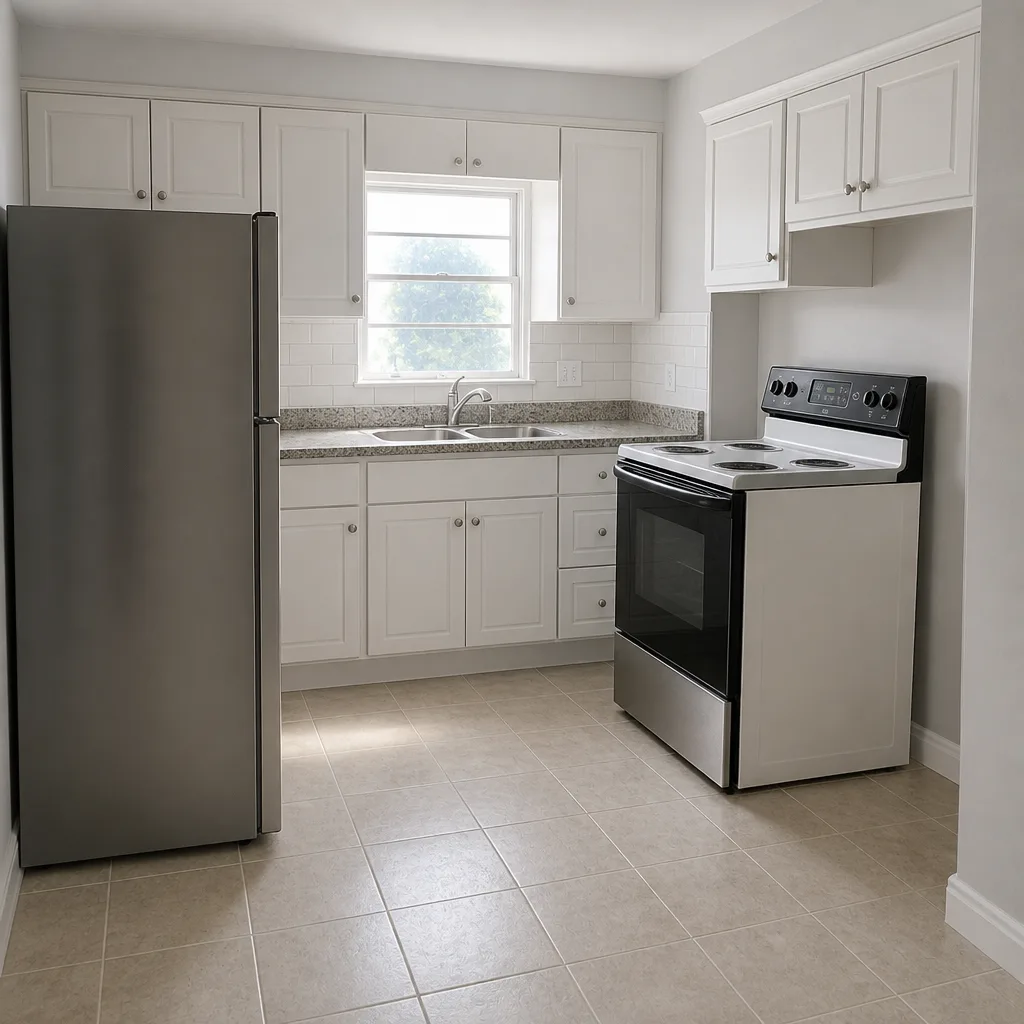 After
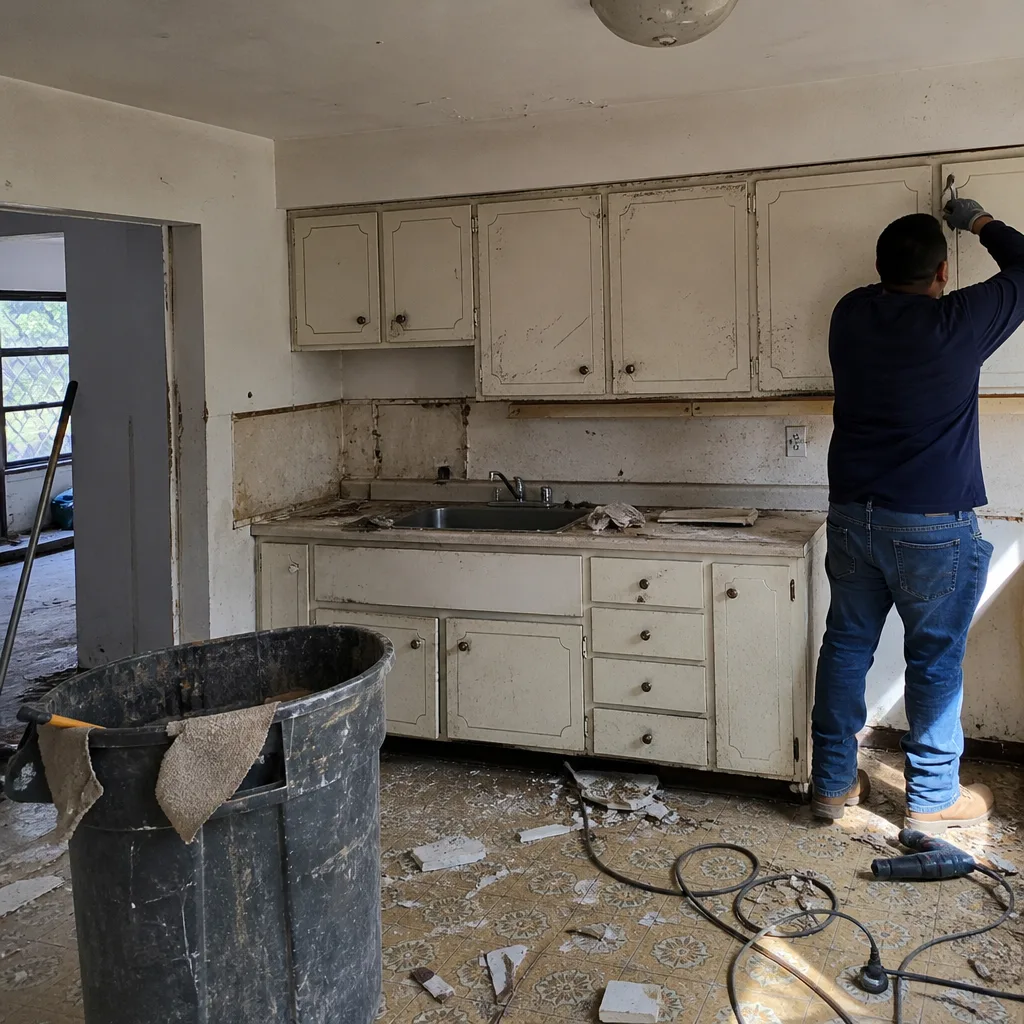 Before
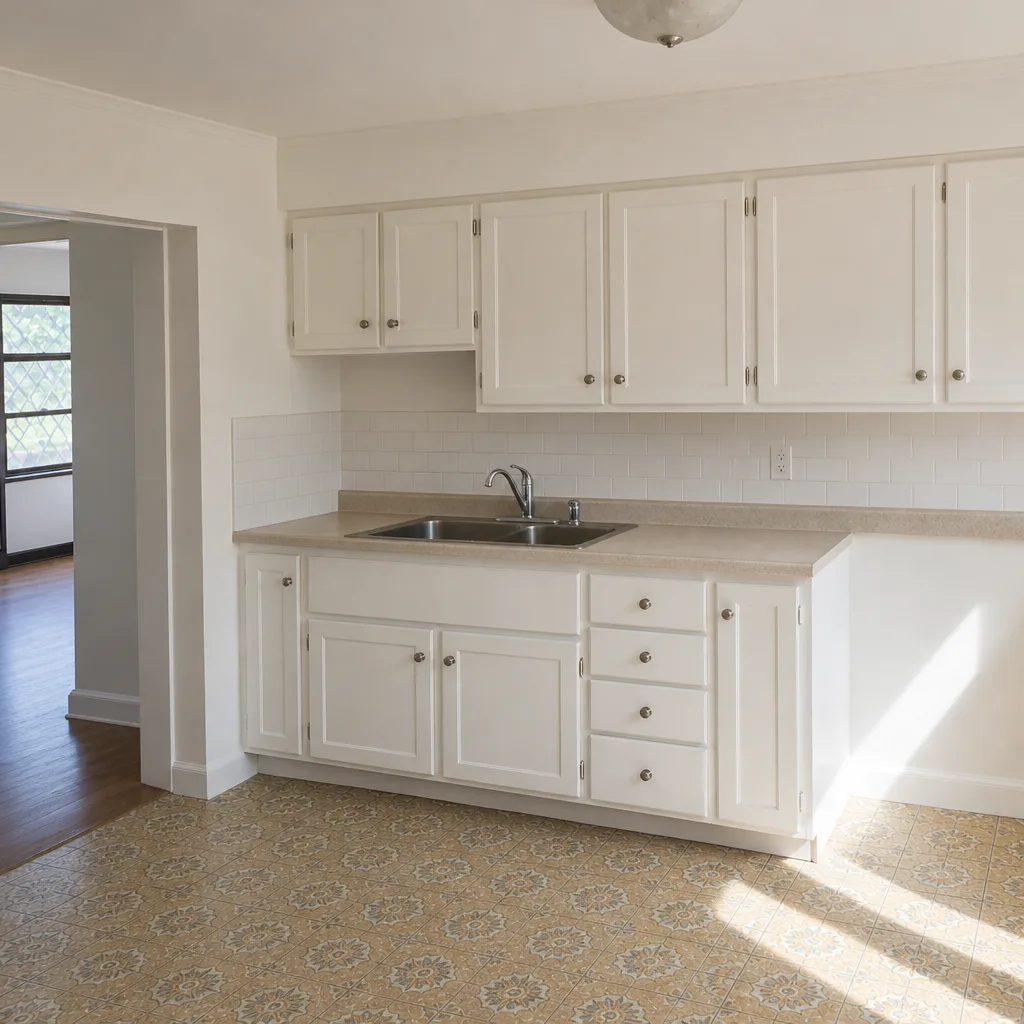 After
When to Call a Professional
Most maintenance on a fence is doable by a careful homeowner. Some isn’t. Call a professional when a post moves more than a quarter inch in any direction, when stucco on a CBS fence is cracking or showing efflorescence, or when a gate won’t latch and hinge adjustment doesn’t fix it. Also call when you’re facing a full reset of multiple posts or a section repair that risks damaging the adjacent panels, or when you’re within a few months of hurricane season and you’re unsure the structure is storm-ready.
Groundwork Construction Co. of Hialeah offers free estimates in Hialeah for fence repair, restoration, and full replacement. Work goes in under our 730-Day Done Right Promise, and calls are answered by a live person 24/7. Call (888) 418-7102 to schedule yours.
Frequently Asked Questions
Every 12 to 18 months, timed to the dry season (December through March). Hialeah’s UV intensity and humidity shorten the standard two-to-three-year interval. Call (888) 418-7102 for a free estimate if you’d rather have a team handle it than do it yourself in the humidity.
No, or at least not with any expectation the finish will hold. Summer humidity in Hialeah runs above 85% through most of the wet season, and finish products won’t cure properly on a moisture-heavy surface. Wait until the dry season opens in November. Call (888) 418-7102 if you need help planning the right window.
304 stainless steel is the baseline, and 316 stainless is the right choice within roughly a mile of the coast. Hot-dipped galvanized is the acceptable alternative for inland installations. Never use plain electroplated zinc or interior fasteners on an exterior fence in this climate. Call (888) 418-7102 if you want a hardware review on an existing fence.
If a post moves more than about a quarter inch when pushed in any direction, it needs repair or replacement. Other signs: rot or softening at the base, a significant dip in the soil beside the post, or a post that’s visibly leaning when the fence line is checked with a straight edge. The April inspection is the right time to catch these – call (888) 418-7102 to schedule one.
A quality vinyl fence typically lasts 15 to 20 years in Hialeah with quarterly wash-downs and annual hardware checks. Cheaper vinyl can discolor and craze under Hialeah’s UV load within 8 to 10 years. Installation quality and material grade matter as much as maintenance. Call (888) 418-7102 for a free estimate on a replacement that’s built for local conditions.
November through April is best. Lower humidity means better cure for stains and finishes on wood, and dry soil makes post-setting more reliable. You’ll also avoid wet-season storm delays and finish the job before June. Call (888) 418-7102 for a free estimate and we’ll map out a realistic install window for your property.
The Bottom Line
Fence maintenance in Hialeah is not a copy-paste of national advice. The 12-to-18-month wood finish cycle, the April storm inspection, the stainless hardware baseline, and the October soil check around each post are the four practices that decide whether a Hialeah fence lasts 15 years or 8. Time structural work to the dry season, keep wet-season work limited to cleaning and hardware inspection, and check fasteners and soil before you check the visible surface. A fence is only as strong as the parts you can’t see from the street. Run the calendar year by year and your fence will hold up through the storms and the sun.
Ready for a Fence That’s Built for Hialeah?
If your fence is due for repair, replacement, or a full installation, Groundwork Construction Co. of Hialeah can help. Our technicians have up to 12 years of experience, every project is backed by our 730-Day Done Right Promise, and every estimate is written line by line with upfront pricing and no surprises. Call (888) 418-7102 for a free estimate and design consult, and we’ll walk the fence line with you. You can also explore our full range of services at Groundwork Construction Co. of Hialeah home.
Written by the team at Groundwork Construction Co. of Hialeah.