Last updated November 18, 2026



Free written scope consultation - allowances, timeline, and change-order rules on paper before a single trade is scheduled
How Long Does Driveway & Pavers Take? Timelines and What to Expect
A contractor who quotes you a “3-day installation” isn’t lying. They’re just telling you about the part they control: the crew standing in your driveway with pavers on a pallet. What they may leave out is the two-week permit pull, the week-long material order lead time, and the 72-hour window after base compaction before any paver can go down. Add those up and the real answer to how long driveway pavers take is closer to 3 to 5 weeks, start to finish. This guide maps every phase of the clock, explains how Miami-Dade County permit timing and South Florida’s rainy season stretch schedules, and shows you the milestones that tell you a Hialeah project is actually on track.
Quick Answer
Driveway paver installation takes 3 to 5 weeks total from signed contract to final walkthrough. Actual on-site labor runs 3 to 7 days for a typical residential driveway, but permits, material lead times, base compaction cure, and joint sand setting add the rest. In Hialeah, expect closer to 4 to 6 weeks during rainy season when base work and sealer curing need weather buffers.
Styles & brands we work with
- Kitchen remodeling
- Bathroom remodeling
- Home additions & ADU
- Roofing
- Windows & doors
- Driveway & pavers
- Fence
Table of Contents
- The Full Timeline, Phase by Phase
- How Miami-Dade Permits Affect Your Start Date
- South Florida Weather and Scheduling Buffers
- Milestones That Prove a Project Is On Track
- Demolition and Base Work: The Slowest Stretch
- Paver Installation, Jointing, and Sealing
- Red Flags in Contractor Timelines
The Full Timeline, Phase by Phase
Most homeowners think of a driveway project as one event. It’s really seven phases, and only two of them involve loud equipment in your yard. Here’s the honest breakdown of what happens between the day you sign and the day you park on new pavers.
- Design and material selection (2 to 5 days). You pick paver style, color, pattern, and edging. Brands like Belgard publish current lead times, and certain colors run longer than others.
- Permit application (1 to 3 weeks). Miami-Dade County reviews right-of-way and drainage details. This is where most project start dates slip.
- Material ordering (3 to 10 days). Pavers ship from regional distribution. Unusual colors or custom blends take the longest.
- Demolition and haul-off (1 to 2 days). Existing concrete or asphalt comes out and gets hauled away.
- Base work and compaction (2 to 4 days). Excavation, grading, crushed stone, and compaction. This is the phase that decides whether the driveway lasts.
- Paver installation and jointing (2 to 4 days). Setting, cutting, edge restraint, and polymeric sand.
- Sealing and cure (2 to 3 days, weather dependent). Sealer needs dry conditions and time to cure before vehicle traffic.
Add them together and you see why a real number lands in the 3 to 5 week range. In Hialeah, drainage and grading details on the permit often draw one round of comments, which alone can add a week.
How Miami-Dade Permits Affect Your Start Date
Permit processing is the single biggest variable that homeowners don’t plan for. Miami-Dade County requires a permit for new driveway construction and for any change to the right-of-way, drainage, or connection to the swale. Review timelines change month to month depending on county workload, but the practical range for a residential driveway is one to three weeks, and longer if the submittal is incomplete.
In our experience across Hialeah, the projects that start on the promised day are the ones where the permit package went in before material was ordered. Here’s what a complete package usually includes:
- A site plan showing the driveway footprint, elevation, and slope away from the structure
- Drainage details showing how water moves off the property and where it discharges
- Base material specification and compaction requirements
- Right-of-way or swale impact details when the work touches county property
- Contractor licensing and insurance documentation on file with the county
What you can do on your end: sign the design approval as soon as you’re sure, have your property survey or plat ready if you have one, and clear vehicles and stored items from the work area on the day demolition is scheduled. Those three small moves are the most common reason Hialeah projects lose a few days. If the county asks for clarification, respond the same day. Every day the file sits in a queue is a day added to your project clock.
South Florida Weather and Scheduling Buffers
South Florida schedules need buffer days built in, not tacked on as an excuse later. Two phases are genuinely weather-sensitive: base compaction and sealer curing.
Saturated base is a real problem. If crushed stone and soil are holding water, compaction can’t reach the density a paver driveway needs, and a crew that lays pavers anyway is setting you up for settling and shifting within a season. Legitimate installers will pause and wait for the base to dry. That might cost two or three days in June. It saves you a rebuild.
Sealer needs dry weather through application and cure. In Hialeah’s wet season, a sudden afternoon storm can ruin a freshly sealed surface, so installers watch radar and often seal early morning. Some crews schedule the seal coat as a separate short visit after installation rather than on the last day of the main job.
Rainy season runs roughly May through October. If your contract is signed in April, ask whether the schedule accounts for weather delays. A builder who says “we never lose days to rain” in Hialeah is either new or blowing smoke.
Milestones That Prove a Project Is On Track
You shouldn’t have to hover over a crew to know whether things are moving. Each phase has a visible marker. If you see these on schedule, the job is fine. If two or more are missing, ask questions.
- Week 1: Signed contract in hand, permit application submitted and a county application number you can reference.
- Week 2: Permit approved, material ordered with a confirmed delivery date from the supplier.
- Week 3: Demolition complete, existing surface hauled off, excavation graded to the new footprint.
- Week 4: Base stone in place and compacted, edge restraint installed, pavers delivered.
- Week 5: Paver installation done, joint sand swept in, sealer applied, site cleaned, final walkthrough scheduled.
Written updates matter as much as physical progress. Ask for a short weekly note: what was done, what’s next, any delays. A contractor who can’t put that in an email is a contractor who is managing your project from memory.
Demolition and Base Work: The Slowest Stretch
The base is where most of the money and most of the risk live. A paver surface is only as good as the structure underneath, and that structure takes time to build correctly.
Demolition of an existing concrete driveway takes one to two days for a typical Hialeah home, including haul-off and disposal. Then excavation begins: removing soil, setting grade, and establishing slope so water runs away from the house and toward the street or a drainage feature. On properties where older driveways were poured nearly flat, correcting that slope is extra work and worth every dollar.
Next comes the base layer: usually a compacted aggregate over a prepared subgrade, graded and compacted in lifts. Each lift is compacted individually rather than dumped and rolled once. This is the phase where a crew that rushes produces a driveway that settles within two years, and where a careful crew takes a few extra days and gives you a surface that stays flat.
You can verify progress by looking at the base before pavers arrive. It should be uniform, level in the right places, sloped in others, and visibly compacted, with edge restraint already set. If pavers are going down on loose or wet stone, stop the work and ask for the compaction schedule.
Paver Installation, Jointing, and Sealing
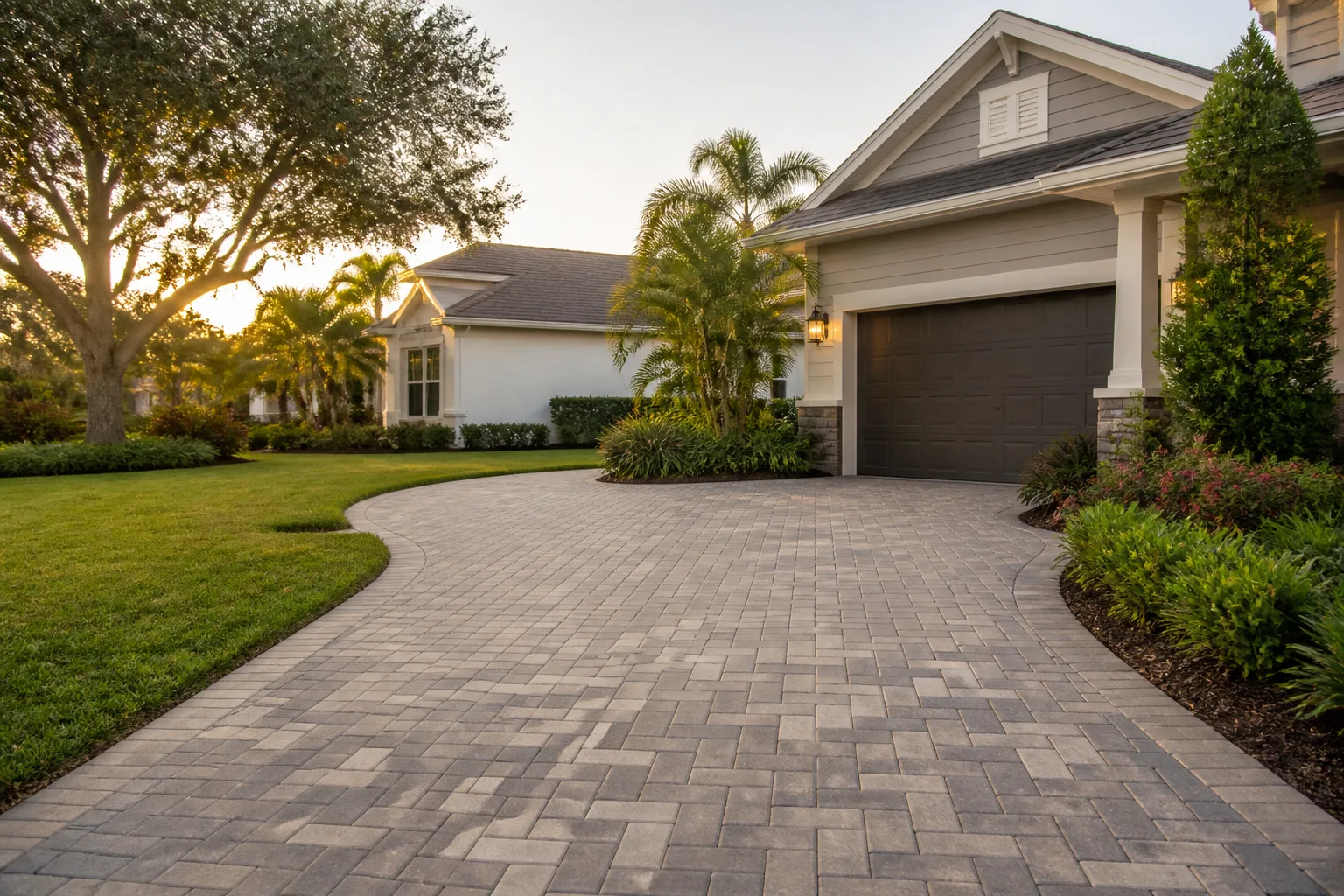
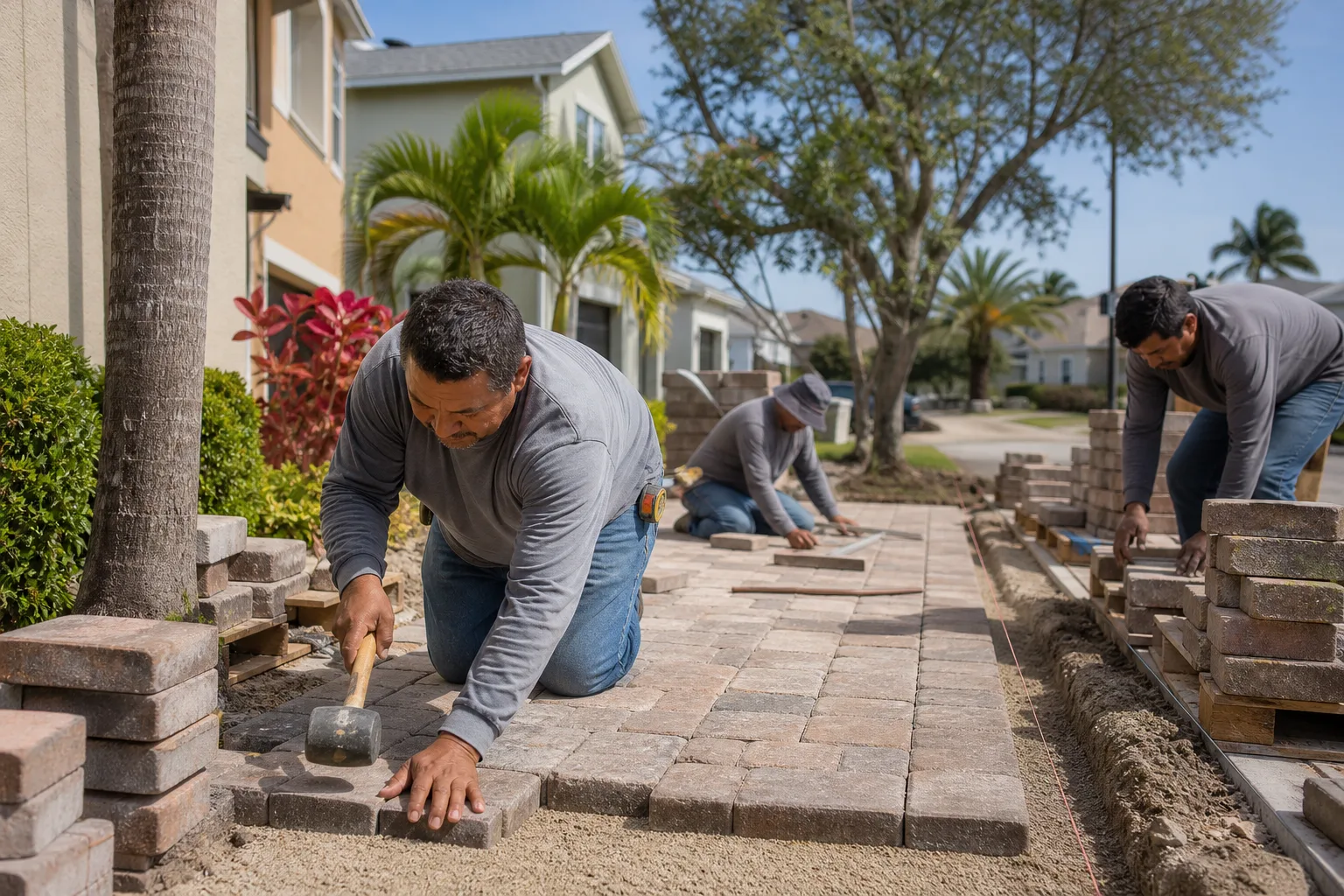
Installation is the part everyone pictures: the crew laying pattern in the driveway. For a standard residential driveway in Hialeah, setting pavers takes two to four days, depending on square footage, pattern complexity, and how many cuts are needed around edges and curves.
After the pavers are set, three finishing steps follow:
- Edge restraint. A concrete or plastic edge locks the perimeter so pavers can’t spread outward.
- Joint sand. Polymeric sand is swept into the joints and activated, locking the surface together and blocking weeds and water.
- Sealing. A penetrating or film-forming sealer protects color and stabilizes joints, and needs dry weather through cure.
Sealing is optional in some climates but worth serious consideration in South Florida, where UV exposure and heavy rain are hard on pavers. If you choose it, plan on the driveway being out of service for a day or two after sealer goes down. That timing belongs in the original schedule, not in a surprise phone call the day before.
Longer term, pavers pair well with other exterior work. If you’re also planning a fence installation in Hialeah, sequencing the fence after the driveway keeps heavy equipment off new pavers. Homeowners adding a garage conversion or detached unit often plan driveway work alongside a home addition or ADU in Hialeah so delivery routes and laydown areas are coordinated instead of conflicting. You can see how we sequence larger exterior projects on the Groundwork Construction Co. of Hialeah home page.
Red Flags in Contractor Timelines
A bad timeline is often the first warning sign of a bad project. It shows up before demolition starts. Here’s what to watch for when you’re comparing bids.
- No mention of permits. A quote that doesn’t state who pulls the permit and when is either incomplete or avoiding county scrutiny. In Hialeah, driveway permits matter.
- No mention of cure time. Sealer needs dry weather and time. A crew that schedules final payment the day sealer goes down is rushing.
- “We can start tomorrow.” That usually means the material is already sitting in someone’s yard and the permit isn’t pulled yet. Fast starts often mean slow finishes or unpermitted work.
- No material lead time discussed. Paver colors run out of stock. A pro knows which lines are in distribution and which will take weeks.
- No weather buffer. In South Florida, a schedule without rain contingency is fantasy.
- Vague start dates. “Sometime in the next few weeks” isn’t a schedule. A written calendar with phases is.
Compare timelines side by side, and the most credible bid is usually the one that sounds the slowest. That’s the one that has already planned for permits, material, and rain.
Common Mistakes to Avoid
- Scheduling around a single date you can’t move. Weddings, graduations, and open houses at home rarely survive a Hialeah rainy week. Build two extra weeks into any event you’re hosting.
- Skipping the drainage conversation. Miami-Dade flat lots depend on grading. If your contract doesn’t talk about water direction, ask why.
- Choosing color before checking lead time. Certain Belgard and Cover blends ship faster than others. Choose the pattern first and the exact color second, with the supplier’s confirmed availability in writing.
- Sealing too early. Polymeric sand and sealers need time and dry conditions. Rushing the seal coat traps moisture and can cloud the finish.
- Parking on new pavers too soon. Follow the installer’s instructions exactly. Driving on fresh sealer is a costly mistake.
- Ignoring the right-of-way. Some Hialeah properties back onto swales or county property. Work that intrudes on the right-of-way without a permit can be halted mid-project.
- Hiring on price alone. The cheapest quote often cuts base depth, compaction, or edge restraint. That’s where a driveway fails in two years, not ten.
See the difference
 Before
 After
 Before
 After
 Before
 After
When to Call a Professional
Call a professional if any of these describe your project: the existing driveway needs full removal, the property has drainage or grading issues, the work touches county right-of-way, or you’re planning pavers around an ADU, addition, or new fence. Those are the situations where an unpermitted shortcut gets expensive. Pavers are heavy, and base mistakes hide for a season before they show up as ruts and shifting.
Groundwork Construction Co. of Hialeah offers free estimates in Hialeah. Call (888) 418-7102 and a live person answers, day or night. Every estimate includes a written phase-by-phase schedule, upfront pricing, and coverage under our 730-Day Done Right Promise. Our technicians have up to 12 years of experience, and they arrive background-checked and in uniform. For a deeper look at scope and process, see our Driveway & Pavers in Hialeah service page.
Frequently Asked Questions
Plan on 3 to 5 weeks from signed contract to final walkthrough in Hialeah, with 3 to 7 of those days involving a crew on site. The rest is permits, material lead time, base compaction cure, and sealer cure. During rainy season, add one to two weeks. Call (888) 418-7102 for a written schedule specific to your property.
No. A single-day driveway install would require skipping compaction, edge restraint, joint sand activation, or cure, and that produces a surface that fails within a season or two. Even small driveways need multiple days because base work and finishing each need their own time. Anyone quoting a one-day job is cutting corners.
Plan for one to three weeks for a residential driveway permit in Miami-Dade County, longer if the site plan or drainage details come back with county comments. The permit clock starts when the application is filed, so filing before material is ordered keeps the whole schedule tight. Call (888) 418-7102 to talk through the permit process for your street.
Yes, with buffer days built in. Base compaction and sealer curing are the two phases that genuinely need dry weather, and a good crew pauses rather than rushing. Hialeah projects scheduled between May and October typically run one to two weeks longer than fall and winter installs. That’s a scheduling fact, not a warning to skip the season.
Usually within 24 to 48 hours after installation if you skip sealing, and within 24 to 48 hours after sealer cures if you choose it. The installer’s written instructions control, and the weather affects timing. Follow those notes exactly rather than estimating on your own. Call (888) 418-7102 if you’re ever uncertain.
Not under our terms. Groundwork Construction Co. of Hialeah uses upfront pricing, and the number you see is the number you pay. Any legitimate scope change requires a written change order agreed by both sides before work continues. If there’s no signed change order, there’s no price change. Estimates are always free.
The Bottom Line
The honest answer to “how long do driveway pavers take” is longer than the install-only number you’ll see in most ads, and shorter than the panic timelines you’ll hear from neighbors. Three to five weeks covers the whole project in Hialeah. Four to six in rainy season. Crew days are a fraction of that, and the phases that matter most, base work and cure, are the ones that get rushed by the wrong contractor. Ask for a written phase schedule, confirm permits, verify material lead times, and you’ll know exactly what to expect. Groundwork Construction Co. of Hialeah is here when you’re ready to plan.
Ready to get a real number and a real schedule? Call (888) 418-7102 for a free estimate. We answer 24/7, we back every install with the 730-Day Done Right Promise, and we put our pricing and timeline in writing before work begins.
Written by the team at Groundwork Construction Co. of Hialeah.