Last updated November 18, 2026

Free written scope consultation - allowances, timeline, and change-order rules on paper before a single trade is scheduled
The Complete Fence Installation Guide for Hialeah Homeowners
Miami-Dade County has some of the strictest fence and wind load requirements in the country. A fence that passed inspection in Orlando or Tampa can get red-tagged here after installation. That gap catches Hialeah homeowners off guard every year: they hire a contractor who builds to a national code, the inspector shows up, and the fence comes down. Hialeah sits inside the High Velocity Hurricane Zone, and residential fencing has to answer to that reality. This guide walks you through what permits you need, which materials hold up against salt air and UV, how to read a survey before anyone digs, and how deep posts must go to meet our wind criteria. By the end you’ll know how to price a fence in Hialeah and how to keep it standing.
Quick Answer
A residential fence in Hialeah is permitted through Miami-Dade County and generally must stay at or under 6 feet in height unless you have an approved engineering drawing for a taller wind-rated structure. Installation requires a property survey so the fence sits inside your boundary lines and clear of easements, and posts must be set at a depth and footing size that meets the county’s wind speed design criteria, not the lighter national standard. Expect the full process, from survey to passed inspection, to run several weeks depending on permit review time. Fence Installation in Hialeah with a contractor who already knows the local requirements keeps this from becoming a rebuild.
Styles & brands we work with
- Kitchen remodeling
- Bathroom remodeling
- Home additions & ADU
- Roofing
- Windows & doors
- Driveway & pavers
- Fence
Table of Contents
- Why Fence Installation in Hialeah Is Different From Anywhere Else
- Miami-Dade Permitting: Height Limits, Setbacks, and Engineering Drawings
- Choosing a Material for South Florida: Aluminum, Vinyl, Wood, and CBS
- The HOA Plus City Code Overlap That Trips Up Hialeah Homeowners
- Post Depth and Concrete Footings for Miami-Dade Wind Loads
- How to Read a Property Survey Before You Install
- What Fence Installation Costs in Hialeah
- The Step-by-Step Installation Process
Why Fence Installation in Hialeah Is Different From Anywhere Else
Most fence guides on the internet were written for a generic American suburb. They assume a mild climate, a light wind zone, and a code book that barely mentions fences. Hialeah is none of those things. We sit in the High Velocity Hurricane Zone, which means the wind forces a fence has to survive are in a different category from what a builder in the Midwest designs for. Salt air from Biscayne Bay and the Atlantic chews through low-grade metal fasteners and untreated wood. Year-round UV exposure in South Florida fades cheap vinyl and makes it brittle faster than in cooler states.
Add the permitting layer on top. Miami-Dade County reviews fence permits with an eye toward wind, water, and property lines. Fences near drainage easements along the canal corridors that run through Hialeah get extra scrutiny. Homeowners in Hialeah who pull a permit for a “simple” 6-foot fence sometimes find themselves waiting on an engineering review they never expected.
Here’s what that means in practical terms:
- Wind: Your fence is a sail. Every panel’s surface area catches wind, and the posts and footings have to resist it. A post designed for a 90 mph plant zone is undersized here.
- Corrosion: Galvanized hardware and stainless fasteners last; cheap zinc-plated screws rust through in a few seasons near the coast.
- UV: Standard vinyl can chalk and crack. UV-stabilized vinyl or powder-coated aluminum handles the sun better over the long haul.
- Code: County reviews are specific to this climate. A fence that’s fine on paper in another county can fail inspection in Hialeah.
If you’ve already seen what happens when a contractor skips the local details, you know why this stuff matters. Our technicians have up to 12 years of experience in this market, and the biggest lesson we’ve learned is that the groundwork decides whether a fence lasts 15 years or gets rebuilt in 4.
Miami-Dade Permitting: Height Limits, Setbacks, and Engineering Drawings
Fence permitting in Hialeah is handled through Miami-Dade County’s permitting system, and the requirements are more specific than most homeowners expect. A straightforward residential fence under 6 feet in most zoning districts can often be permitted with a standard application, a survey, and a site plan. Go above that height, or install certain styles that catch more wind, and the county will typically require engineering.
What you generally need before you apply
- A current property survey. No exceptions. The county and your installer both need it to confirm the fence stays inside your lines and clear of easements.
- A site plan showing the fence line. Markings on the survey showing exactly where the fence goes, including gates and any return walls.
- Height confirmation. Confirm your proposed fence height is within the county limit for your district and any overlay zone that applies to your parcel.
- Engineering drawings if you’re above the standard height threshold, building a masonry or CBS wall, or the county asks for wind load calculations on your specific design.
- HOA approval letter if your community has an association (more on that overlap below).
Height limits and setbacks
Residential front-yard fences in most of Hialeah top out at 4 feet in several districts, while side and rear yard fences can typically reach 6 feet. Corner lots often get stricter treatment on the street-side yard for sightline reasons, so a fence that would pass on an interior lot may hit a wall at the corner. Setbacks are set by zoning district and by easements on your specific parcel: a drainage or utility easement running along your rear line may require you to pull the fence forward a few feet, and building over the easement without approval is one of the fastest ways to get a removal order.
Our advice: before you buy a single post, take your survey to the county or to a contractor who’s pulled fence permits in Hialeah before and can read the district rules against your parcel. That one step has saved more than a few homeowners from buying materials for a fence that couldn’t be built where they wanted it.
Choosing a Material for South Florida: Aluminum, Vinyl, Wood, and CBS
Material choice is where a lot of fence budget either gets locked in properly or gets wasted. In a coastal hurricane zone the tradeoffs between materials look different from a dry, inland market. Here’s how the four main options stack up for Hialeah conditions.
Powder-coated aluminum
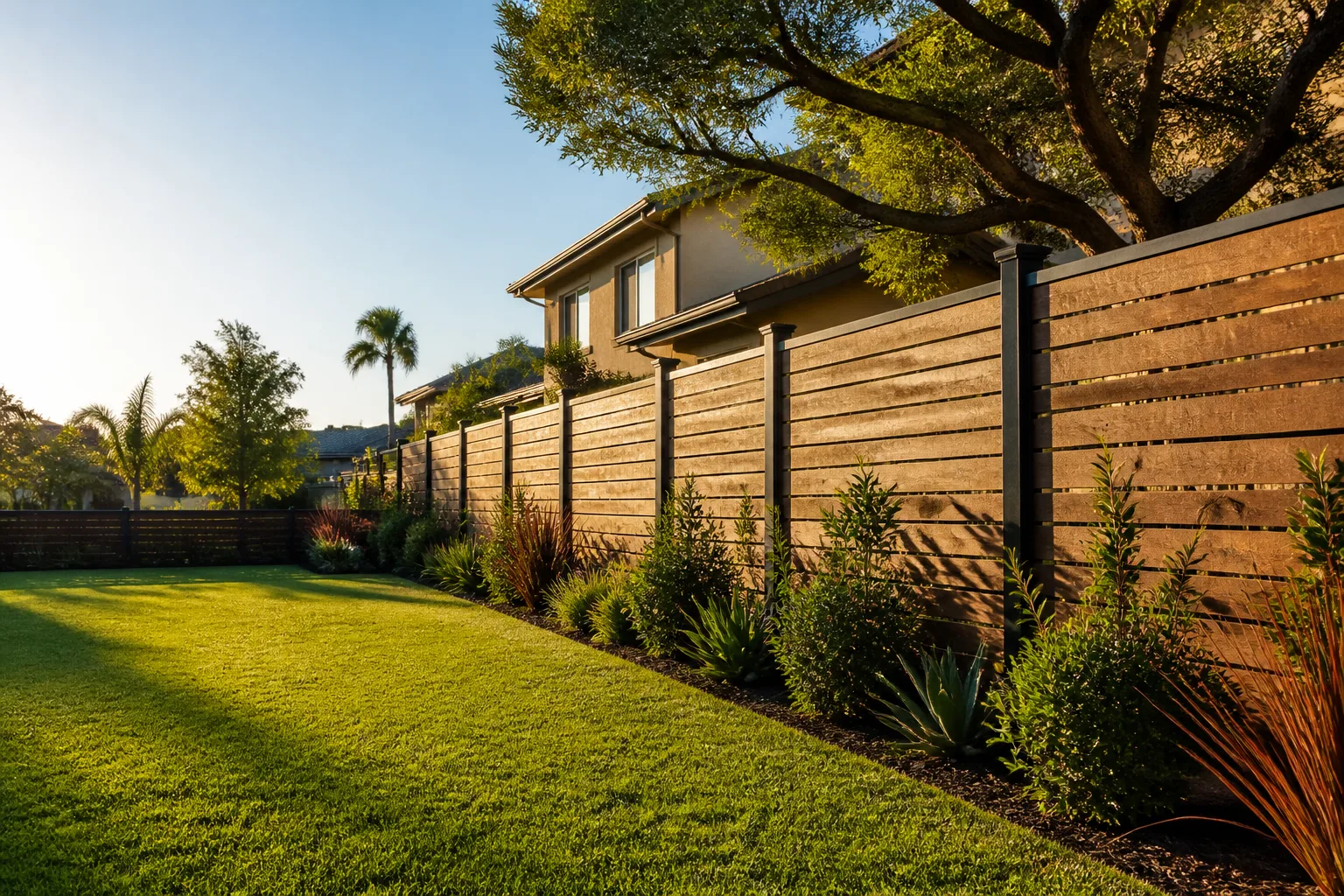
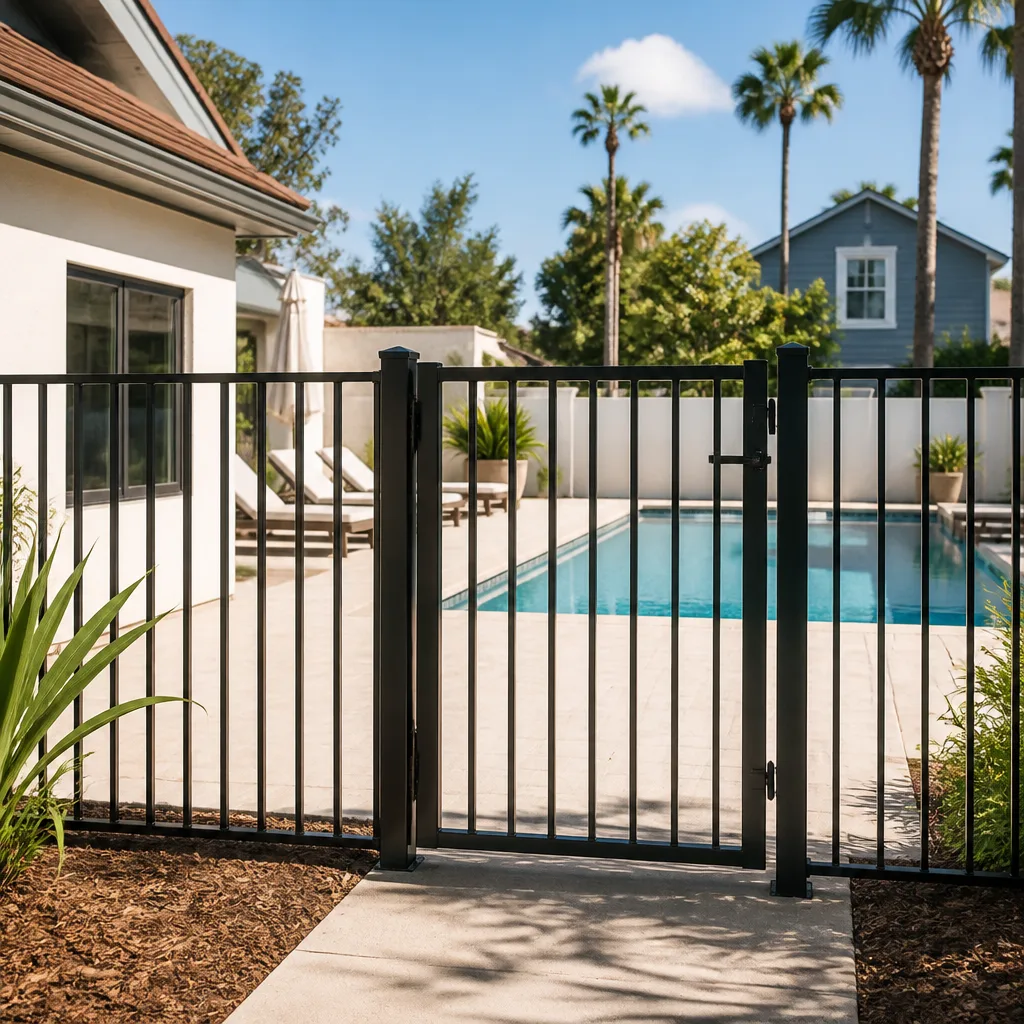
The strongest all-around choice for most Hialeah properties. It doesn’t rust, doesn’t rot, doesn’t attract termites, and a good powder coat holds its color under UV. Aluminum panels are lighter than wood or concrete, which helps wind performance, and they’re typically engineerable for county review. Higher upfront cost than wood or basic vinyl; you pay for it in longevity.
Vinyl
Low-maintenance and rot-proof, with a clean look that suits a lot of Hialeah neighborhoods. The catch is UV: cheaper vinyl chalks and can go brittle, and heat buildup can warp panels over time. UV-stabilized vinyl with a thicker wall profile holds up much better. Wind performance depends entirely on post spacing and reinforcement. A standard vinyl fence installed with undersized posts is the wrong answer for a hurricane-zone property.
Wood
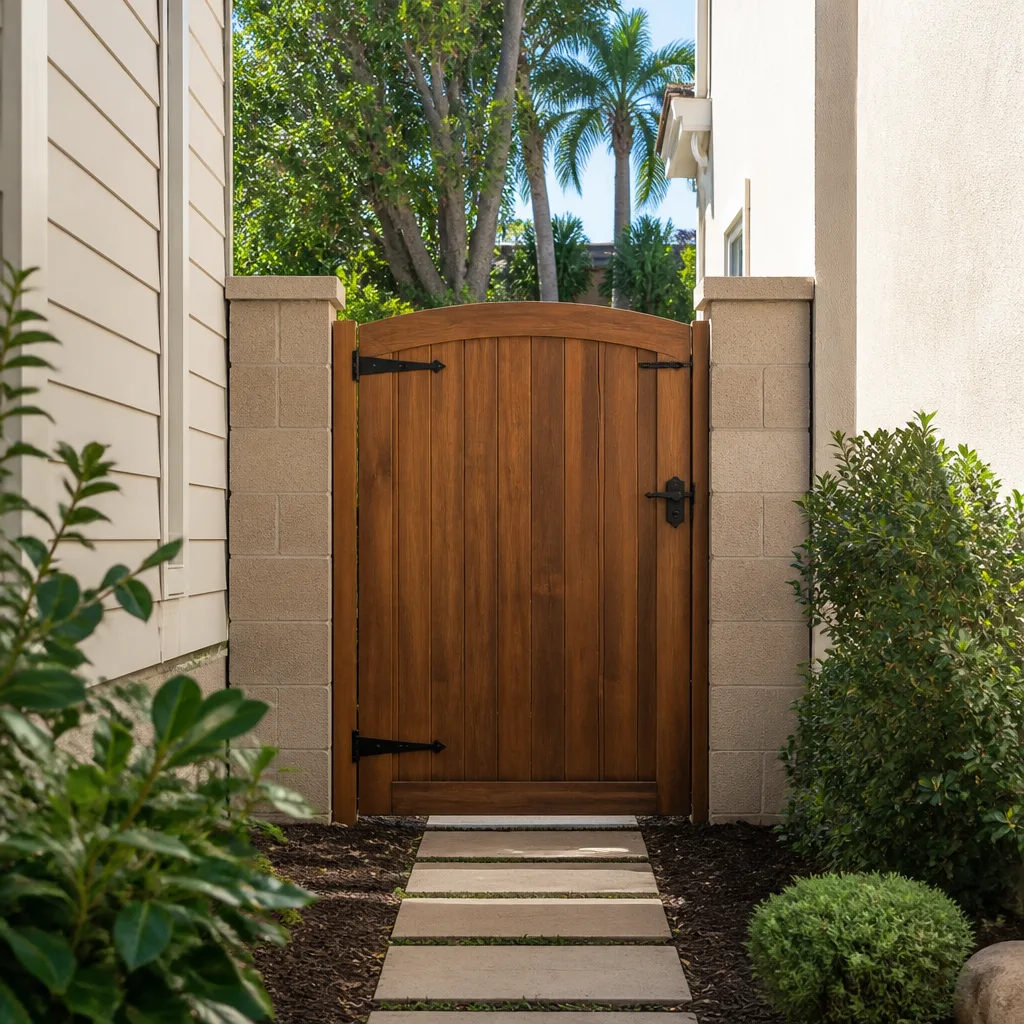
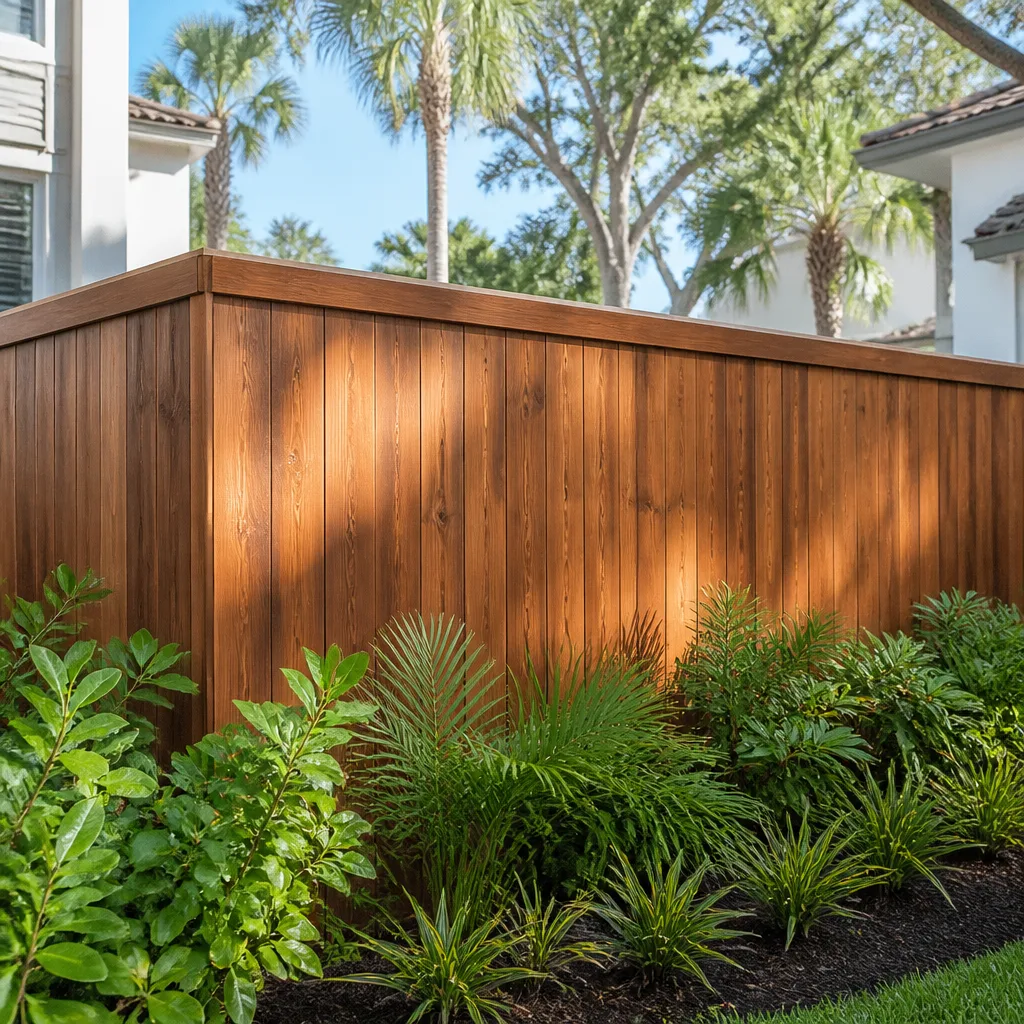
The classic look, and still the least expensive material to install. It’s also the highest maintenance. South Florida humidity and termites eat through untreated softwood fast, so pressure-treated pine or cedar with the right fasteners is the floor. Even then, plan on inspecting and resealing regularly. Wood performs well as a privacy fence but needs more attention than any other option on this list.
CBS and masonry
Concrete block stucco walls are heavy, permanent, and they need engineering. Above a certain height, Miami-Dade will require a design by a licensed engineer with wind load calculations for the wall, its reinforcing, and its foundation. For a lot of Hialeah homeowners concerned about privacy and security, a CBS wall is the answer to a loud street or an active backyard. Just budget for the engineering and permitting time, which runs longer than a post-and-panel fence. If you’re coordinating a large outdoor project, our Home Additions & ADU in Hialeah work often pairs a fence line plan with larger site changes so everything gets permitted in the right order.
Whichever material you pick, the fasteners matter as much as the panel. Hot-dipped galvanized or stainless every time. A $5 box of zinc-plated screws will rust the fence from the inside out before any panel fails.
The HOA Plus City Code Overlap That Trips Up Hialeah Homeowners
Here’s the headache that catches more Hialeah homeowners than any single permit rule: your city and county code can approve a fence your HOA will still reject. The county has its height and setback rules. Your HOA has its own design guidelines that sit on top. Where the two overlap, you have to satisfy both, and the stricter of the two wins.
Common places where they conflict:
- Height: The county may allow 6 feet in the rear yard; your HOA might cap fences at 4 feet for a consistent community look.
- Material and color: The county may not care whether you install wood or aluminum; your HOA usually does, and often specifies exact colors.
- Style: Open pickets versus solid panels, orientation (finished side out is typical, but not always), and gate design are all elements HOAs regulate.
- Placement: HOA architectural rules sometimes require extra setback from the sidewalk or prohibit fences in certain front-yard situations.
What to verify before you apply for a permit
- Get your HOA’s current architectural guidelines in writing. Not a neighbor’s memory of them; the actual document.
- Submit your HOA application with drawings first. HOA review can take weeks, and you don’t want to burn time on permit review only to hit an HOA rejection after.
- Confirm the HOA-approved design fits within county height and setback limits for your district. If it doesn’t, redesign now, not after demolition.
- Get the HOA approval letter and attach it to your county permit application.
We’ve watched homeowners order material for a fence plan their HOA then rejected, and the redesign cost them both time and money. Verify the HOA side before you order a thing. If you aren’t sure how the HOA rules and county code interact on your parcel, ask before the posts go in.
Post Depth and Concrete Footings for Miami-Dade Wind Loads
This is the section most fence guides skip, and it’s the one that matters most in Hialeah. The single biggest cause of fence failures we see after a storm isn’t a blown-out panel; it’s a post that pulled out of the ground because it was set too shallow, in the wrong soil, or with too little concrete. Miami-Dade’s wind speed design criteria are stricter than the national standards, and post depth and footing size here have to answer to that.
The county’s requirements vary by fence height, material, and wind exposure, but the general principles hold:
- Depth scales with height. A 6-foot fence needs deeper posts than a 4-foot fence. A post-and-panel fence with solid panels catching full wind is a different engineering problem than a light aluminum picket.
- Concrete volume is part of the design, not an afterthought. Posts set in soil without concrete, or with a thin splash of it, are the ones that lean after a year or two. Footing size relates to the post load, and the load is dictated by the wind zone.
- Soil matters. Loose fill and higher water tables in parts of Hialeah behave differently than compacted native soil, and footings sometimes need to be sized larger to compensate.
- Spacing matters as much as depth. Wider post spacing means each post carries more load. Tighter spacing increases post count but improves wind resistance.
For a masonry or CBS wall, the footing design is dictated by a licensed engineer for your specific windspeed requirement. That’s not a corner you cut. For a post-and-panel fence, if your contractor can’t tell you what depth they’re setting posts at, what footing size they’re using, and how those numbers were arrived at for your height and material, that’s a red flag.
The right footings and fasteners plus a premium material grade is what lets us stand behind work in writing. It’s what “Built to last, backed in writing” means in a hurricane zone.
How to Read a Property Survey Before You Install
A lot of the ugliest fence stories in Hialeah start with a survey that nobody read carefully. Fencing onto a neighbor’s property, or onto an easement, gets you exactly one outcome when it’s discovered: the fence comes down. Sometimes by court order, sometimes by the county, always at your expense.
Your property survey is the document that prevents all of that. Here’s what to look for on it before anyone marks a line:
1. Property lines vs. fence lines
The property line is the boundary of record. Your fence line should sit on your side of it, typically just inside the line. A fence built even a few inches over is technically an encroachment, and while a friendly neighbor won’t care, a property sale, a new neighbor, or a dispute turns it into a problem fast.
2. Easements
Look for dashes or shading marking utility, drainage, or access easements. Fences built over an easement can be legally removed by the easement holder, and in Hialeah that includes the drainage canals and utility corridors that run through parts of the city. Even without prompt removal, you may be required to take the fence out any time work in the easement is needed.
3. Setback lines and building envelopes
The survey shows required setbacks. Front and street-side yard setbacks for fences are where the county’s rules show up on paper. Confirm your proposed fence line is inside your buildable area, not overlapping the required setback zone.
4. Existing structures and utilities
Gas lines, water service, and electrical conduits are usually marked. You need to know what’s underground before anyone digs postholes. Striking a line during installation is a hard stop and an expensive repair.
5. Corners and dimensions
Check the lot dimensions against the fence plan. A fence that’s short by a few feet on the last run because the plan didn’t account for a corner angle is a fix you shouldn’t have to pay for.
No current survey? Get one before you do any fence work. It costs money and takes time, but it’s the cheapest insurance against a forced removal or a neighbor dispute you can buy.
What Fence Installation Costs in Hialeah
Fence pricing in Hialeah depends on material, height, total linear footage, and whether you’re dealing with a CBS wall versus a post-and-panel system. The ranges below are for planning and vary by site conditions, so treat them as a starting point, not a quote.
| Material | Typical cost per linear foot (installed) |
|---|---|
| Pressure-treated wood, 6 ft | $35 – $60 |
| Vinyl, 6 ft, UV-stabilized | $45 – $75 |
| Powder-coated aluminum, 6 ft | $55 – $95 |
| CBS block with stucco | $90 – $180+ |
| Gate (standard single, installed) | $300 – $900 |
| Permit and survey (varies by parcel) | Separate line items |
A typical Hialeah quarter-acre lot with 150 to 200 linear feet of privacy fencing lands somewhere around $7,500 to $15,000 installed, plus permitting and survey costs. CBS walls run significantly higher once engineering and inspection are factored in. Get it quoted as line items so you can see what the foundation and fixture markup really is.
We do no-hassle upfront pricing so the number you see is the number you pay. Combined with 0% financing for 18 months and $1,000 off projects over $10,000, the total on a full perimeter fence becomes easier to plan around. Call us for a written quote on your specific footage.
The Step-by-Step Installation Process
Here’s the sequence a properly permitted Hialeah fence installation follows, and knowing it keeps you from getting caught off guard by a step you didn’t budget for.
- Survey review and site plan. Confirm property lines, easements, and setbacks. This happens before anything else.
- HOA approval. Submit drawings and get the approval letter if your community has an association. Verify the approved design against county limits.
- Permit application with Miami-Dade. Attach the survey, site plan, and HOA approval. Engineering drawings get added if the design requires them.
- Utility locate. Every underground line gets marked before any digging. Free service, and it’s mandatory.
- Line marking and post placement. Posts are laid out to the approved plan and spacing. Concrete footings are set to the depth and volume dictated by the design.
- Panel and gate installation. Panels go up, gates get hung and adjusted. Hardware is stainless or hot-dipped galvanized.
- Inspection. The county inspects the finished installation against the approved plan. This is where a fence built to the wrong standard fails.
- Final walkthrough. We walk the finished fence with you: gate swing, hardware, any soil restoration. Then the written warranty kicks in.
If you’re also considering hardscape to tie into your new fence line, our Driveway & Pavers in Hialeah work is often planned alongside fencing so the trenching and site grading happen once, not twice.
Common Mistakes to Avoid
- Building to the national code instead of the county’s. Post depth and footing size that pass in a lighter wind zone fail Miami-Dade’s criteria. Confirm the design against local requirements before installation, not after the inspector shows up.
- Skipping the HOA approval until after you’ve ordered materials. The HOA can reject a fence that the county has already approved. Get the HOA letter first, then order materials.
- Fencing onto a neighbor’s property or over an easement. This happens most often when the survey was never actually read. The outcome is a forced removal at your expense.
- Cutting corners on concrete footings. Posts set in soil without adequate concrete lean and eventually pull out in high wind. This is the top cause of fence failure after a South Florida storm.
- Using cheap zinc-plated fasteners. They rust through fast in coastal air and the fence fails from the inside out. Use stainless or hot-dipped galvanized, no exceptions.
- Installing the cheapest vinyl available. Low-grade vinyl chalks and cracks under South Florida UV within a few years. UV-stabilized product in a thicker wall profile costs more but holds up.
- Leaving survey, permit, and finishing out of the budget. These are real line items. A quote that leaves them out isn’t the price of your fence; it’s the price of part of it.
See the difference
 Before
 After
 Before
 After
 Before
 After
When to Call a Professional
Some fence work is genuinely a solo weekend job. A low decorative border on flat, clear ground is one example. Installing a permitted residential fence in Hialeah that has to pass Miami-Dade inspection is not. The moment your project involves an engineering review, wind-rated post depth and footing design, easement conflicts, or HOA design approval, the risk of getting it wrong carries a real dollar cost. Add a CBS wall, a gate, or a fence line that needs to integrate with larger site work, and the complexity climbs fast. This is where a licensed contractor pays for themselves: the county review, the exact footing spec, and a written warranty behind the finished install. Groundwork Construction Co. of Hialeah offers free estimates in Hialeah and answers every call with a live person, 24/7. Call (888) 418-7102 to schedule yours, and we’ll walk your property, read the survey, and put the whole scope in writing before anyone digs.
Frequently Asked Questions
Most residential zoning districts in Hialeah allow side and rear fences up to 6 feet and front-yard fences up to 4 feet without engineering drawings, though the exact limit varies by district and overlay zone. Anything taller, or any CBS block wall above a certain height, typically requires an engineer’s design with wind load calculations for Miami-Dade’s High Velocity Hurricane Zone. Confirm your specific parcel’s limits before you order materials. Call (888) 418-7102 for a free estimate and we’ll verify the limits on your district.
Yes. Residential fences in Hialeah are permitted through Miami-Dade County and generally require a property survey, a site plan showing the fence line, and confirmation of height and setback compliance. HOA approval is also required if your community has an association. Installation without a permit can result in a notice to remove the fence, along with the full cost of the removal and a reinstall with permits. Call us before you buy a single post.
Powder-coated aluminum is generally the best all-around choice for Hialeah properties: it doesn’t rust or rot, resists UV fading, and is engineerable for county wind review. UV-stabilized vinyl with a thicker wall profile is a solid lower-maintenance option when installed with the right post spacing. Wood is the least expensive but requires the most maintenance in South Florida’s humidity and termite pressure. Regardless of material, post depth and footing design determine how well the fence handles wind, so confirm those specs before work starts.
Post depth in Hialeah depends on fence height, material, and the windspeed requirement for your parcel, and there’s no single universal number. Miami-Dade’s wind criteria are stricter than the national standard, so a post depth that works in another state can be undersized here. A 6-foot solid-panel fence needs deeper posts and larger footings than a 4-foot picket fence. Ask your contractor to specify the exact depth and footing size for your design, and how those numbers were derived. If they can’t, that’s a sign to walk.
Yes. HOAs set their own design guidelines on top of county code, and they can reject a fence for material, color, height, or style even after county approval. Where the two overlap, the stricter rule wins. Get your HOA’s guidelines in writing and submit your application with drawings before you apply for the county permit, so an HOA rejection doesn’t cost you a permit fee and weeks of review time. We see this trip up Hialeah homeowners every year.
Fences built over drainage, utility, or access easements can be legally removed by the easement holder, and you may be required to take the fence out whenever work in the easement is needed. In Hialeah, canal and utility corridors run through several neighborhoods, so this is a real risk, not a hypothetical. The fix is to pull the fence line forward of the easement before installation. Read your property survey carefully before marking a line, and call (888) 418-7102 if you want the survey reviewed before you commit.
The Bottom Line
Fence installation in Hialeah isn’t a generic weekend project. It’s a permitting, engineering, and material-selection problem specific to a hurricane zone, and getting it wrong costs real money. Verify your district’s height and setback limits, secure HOA approval before you apply for the county permit, read your survey for easements before marking a line, and confirm post depth and footing size against Miami-Dade’s wind criteria rather than the national standard. Match the material to the climate: powder-coated aluminum or UV-stabilized vinyl over cheap shortcuts. Get a written line-item quote that includes survey and permit costs. Groundwork Construction Co. of Hialeah backs every fence installation with the 730-Day Done Right Promise, so if it’s not done right, we make it right. Our technicians have up to 12 years of experience in this market and arrive background-checked and in uniform, and a live person answers your call 24/7. Call (888) 418-7102 to schedule your free estimate and get your project priced in writing.
Written by the team at Groundwork Construction Co. of Hialeah.