Last updated November 18, 2026



Free written scope consultation - allowances, timeline, and change-order rules on paper before a single trade is scheduled
Construction Warning Signs: A Hialeah Homeowner’s Reference Guide
The crack running diagonally from the corner of your window frame is not normal settling. In South Florida’s expansive soil conditions, it’s one of the clearest early indicators of foundation movement, and most homeowners patch it with caulk and move on. That choice costs far more later. We’ve walked through hundreds of Hialeah homes where a $200 repair became a $20,000 structural scope because a visible symptom went unread for two or three rainy seasons.
This guide is built to change that. It translates what you’re actually seeing on your Hialeah home into plain-language diagnoses, so you can tell cosmetic wear from a foundation or roof that’s starting to move. You’ll learn how crack patterns, interior symptoms, roof moisture, and driveway warning signs read differently in Hialeah than they do anywhere else. And you’ll learn how to document them correctly so any contractor can scope the job without guessing.
Quick Answer
The most important construction warning signs on a Hialeah home are stair-step or diagonal cracks in stucco and block wider than 1/8 inch, doors and windows that suddenly stick after years of working fine, grout cracking at floor-to-wall joints, roof deck staining or soft spots visible from the attic, and driveway pavers sinking in isolated patches. In Hialeah’s expansive soil and high water table, these symptoms point to soil movement, moisture intrusion, or settlement – not cosmetic wear – and each one is worth a professional look before the next rainy season makes it worse.
Styles & brands we work with
- Kitchen remodeling
- Bathroom remodeling
- Home additions & ADU
- Roofing
- Windows & doors
- Driveway & pavers
- Fence
Table of Contents
- Reading Crack Patterns in Stucco and Concrete Block
- Interior Symptoms That Point to Foundation Movement
- Spotting Early Roof Deck Moisture From Inside Your Home
- Driveway and Paver Warning Signs Specific to South Florida
- Windows, Doors, and the Frame Symptoms Hialeah Homes Show First
- How to Document and Photograph Warning Signs Correctly
- Warning Signs During a Renovation or Addition
- Common Mistakes to Avoid
Reading Crack Patterns in Stucco and Concrete Block
Not every crack in a Hialeah home is structural. Most aren’t. But the direction, width, and location of a crack tell you almost everything about what’s causing it, and once you know the pattern, you can stop treating each one as an emergency. The rule of thumb: horizontal cracks, narrow vertical cracks along block joints, and hairline map cracking are usually cosmetic. Diagonal cracks that run from a corner, stair-step cracks along the mortar joints, and anything wider than 1/8 inch deserve attention within the month.
Hialeah’s housing stock matters here. Most of the city was built between the 1950s and 1980s in concrete block and stucco, and block construction behaves differently from wood frame. The block itself rarely fails. What fails is the stucco, the mortar between block courses, or the footing underneath, and each of those failures shows up in a distinct crack signature.
What each pattern typically means
- Vertical hairline cracks (under 1/16 inch) at block joints: usually normal curing or stucco shrinkage. Photograph and monitor season to season.
- Stair-step cracks that follow the mortar joints diagonally up a block wall: often footing settlement or soil movement under one corner of the house.
- Diagonal cracks running 45 degrees from a window or door corner: the classic indicator of differential foundation movement. In Hialeah, this is very often tied to expansive clay soils reacting to the wet/dry cycle of our storm season.
- Horizontal cracks at the base of a wall or at a grade line: lateral soil pressure or water pushing against the block. Common where poor drainage concentrates stormwater against the foundation.
- Wide cracks (over 1/4 inch): should be evaluated by a structural professional before any cosmetic repair. Patching these without addressing the cause just hides the problem.
In Hialeah we see plenty of stair-step cracking in older neighborhoods like Liberty City and Hialeah Gardens, where the ground has been through sixty-plus years of wet-dry cycling and the original footings weren’t engineered for today’s water loads. A crack that was invisible in 1995 is visible now, and it’s moving.
Interior Symptoms That Point to Foundation Movement
Cracks are the outside story. The inside of your house tells the same story in subtler ways, and the interior symptoms are often the ones most homeowners notice first because they interrupt daily life. A door that used to close now needs a shoulder. The grout at the base of your kitchen wall is chipping out in a straight line. The floor has a slope you feel underfoot but can’t see. These are not old-house quirks. They’re information.
The key question with any interior symptom is timing. Was this true when you bought the house? Has it changed in the past year? Something that’s been there for a decade is likely stable. Something that appeared in the past two storm seasons is moving, and movement is what matters.
Symptoms worth writing down
- Doors that stick seasonally. If a door binds in dry weather and works in the wet season (or the reverse), the wall it’s hung in is moving with the soil.
- Windows that won’t latch or have new drafts. A window frame goes out of square when the wall around it shifts, and the gap you can feel with your hand is the evidence.
- Uneven floors. A slope over a few feet is normal in older Hialeah homes. A slope that’s getting steeper is not.
- Grout or caulk cracking at floor-to-wall joints. Especially when the crack opens consistently in a straight horizontal line at the baseboard. This points to the floor slab or subfloor moving relative to the wall.
- Sheetrock cracks around door frames and closets. A hairline drywall crack is cosmetic. A repeated crack that comes back within a year at the same spot is a movement signal.
- Doors or trim separating from the frame. The house has moved, the trim hasn’t followed.
In Hialeah’s mid-century homes, the flat-roof construction and concrete slab-on-grade make these symptoms read a little differently than in a two-story house with a crawl space. You’re not looking for sagging joists – you’re looking for slab movement and what it does to the walls. If two or more symptoms show up at once, get eyes on it before you spend money on paint and drywall.
Spotting Early Roof Deck Moisture From Inside Your Home
The most expensive roof replacement we see in Hialeah is one that started as a $600 flashing repair two years ago. South Florida’s daily summer rain and hurricane-season blowback make roof deck moisture the number one repair we’re called in to scope after the fact. The good news: you can spot most of it from inside the attic before it ever becomes a ceiling stain in your living room.
What to look for from inside
- Attic deck staining. A brown or grayish ring around plywood fasteners or a shadow spreading through the plywood grain is moisture. Fresh water damage looks wet and smells like the outdoors; older damage looks dry with a tide-line ring.
- Soft or spongy decking. Press the decking near the ridge and around roof penetrations with a screwdriver handle. Any give that isn’t firm plywood needs closer inspection.
- Wet insulation. Squashed or dark blown insulation, especially near a chimney or skylight, indicates water is reaching it.
- Daylight through the deck. Visible light from the attic between decking panels or around nail penetrations means an opening existed before your shingles did.
- Mold or efflorescence on the underside of the deck. White powdery stains or dark mottling near the roof edge means moisture has been sitting there long enough for biology to move in.
- Rust at the fasteners. Rusty nails or staples in the underside of the roof deck mean moisture, even if the decking itself still looks intact.
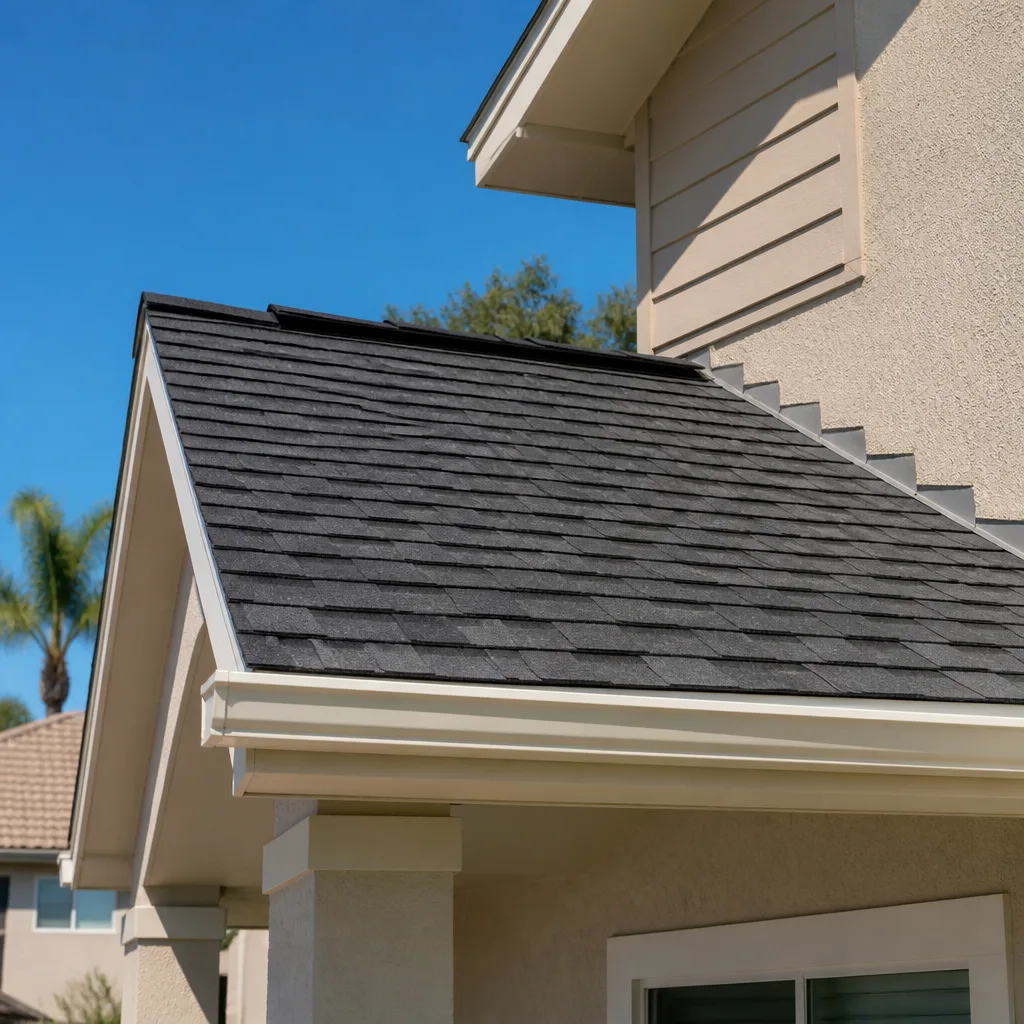
From the outside, on a Hialeah roof, the signs read differently. Dark streaks running vertically down a slope point to algae but can also be a water trail. Lifted or curled shingle tabs (especially on south- and west-facing slopes, which take the sun and the driving rain) often hide a saturated deck underneath. Granule loss in your gutters in the weeks after a storm is normal. Granule loss across an entire slope is not.
Older Hialeah roofs with gray or black shingles hold heat and hide damage well. If your roof is past the 15-year mark and you see any two items from the list above, get a professional assessment. Our team handles Groundwork Construction Co. of Hialeah home roofing scopes with GAF and CertainTeed systems, and we scope the deck as part of the inspection – not just the shingles.
Driveway and Paver Warning Signs Specific to South Florida
A driveway paver that’s a quarter inch lower than its neighbors is not worn out. It’s telling you something is happening underneath it. In Hialeah, that “something” is almost always subsurface washout, root intrusion, or a base that was never compacted to handle our water table – not simple surface wear. The distinction matters because repaving the top without fixing the base is money spent twice.
Paver warning signs that point to base failure
- Isolated sunken patches (not the whole driveway, but 5-20 square feet in one spot): classic washout. Soil under the base has eroded from pooled water or a broken irrigation line.
- Pavers that rock underfoot. A paver that moves when you step on it has lost its base support.
- Sand washing out of the joints after every rain. Either the joint sand was never polymer-stabilized, or water is moving through the base and flushing it up.
- Root heave. A line of pavers pushed up in a curve (often along a tree line) means roots are lifting the base. Common with ficus and oak roots in older Hialeah yards.
- Standing water more than 24 hours after a storm. The slope or base has failed to drain. In our wet season, this is water that will find the foundation next.
- Ruts along the tire path. If they’re deeper than 1/4 inch, the base wasn’t compacted correctly when the driveway was built.
Concrete driveways read a little differently. A concrete driveway with a straight transverse crack is usually a control joint doing its job. A concrete driveway with a crack that steps vertically (one side higher than the other) is a slab that’s moved. Spalling – thin flakes popping off the top surface – is usually a finishing problem, but when it concentrates in the tire path it can point to water sitting under the slab.
If your driveway already needs more than a spot repair, our Driveway & Pavers in Hialeah scopes start with the base, not the surface material.
Windows, Doors, and the Frame Symptoms Hialeah Homes Show First
Windows and doors are the most sensitive instruments in the house. They’re manufactured to a tolerance of about 1/8 inch across the rough opening, so when the wall around them moves even slightly, they’re the first thing to bind, leak, or stop latching. In Hialeah, that means your windows are often telling you about a wall problem before the wall does.
We also see a separate category of window warning signs in older Hialeah homes: the failure of the window itself. Single-pane aluminum sliders from the 1970s and 1980s have a working life of about 25-30 years, and most of them are past it. When the rollers stop rolling, the frames go out of square, or you can feel wind coming through a closed window, it’s time to look at replacement – not just repair.
Window warning signs to log
- Fogging between panes on a dual-pane window. The seal has failed. It won’t fail catastrophically, but it will keep leaking heat and eventually leak water.
- Condensation on the room-facing glass in summer. Usually the window itself is fine and the humidity inside is high, but check the frame first.
- Water staining on the interior sill or drywall below the window. Often the window frame-to-wall seal. Sometimes the wall above the window. Very rarely the window itself, but it can be.
- Drafts around a closed window. A draft you can feel at the sealing plane is a failed weatherstrip or a misaligned sash.
- A window that chatters in the track when you slide it. Worn rollers on an aluminum slider; usually replaceable, sometimes indicative that the rough opening has twisted.
On the doors: the exterior door on a Hialeah home is the single best diagnostic tool you have. Open it, look at the gap around the frame. A perimeter gap that’s even all the way around is a house that’s sitting still. A gap that’s tight at the top hinge and wide at the bottom latch (or the reverse) is a house that’s moving. Same for interior doors, but less severe – interior wall movement usually points to something local rather than the whole foundation.
If your windows are past their working life and you’re planning replacement, we install CWS and ES Windows systems, along with Andersen and Marvin, so the replacement is scoped to the actual wall condition – not just the frame size.
How to Document and Photograph Warning Signs Correctly
Most homeowners take one photo of the crack from across the room. Then they text it to a contractor and ask “is this bad?” The contractor says “hard to tell from that.” Two weeks later, nobody has an answer. Photographing warning signs correctly takes 15 minutes and will save you the whole first round of phone tag – it also lets a good contractor give you a real scope estimate without an in-person visit first.
The documentation process, in order
- Photograph the whole wall first. Wide-angle, standing back far enough that the ceiling and floor are both visible. This is the context shot. Contractors need to know where the crack sits relative to the corners, openings, and floor line.
- Get a close-up with a scale reference. Place a coin or a measuring tape next to the crack (a quarter is 15/16 inch – close enough to 1 inch for scale). Photograph the widest part of the crack, not the middle.
- Photograph each end of the crack. Where the crack starts and stops is a strong indicator of what’s moving. A crack that runs from window corner to window corner is different from one that fades into the stucco.
- Photograph the corresponding interior location. Same wall, inside. Doors and windows that sit near the crack tell the same story from inside.
- Record the date. Write it on a piece of paper taped next to the crack, or use your phone’s timestamp. You want to know if you’re looking at a crack that’s six months old or six years old.
- Take a second set of photos 90 days later. Same angle, same lighting, same scale reference. The comparison between the two sets is the single most useful thing you can hand a contractor.
Save the photos in one folder labeled with the room and the date. Add a short written note for each: “north wall, above kitchen door, appears new in May 2025.” Straightforward documentation like this is what lets us scope a job accurately and give you a written estimate without charging you for a discovery visit. For Hialeah homes, add the street and the approximate build era to the folder name – it tells us almost immediately whether we’re looking at block-and-stucco from the 1960s or frame construction from later, and the two need different answers.
Warning Signs During a Renovation or Addition
The most expensive construction problems we’ve seen in Hialeah homes weren’t caused by weather. They were caused by work that was started and never finished, or finished and never inspected. When you’re living through a remodel or addition, the warning signs look different from the ones on a finished house. They show up in the process.
Process warning signs to watch for
- No written line-item scope before work starts. A bid that says “kitchen remodel – $28,000” is not a scope. You should have a line for demolition, framing, electrical, plumbing, drywall, cabinetry, counters, tile, paint, and cleanup – each with a number.
- Permit pulled in the contractor’s name with no copy in your file. In Hialeah you can verify a permit through the city, and a competent contractor hands you the permit number before demolition starts.
- Subs showing up without being announced the day before. Scheduled trades should be on a written calendar. Surprise arrivals mean the schedule isn’t actually a schedule.
- Framing that’s not inspected before drywall goes up. Once drywall is closed, you can’t see what’s inside. A framing inspection isn’t a formality – it’s the one chance you have to see the wall before you can’t.
- Change orders that arrive after the work. A change order that shows up on the invoice instead of in your inbox before the work happens is a red flag that the original scope was underbid on purpose.
- No moisture test on slab before flooring install. In Hialeah’s high water table, installers who skip a slab moisture test will install flooring over active moisture. You’ll see the failure in six months.
An addition or ADU in Hialeah brings a second layer of process. The addition triggers a survey, setbacks, and a connection into the existing structure that has to be engineered – not “figured out on the day.” If a contractor can’t show you the tie-in detail before framing starts, that’s the moment to slow down. Our Home Additions & ADU in Hialeah projects all go through a documented design-consult stage for exactly this reason.
Common Mistakes to Avoid
- Caulking a structural crack. Caulk over a moving crack hides the evidence without stopping the movement. In Hialeah’s wet-dry cycle, the crack opens again within a season – often wider – and now it’s harder to read.
- Patching drywall cracks every year without asking why they came back. A drywall patch is cosmetic. A drywall crack that returns to the same spot within 12 months is a movement signal that needs eyes on the wall, not another coat of mud.
- Treating driveway pavers as a surface-only repair. In South Florida, most paver failures are base failures. Repaving the top over a failed base re-creates the exact problem you paid to fix.
- Skipping the attic inspection when you buy a Hialeah home. The attic tells you what the kitchen looks like inside. Attic deck staining, wet insulation, and rusted fasteners are visible to the right set of eyes and invisible to a buyer who only walked the rooms.
- Hiring on the price of the bid without reading the line-item scope. The lowest bid is usually missing something – a permit, a moisture test, the door install, the cleanup. Upfront pricing means every line is on the page before you sign.
- Photographing cracks with no scale reference. A crack that looks terrifying on a phone screen may be 1/32 inch wide. A crack that looks like a hairline may be 3/16 inch. Without a reference, no contractor can diagnose either one accurately.
- Waiting for the next rainy season to test a repair. Hialeah’s wet season is short and punishing. If a repair has to prove itself, it needs to prove itself through a storm, not through a dry month.
See the difference
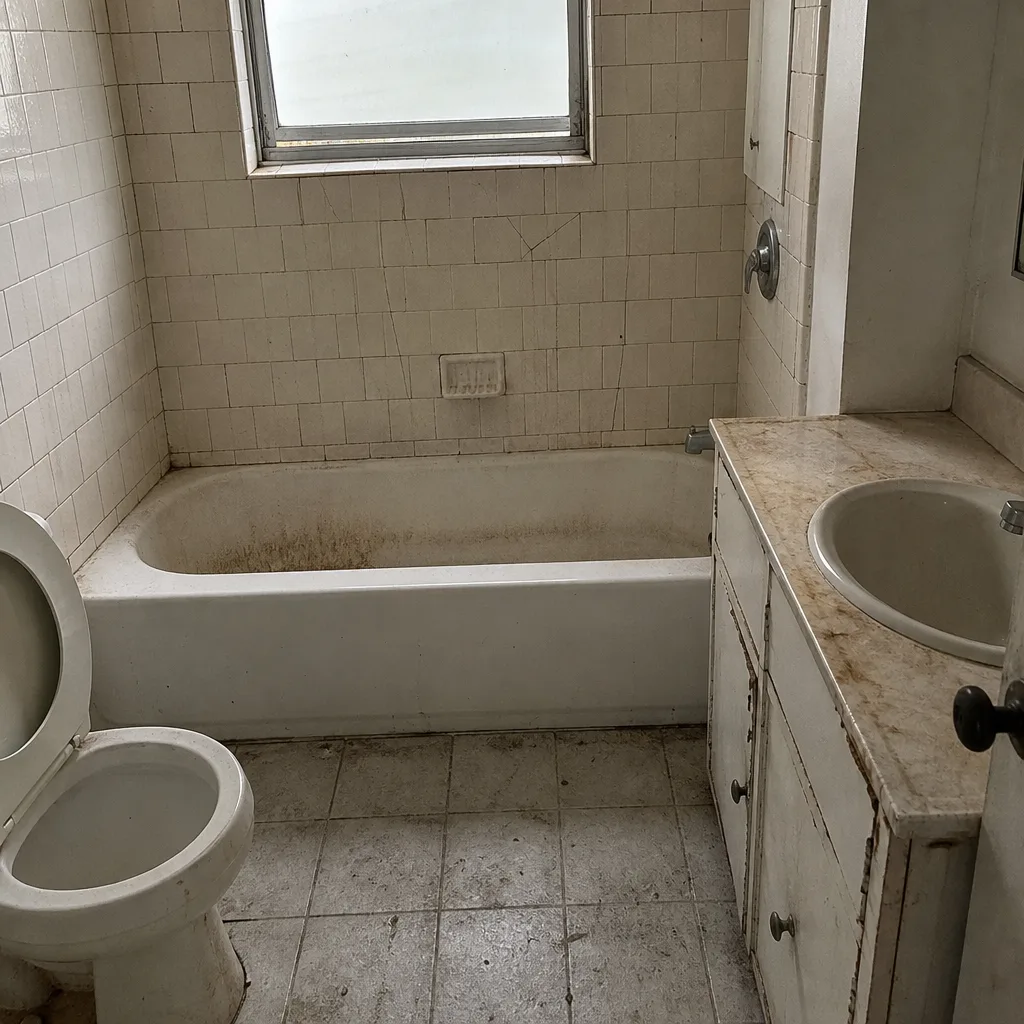 Before
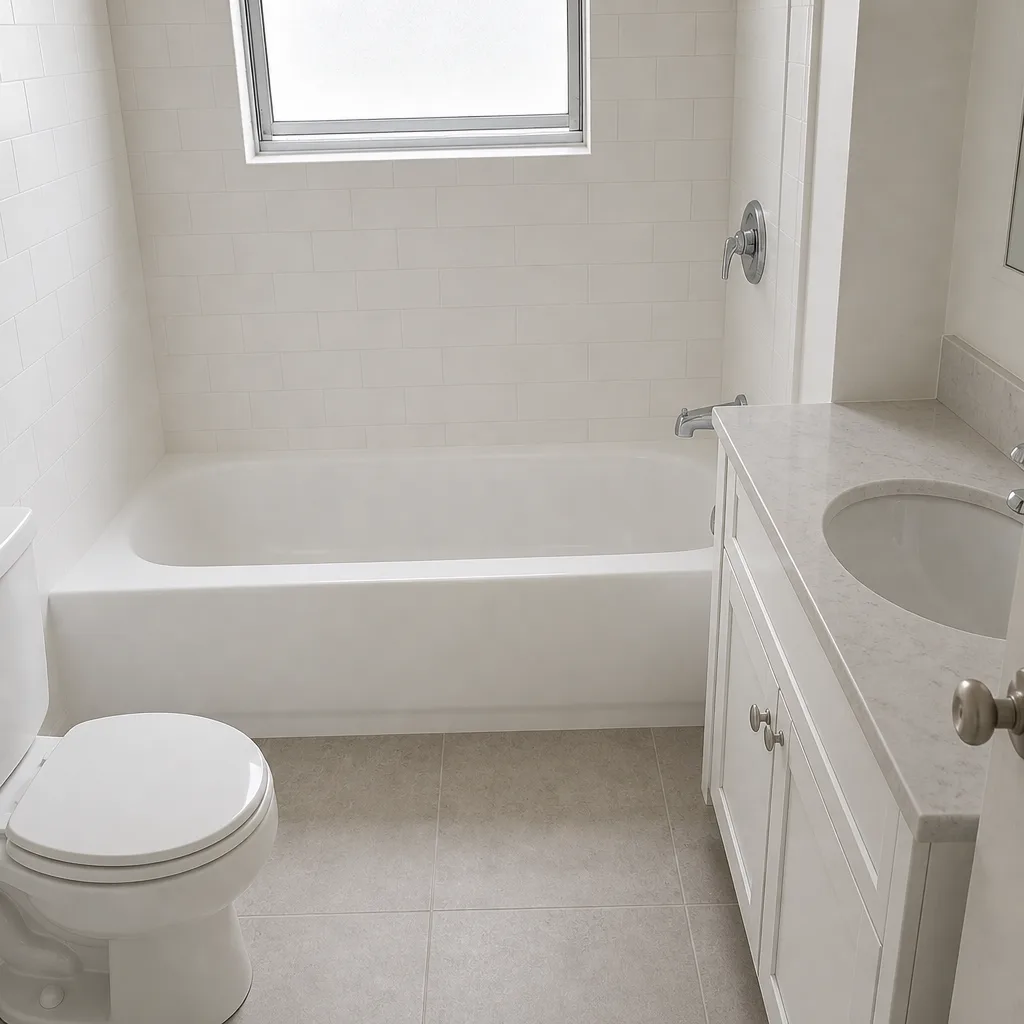 After
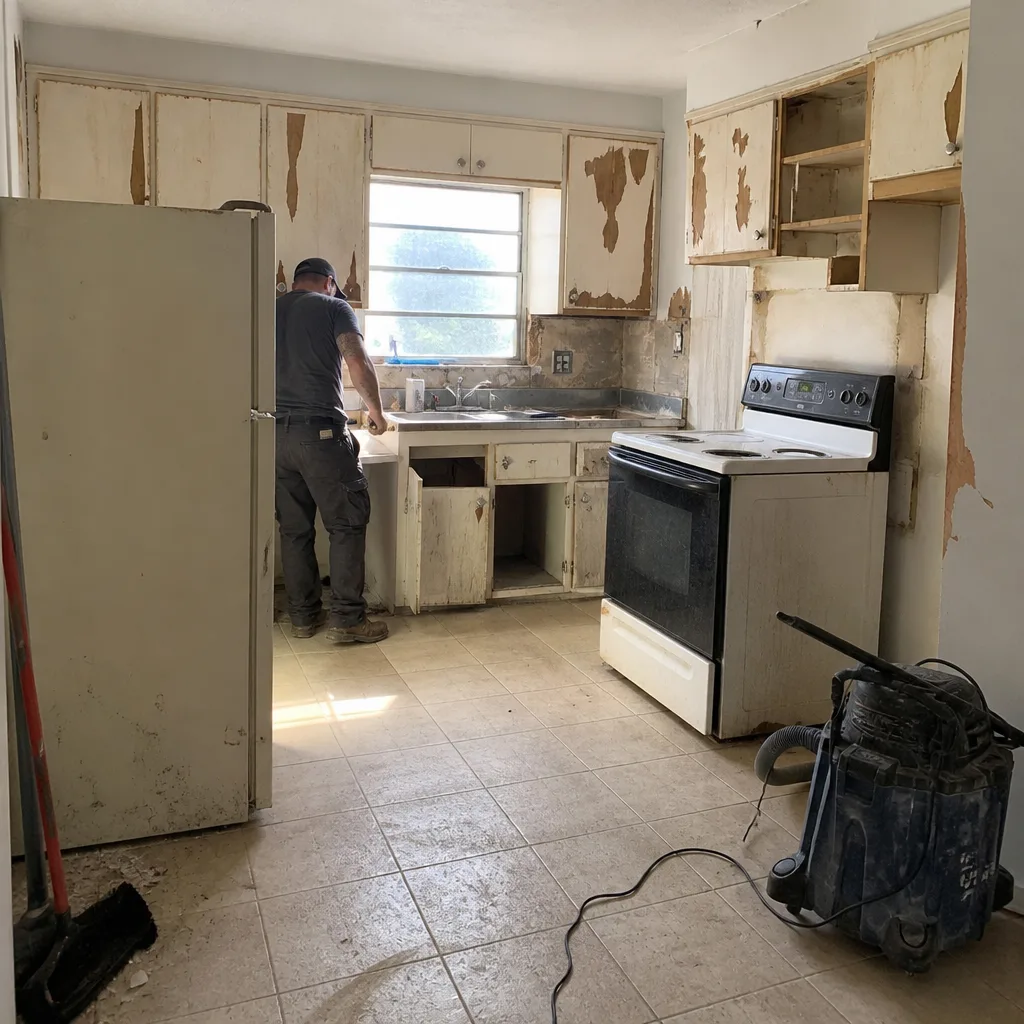 Before
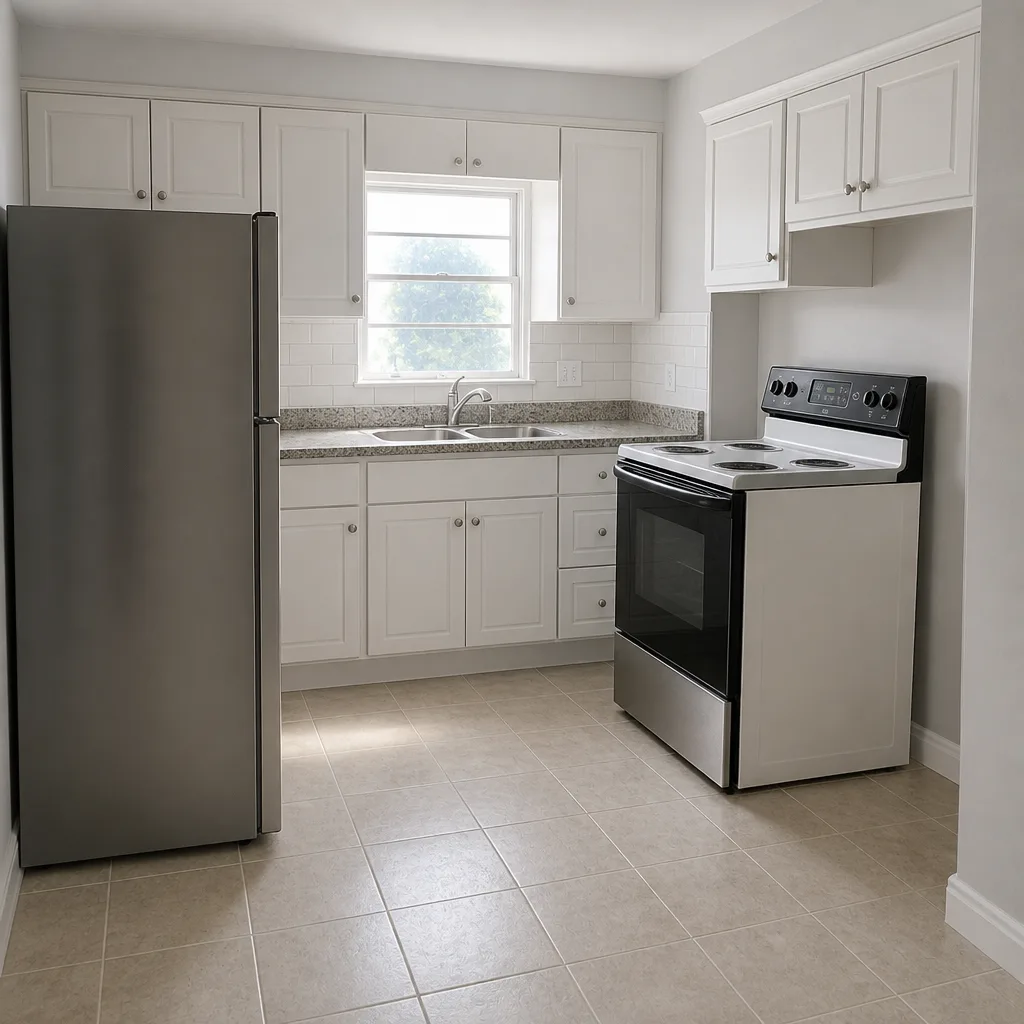 After
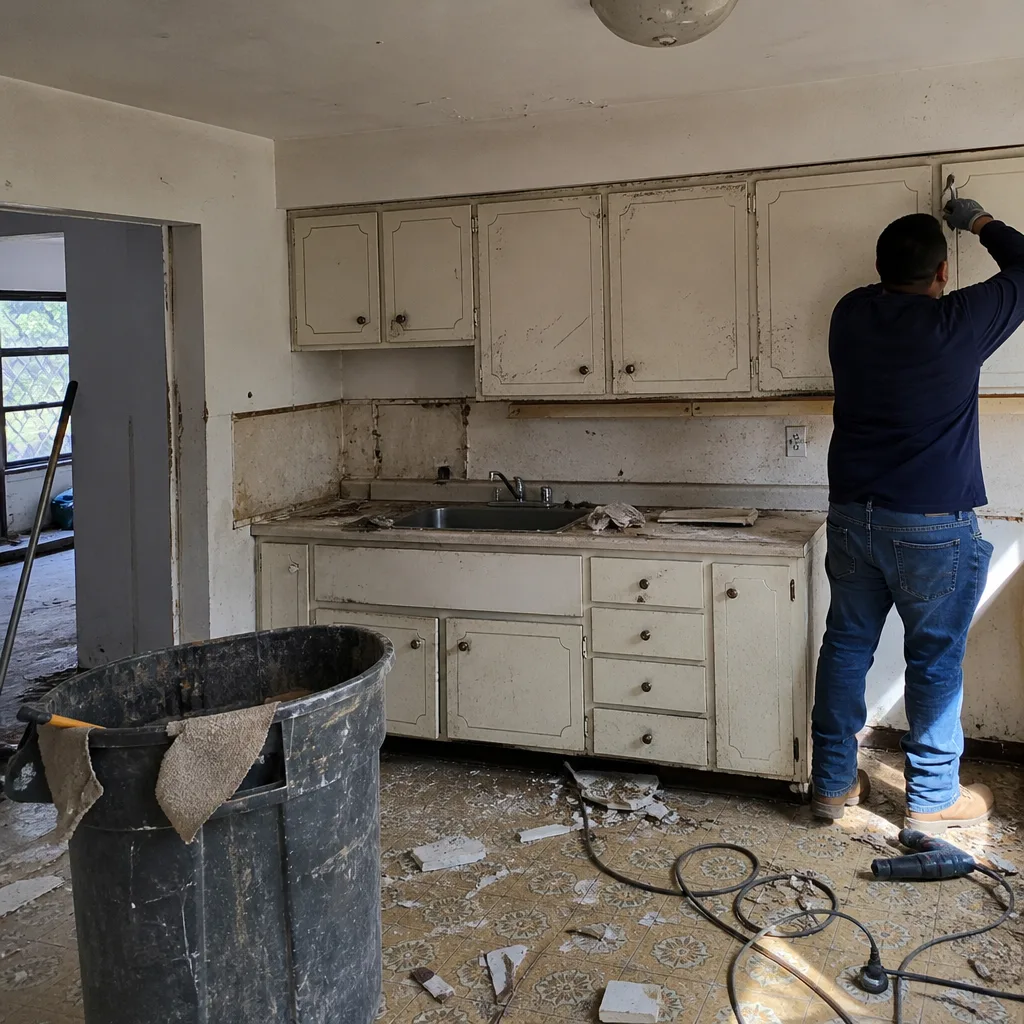 Before
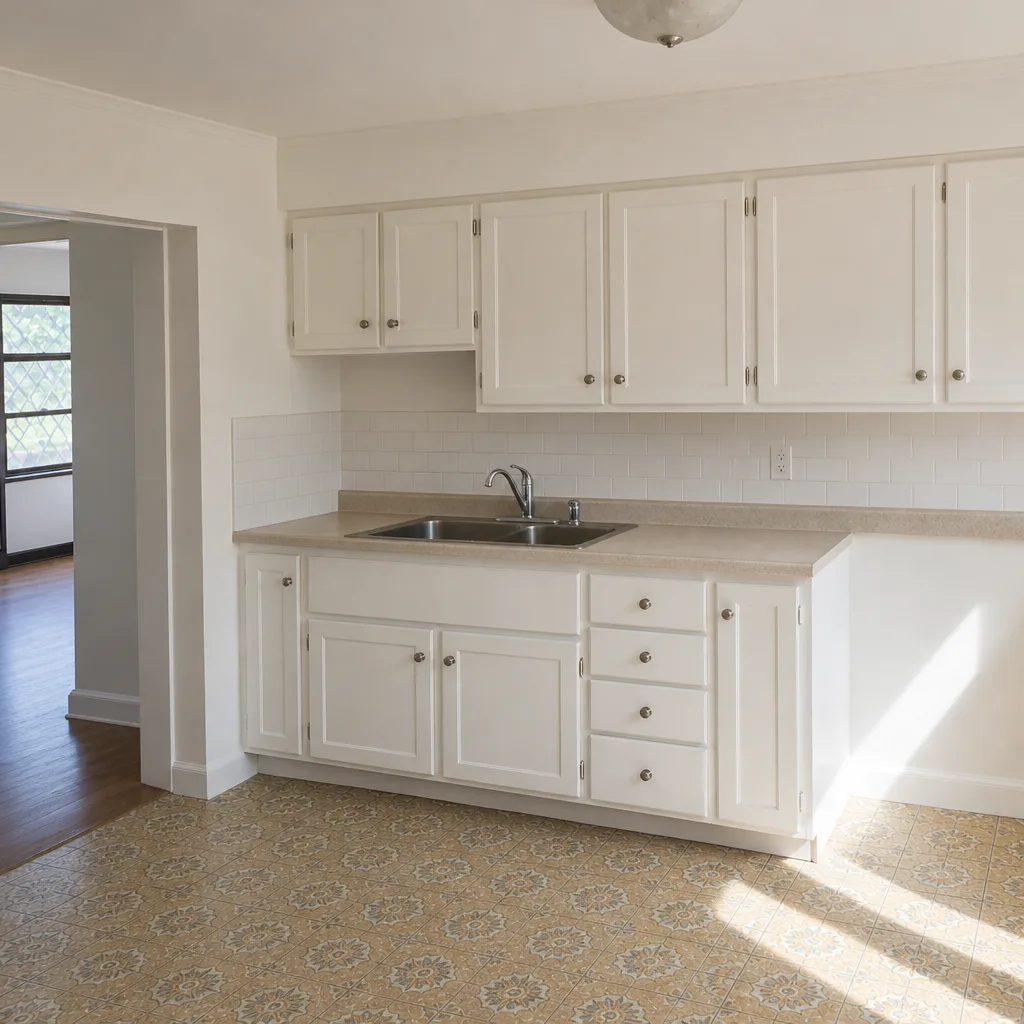 After
When to Call a Professional
Call a professional when you see a diagonal or stair-step crack wider than 1/8 inch, when you see two or more interior symptoms at the same time (a sticking door plus a floor slope plus grout cracking at a baseboard), when you see attic deck staining or soft decking, or when a paver driveway has an isolated sunken patch that appeared within the last two years. Those are the four flags that most often turn into significant scope if they’re ignored through a wet season. A hairline crack that’s been in the same place for a decade and isn’t changing isn’t an emergency – but it’s still worth having on a contractor’s radar. Groundwork Construction Co. of Hialeah offers free estimates in Hialeah – call (888) 418-7102 to schedule an inspection with a technician who’s looked at this exact problem on this block before.
Frequently Asked Questions
Generally, a crack 1/8 inch wide or wider should be evaluated by a professional, and anything over 1/4 inch shouldn’t be treated cosmetically. Width alone doesn’t decide it – direction and location matter just as much. A diagonal crack from a window corner, or a stair-step crack along block joints, is structural until proven otherwise, even at 1/8 inch. Call (888) 418-7102 for a free estimate if you’re not sure which category you’re looking at.
They’re common in Hialeah because of our soil and water. Expansive clay soils under much of the city expand in the wet season and shrink in the dry season, and every cycle puts stress on concrete block and stucco walls. Add the daily summer rain and hurricane-season blowback, and the pressure on footings, window frames, and pavers is higher here than in most parts of the country. If you’re seeing what your neighbor is seeing, that’s usually the same soil at work – not a coincidence.
Cosmetic crack repairs in Hialeah typically run a few hundred dollars per location, while foundation pier or underpinning work on a single corner of a block home is a five-figure scope in most cases. The gap between those two numbers is the entire reason this guide exists – the difference between a small repair and a large one is usually caught at the inspection stage. Call (888) 418-7102 for a free estimate with a written line-item scope, so you’re pricing the actual condition, not a worst-case guess.
Usually not. Most Florida homeowner policies exclude damage caused by soil settling, expansion, or movement – which is what most Hialeah foundation warning signs are tied to. Storm-driven water damage is more often covered, but the burden is on you to document that the damage followed a specific storm event. That’s why the dated photograph folder matters. If you’re filing a claim, have your documentation in hand before you call the adjuster.
It depends on how much of the deck is soft and how many boards are affected. Isolated moisture around a flashing or skylight is often a spot repair. Widespread deck staining, soft decking across more than one slope, or rusted fasteners up and down the roof often means a full replacement is the honest answer. Our team scopes both, so the recommendation you get is based on the deck – not on what’s easiest to sell. Call (888) 418-7102 for a free estimate that includes a deck inspection.
Stucco crack repair usually doesn’t require a permit. A driveway replacement, a roof replacement, and any addition or ADU do. We pull permits and pass inspections on every job that needs them, and the permit number is in your file before work starts. If you’re unsure whether your specific repair crosses the threshold, ask the contractor to confirm in writing before the first day of work.
The Bottom Line
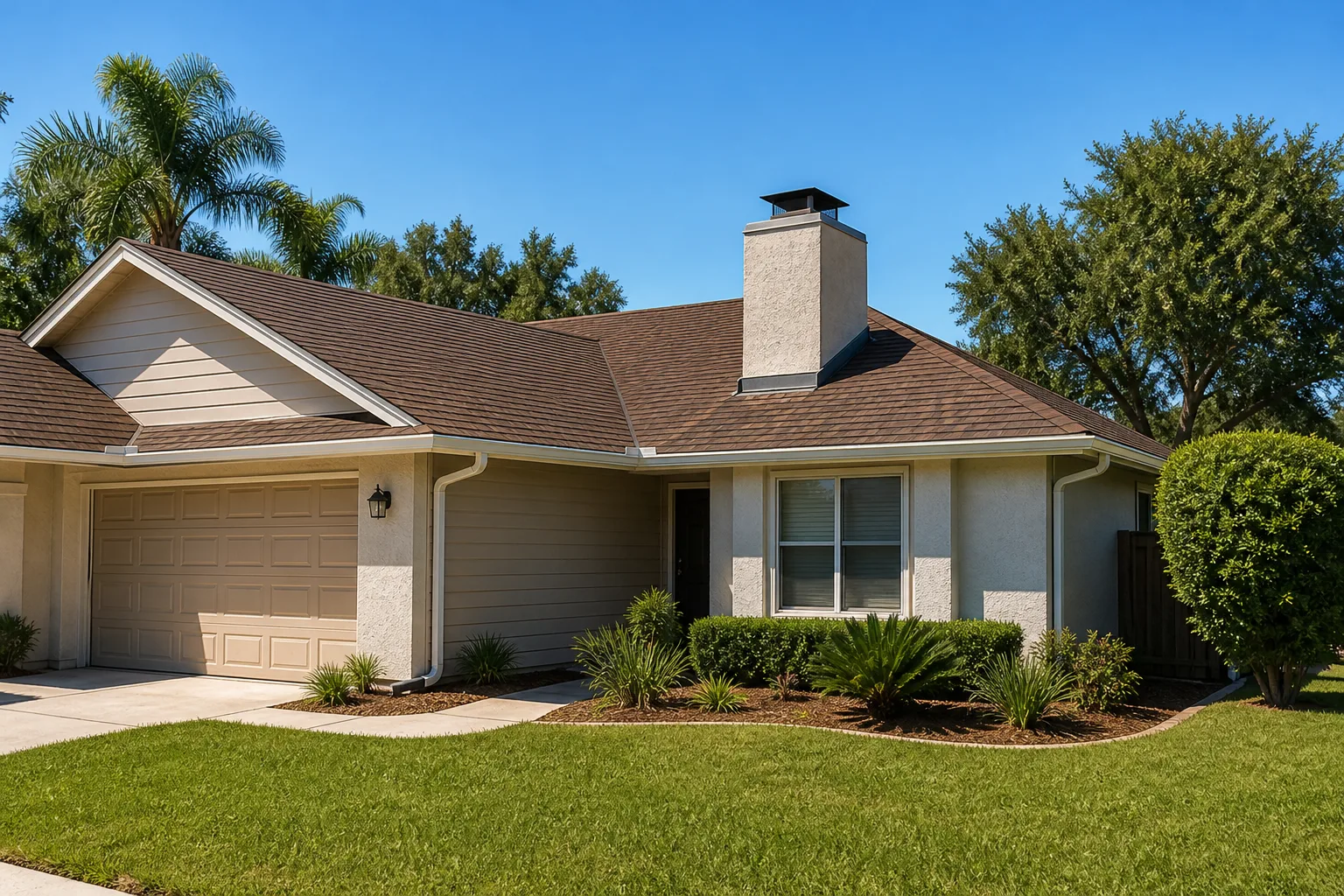
Most construction problems in Hialeah give you a warning before they become expensive. The warning is usually a crack, a door, a stain, or a paver that’s sunk a quarter inch – and the alert homeowner who photographs it, dates it, and asks a professional about it is the one who pays a few hundred dollars instead of a few thousand. When you know what you’re looking at, you stop treating every crack as an emergency and you stop ignoring the one that actually is. Document it, watch it for a season, and when the pattern says “call,” call. That’s the whole method.
If your documentation points to something worth a closer look, our team is the right call. We’re insured and bonded, our technicians are background-checked and arrive in uniform, and our workmanship is covered by the 730-Day Done Right Promise – if it’s not done right, we make it right. Calls are answered by a live person 24/7, no voicemail black holes, and every estimate is free with a written line-item scope so you’re pricing the real condition and not a guess. We also offer 0% financing for 18 months and $1,000 off projects over $10,000. From foundation to finish line – or from a first crack to a full replacement – call (888) 418-7102 for your free estimate. You can also see what we do in Fence Installation in Hialeah and how we scope exterior work across Hialeah, or reach out and we’ll walk your property with you.
Written by the team at Groundwork Construction Co. of Hialeah.