Last updated November 18, 2026

Free written scope consultation - allowances, timeline, and change-order rules on paper before a single trade is scheduled
Driveway & Pavers Maintenance Checklist for Hialeah Homeowners
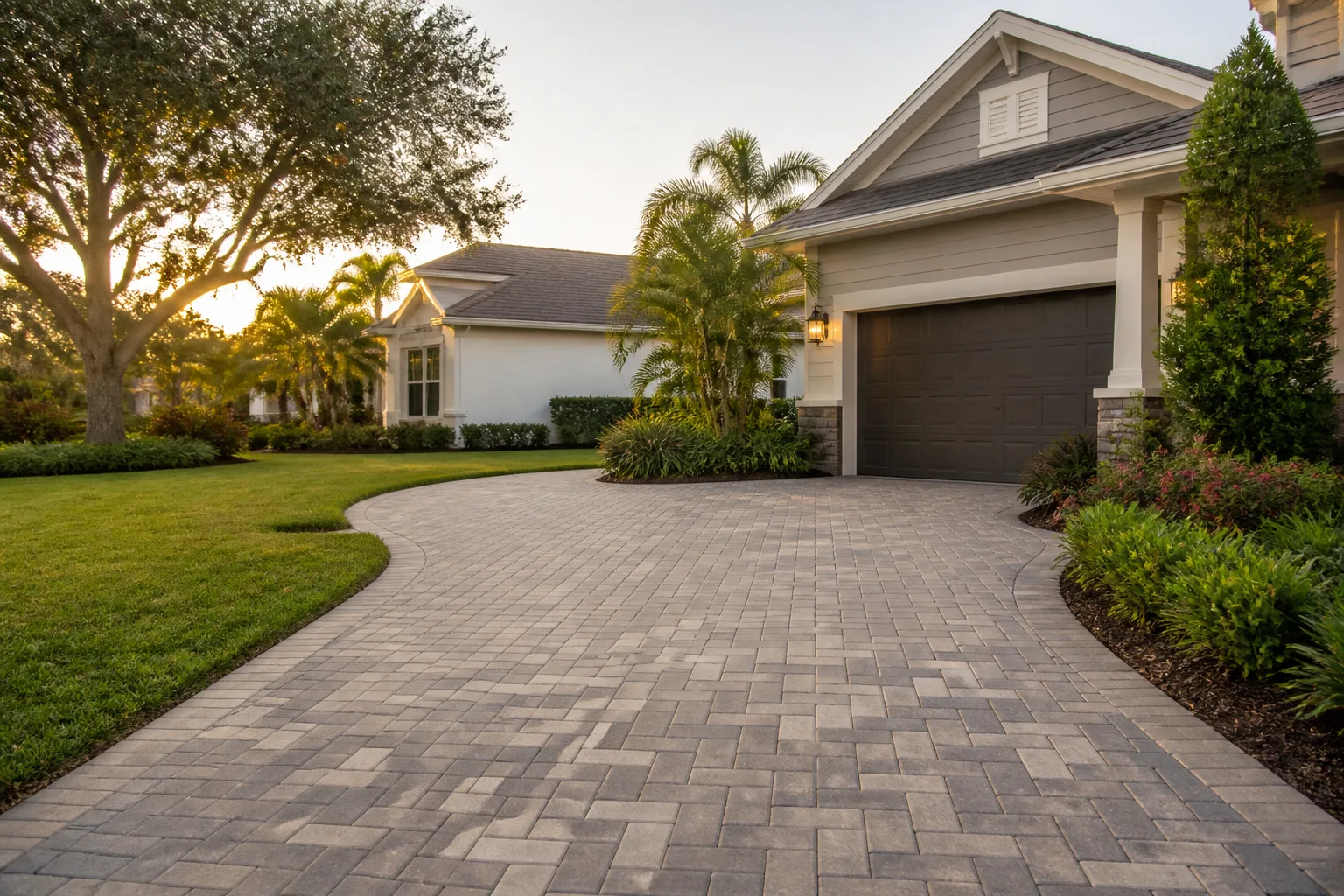
A paver driveway that looks flawless in March can be showing joint erosion, chalky white efflorescence, and ant tunneling by September. In Hialeah, that gap between “looks good” and “needs work” closes fast. Why? Because most homeowners are following maintenance advice written for Georgia, the Carolinas, or somewhere the sun clocks out after eight months. South Florida runs a different schedule: relentless UV, a five-month rainy season, and limestone-heavy soil that behaves nothing like clay or sand. This guide walks through what actually happens to pavers in Hialeah’s climate, month by month, so you can catch problems before they cost you a resealing or a reset. You’ll get the specific windows that matter, the treatments that actually work here, and the signs it’s time to call someone.
Quick Answer
The core checklist for paver maintenance in Hialeah: reseal or top off polymeric sand joints before June, treat efflorescence with a pH-neutral cleaner (not acid) during the dry season, keep pressure washing gentle and infrequent because aggressive washing strips sealer and speeds fading, and inspect joints near palms and ficus trees every couple of months for root intrusion and ant tunneling. The single most important deadline is getting joints locked down before the wet season hits in June.
Styles & brands we work with
- Kitchen remodeling
- Bathroom remodeling
- Home additions & ADU
- Roofing
- Windows & doors
- Driveway & pavers
- Fence
Table of Contents
- Why Hialeah Pavers Age Faster Than Pavers Anywhere Else
- The Polymeric Sand Window: June – September Is the Danger Zone
- Efflorescence vs. Mold: How to Tell Them Apart and Treat Each
- Pressure Washing in Hialeah: Why Northern Advice Will Ruin Your Sealer
- Ant and Root Intrusion: The South Florida Inspection Routine
- The Month-by-Month Maintenance Calendar for Hialeah
- Common Mistakes to Avoid
- When to Call a Professional
Why Hialeah Pavers Age Faster Than Pavers Anywhere Else
Three forces work on a paver driveway in Hialeah, and all three run hotter here than almost anywhere else in the country.
The UV index. Hialeah sits in a region that sees UV index numbers in the 10 to 11 range from late spring through early fall. Concrete pavers, clay brick, and even high-end porcelain pavers fade, chalk, and lose surface density under that kind of exposure. Sealers break down faster too. A sealer rated for “3 to 5 years” in a moderate climate is often a 2-year sealer in South Florida. That’s not a manufacturer flaw; it’s the sun doing exactly what the sun does here.
The rain cycle. Hialeah’s wet season runs from roughly June through September, and it’s not gentle drizzle. It’s afternoon downpours that dump an inch in forty minutes, then stop. That cycle repeats for months. Water saturates the joints, the base, and the soil underneath, then the sun bakes it dry. Wet-dry-wet-dry is the most destructive pattern for joint sand and for the bedding layer that holds pavers level.
The soil. Much of Miami-Dade County, Hialeah included, sits on limestone bedrock close to the surface with sandy, shell-heavy fill soil above it. Limestone is alkaline, and alkaline soil is a direct contributor to efflorescence – the white mineral bloom that shows up on paver surfaces. It also drains differently than clay: water moves through it fast but leaves mineral deposits behind. And it’s a favorite tunneling medium for the ants and root systems that find their way into joints across Hialeah.
Layer those three together and you get the pattern we’ve seen across Hialeah neighborhoods like Palm Springs, Hialeah Gardens, and the corridors off Okeechobee Road: driveways that look great the first spring and show real wear by the second. The wear isn’t a sign of bad installation. It’s a sign the maintenance schedule wasn’t built for this climate.
If you’re still choosing materials or planning a new driveway, our Driveway & Pavers in Hialeah page walks through paver types and base preparation for South Florida soils. If yours is already installed, read on.
The Polymeric Sand Window: June – September Is the Danger Zone
Polymeric sand is the joint filler that locks pavers together and keeps weeds, water, and insects out. It works by activating when it gets wet, then curing into a firm, slightly flexible joint. In most of the country, that cure happens once and holds for years. In Hialeah, the joint gets tested every single day of the wet season.
Here’s the problem: polymeric sand that has started to degrade – hairline cracks, small voids, sand washing out at the edges – will fail completely once the June rains arrive. A joint that’s 90% intact in May can be 50% gone by August if water keeps getting underneath and pushing the sand out. Once the sand is gone, pavers shift, edges chip, and the fix goes from a $200 sand top-off to a $2,000 reset of a section.
The window that matters most is April and May. That’s when you want to:
- Inspect every joint line by walking the driveway with a screwdriver handle, tapping for hollow spots and looking for sand loss of more than about a quarter inch.
- Sweep in fresh polymeric sand on any joints showing voids, then activate it with a light mist and let it cure for 24 hours of dry weather – which you’ll reliably get in April and May, and won’t reliably get in July.
- Check the perimeter. The joint between the pavers and the concrete edge restraint is where water enters first. If it’s open, water goes straight into the base.
- Clear and re-seat any pavers that have rocked or lifted. A rocking paver is a paver with a failed base underneath it, and no amount of sand will fix that.
Once the wet season starts in June, your options narrow. You can still do small top-offs on a dry afternoon, but full joint re-sanding in the middle of a Hialeah summer is a gamble. Rain hits at 2 pm like clockwork, and polymeric sand that gets rained on before it cures hazes over and turns chalky.
And a note on the joint type: if your driveway was sand-set with regular (non-polymeric) sand, the maintenance rhythm is different and more frequent. Polymeric is the standard for a reason in this climate. If yours isn’t, that’s worth knowing before you plan the rest of the year.
Efflorescence vs. Mold: How to Tell Them Apart and Treat Each
This is the single most common misdiagnosis we see on Hialeah paver driveways, and it causes real damage. Homeowners see white or greenish-white growth on the pavers, assume it’s mold, and hit it with a bleach mix. Or they assume efflorescence and treat it with a muriatic acid wash. Both can make the problem worse.
Here’s how to tell them apart.
Efflorescence is a mineral deposit. It forms when water moves through the paver and carries dissolved salts to the surface, where they crystallize as a white, powdery, or slightly crystalline bloom. It’s usually concentrated in patterns – along a low spot where water pools, near a foundation edge, or in a broad patch where the base holds moisture. Efflorescence doesn’t smell. It’s powdery and brushes away slightly, then comes back. Limestone-heavy Hialeah soil is a direct fertilizer for it: the alkalinity from the ground feeds the deposit right back into the paver.
Mold and mildew form in shaded areas and along wet edges, tend to have a greenish, gray, or black tint, and flourish on north-facing driveways and under tree canopy. Hialeah’s humidity and shade from oaks and ficus trees make this common. It has an earthy or musty smell, and it usually streaks rather than forms in powdery bloom patterns.
The treatments are opposite:
- Efflorescence needs an acidic or efflorescence-specific cleaner (a mild efflorescence remover, not straight muriatic acid on a sealed surface). The root cause is water and alkalinity, so the fix is drainage and curing the moisture source, not just cleaning the surface.
- Mold and mildew need a mold-specific cleaner or a dilute oxygen bleach solution. Never a strong acid – that won’t touch mold and can damage the paver surface and any nearby landscape.
- Neither should be pressure washed at high PSI. You’ll drive the deposit into the pores or strip the sealer, and the problem rebounds in weeks.
One more thing worth knowing: efflorescence can show up months after a new installation as the bedding and base finish curing. If your driveway was installed within the last year and you’re seeing white powder in Hialeah, it’s often not a defect – it’s the material drying out. It should taper off in 12 to 18 months if drainage is right. If it’s still blooming hard at year two, the moisture source is not resolving on its own.
Pressure Washing in Hialeah: Why Northern Advice Will Ruin Your Sealer
A lot of paver care advice floating around recommends pressure washing once or twice a year at 2,500 to 3,000 PSI. In Michigan, that might be fine. In Hialeah, it’s a fast way to destroy your sealer and accelerate fading.
Here’s the physics. A sealer is a thin film, or in some cases an impregnating treatment, on the paver surface. That film is what blocks UV, resists staining, and keeps the joint sand stable. High-pressure water strips the film at the edges first – right where the wear is already highest – and once it’s gone, the surface underneath gets the full Hialeah sun with no protection. Within a season you’ll see chalky, faded, patchy pavers, and the sealer that was supposed to last two years is toast in six months.
The right approach for Hialeah:
- Wash with a surface cleaner at low pressure (under 1,500 PSI), never a wand held close. Keep the nozzle a good distance off the paver and let the water and a mild pH-neutral cleaner do the work.
- Wash in the dry season (roughly November through April), not in the middle of the wet season. Pavers need to dry properly between washing and sealing. Hialeah’s summer rain makes that impossible.
- Let the driveway dry for at least 48 hours before resealing. Moisture trapped under a fresh sealer produces a hazy, milky finish that’s hard to undo.
- Reseal on a 2-year rhythm in Hialeah. Not 3 to 5. The UV here asks more.
- Spot-clean stains (oil from the car, rust from a hose fitting, tire marks) with a dedicated cleaner rather than blasting the whole surface.
If your driveway is clay brick rather than concrete paver, be even more careful: brick is porous, and high-pressure water blasts the surface layer off permanently. Clay brick in Hialeah’s sun is already working hard; you don’t want to compound it.
Our Groundwork Construction Co. of Hialeah home page lays out all seven of our service lines if you’re also thinking about broader exterior work. A failing driveway and a failing fence often go together, which brings us to the next thing most Hialeah homeowners skip.
Ant and Root Intrusion: The South Florida Inspection Routine
You need to inspect more than the paver surface. In South Florida, the real damage happens below and beside it.
Ants. Fire ants and ghost ants love limestone-based sand. The joint sand in a paver driveway is basically a perfect tunneling medium: loose, warm, and protected from rain by the pavers above. Over a season they can move a substantial amount of joint sand into a nest, leaving hollow tunnels that collapse into voids under the pavers. You won’t see the ants – you’ll see the sinkholes and the rocking pavers. Check joints near the driveway edges and around any landscape bed once every two months in the wet season. A small ant mound at the edge of the driveway is a signal to look underneath.
Roots. This is the Hialeah-specific one most people miss. The trees that define streets in Hialeah and the surrounding neighborhoods – oaks, ficus, palms – run shallow, aggressive roots in South Florida’s sandy soil and limestone. A root doesn’t have to break a paver to destroy a driveway. It just has to lift a bedding layer by a quarter inch. That quarter inch becomes a puddle every rain, a puddle becomes a settlement point, and settlement becomes a lippage issue where one paver sits higher than its neighbor – a trip hazard and a fast path to chipped edges.
The inspection routine:
- Walk the full perimeter on foot, looking for any paver that has lifted more than 1/8″ relative to its neighbor.
- Check soil contact at the concrete edge restraint. Any gap is a moisture entry point.
- Inspect any joint within 3 feet of a tree trunk for sand loss, tunneling, or soft spots.
- Tap with a screwdriver handle on each quarter, listening for the hollow “tink” that means a base void below.
- Look at low spots after a heavy rain. Standing water for more than 24 hours means the base or the slope has changed.
If your driveway sits against a fence line or a landscape bed with mature trees, the intrusion risk doubles. That’s also where a solid fence helps: removing the tree’s competition for water forces it deeper. If you’re planning fence work around the driveway, our Fence Installation in Hialeah page covers the options that hold up in Hialeah’s heat and rain.
The Month-by-Month Maintenance Calendar for Hialeah
The generic four-season calendar (spring cleanup, summer watering, fall leaf removal, winter storage) is built for climates that have four seasons. Hialeah has two: a dry winter and a wet summer. Everything changes based on which one you’re in.
January – February: dry-season inspection. This is the best window of the year to evaluate everything. Wash the driveway at low pressure, inspect joints, note any cracked or lipped pavers. Efflorescence blooms most visibly in the dry stretch – catch them now. This is your planning window: schedule any re-sanding, re-sealing, or spot repairs so they’re done before the rain.
March – April: sealer and re-sanding window. This is when most of the work should happen. Reseal if your sealer is near its 2-year point. Top off joints. Fix any paver that’s rocked or lifted. Address drainage issues before they get tested. April is the last reliable month for polymeric sand that needs to cure – rain chances climb in May, and full-dry cure becomes a gamble.
May: final pre-season check. Verify joint sand is topped off. Check ant activity at the perimeter. Cut back any tree branches creating shade issues on the pavement. Last chance to be ready before the rains hit.
June – September: wet season – inspect, don’t overhaul. The joint sand is under stress. Walk the driveway once every three to four weeks. Look for sand washout, settlement, and standing water. Spot-fix small issues on dry afternoons; save any real re-sanding or sealing for October at the earliest. Never seal in the wet season – you’ll trap moisture and haze the surface. Ant activity peaks; keep an eye on the perimeter.
October: post-wet-season inspection. The rains are tapering off. This is your second-best window of the year. Wash at low pressure, check for damage from the summer, look for new cracks and settlement. Note anything that needs to be addressed between November and April.
November – December: repair and seal. The dry season is back. Fix anything discovered in October – reseat lifted pavers, resolve drainage, apply sealer if it’s due. This is the stretch when the driveway gets the most sun-fade resistance loading for the next 12 months of UV.
The short version: the Hialeah work year runs November through May. June through September is inspection-and-spot-fix only. That’s the calendar. Follow it and your paver driveway lasts decades longer than the neighbor’s.
If you’re considering a driveway addition or an ADU that will cross the paver driveway and affect drainage, our Home Additions & ADU in Hialeah page covers how sitework integrates with new construction.
Common Mistakes to Avoid
- Resealing in the summer. Sealing a Hialeah driveway in July or August almost always produces a hazy, milky finish because moisture is trapped under the sealer. Wait for a dry, 70°F-plus stretch in the winter or early spring.
- Treating efflorescence with bleach or treating mold with acid. They look similar (white or pale growth on pavers) and require opposite treatments. Bleach on efflorescence does nothing; acid on mold does nothing and can damage the sealer. Diagnose first, then treat.
- Power washing at 3,000 PSI. The northern-climate advice. Strips sealer, drives sand out of joints, fades pavers. Use a surface cleaner at low pressure and a pH-neutral cleaner, and wash no more than twice a year.
- Waiting until water is pooling to address settlement. A rocking paver or a low spot isn’t cosmetic – it’s the first symptom of base failure. Once the base is gone under a paver, every rain cycle makes it worse. Fix it while it’s a $200 problem, not a $2,000 one.
- Skipping the perimeter walk. The joint at the edge restraint is where 80% of water intrusion starts. Most homeowners never look at it. Walk the perimeter once a month.
- Ignoring ant mounds at the driveway edge. A small fire ant mound near the pavement is a signal that tunneling is happening under it. Treat the mound and inspect the joints nearby before the next rain.
- Using generic joint sand instead of polymeric. Regular sand washes out in one or two Hialeah downpours. Polymeric is the standard for a reason. If your driveway is sand-set with regular sand, budget for a polymeric conversion.
- Cutting corners on tree root management. A 1/8″ paver lift from a root becomes a 1/2″ tilt in two wet seasons. Either manage the root or plan for the paver reset. Popping a paver to run a root barrier before the problem gets bad is far cheaper than resetting the driveway.
See the difference
 Before
 After
 Before
 After
 Before
 After
When to Call a Professional
Most of what’s in this guide is homeowner work: walking the driveway, treating efflorescence, spot-sanding, low-pressure washing. A few things genuinely need a trained crew.
Call us when pavers are rocking or visibly lipped, when water is pooling for more than a day after a heavy rain, when the concrete edge restraint has separated from the pavers, when the base appears to have settled in a section, or when a root has lifted multiple pavers. Also call us at the front end: a new driveway or a full re-sanding job done wrong is much more expensive than one done right the first time.
Groundwork Construction Co. of Hialeah offers free estimates in Hialeah. Every job is covered by our 730-Day Done Right Promise – if it’s not done right, we make it right – which is one of the longest workmanship guarantees in the residential construction space. We use Belgian-quality paver systems and brand partners like Belgard in our driveway category, and we stand behind every joint and every base. Upfront pricing, no surprises: the number you see is the number you pay. Call (888) 418-7102 to schedule your free estimate.
Frequently Asked Questions
Every 2 years, not the 3 to 5 years often recommended for northern climates. Hialeah’s UV index runs in the 10 to 11 range most of the year and breaks sealer down faster than almost anywhere in the US. Reseal in the November to April dry season, never in the summer, and let the driveway dry for at least 48 hours before sealing. If you’re not sure your sealer is due, call (888) 418-7102 for a free estimate – we’ll tell you what the surface needs.
Yes, it matters – they look similar but need opposite treatments. Efflorescence is a mineral deposit (powdery, white, crystalline, in patterns tied to moisture) that requires an efflorescence-specific cleaner or a mild acid wash. Mold is biological (greenish, grayish, streaky, in shaded areas) and needs a mold cleaner or dilute oxygen bleach. Bleach on efflorescence does nothing; acid on mold does nothing. Diagnose first, then treat. Call (888) 418-7102 for a free estimate if you’re not sure which one you’re looking at.
Yes, if you keep pressure under about 1,500 PSI and use a surface cleaner instead of a wand held close to the surface. High-pressure washing at 2,500 PSI or above is what northern-climate advice recommends and it will strip your sealer and fade your pavers in Hialeah’s sun. Wash no more than twice a year, in the dry season, with a pH-neutral cleaner. Call (888) 418-7102 for a free estimate if the pavers are already fading or the sealer is patchy.
Because limestone-based joint sand is close to ideal tunneling material for fire ants and ghost ants – loose, warm, and protected from rain by the pavers above. A small ant mound at the edge of the driveway is a signal to inspect the joints nearby for tunneling and sand loss. Treat the mound, top off the sand, and check once every two months during the June – September wet season. Call (888) 418-7102 for a free estimate if you’re seeing settlement or rocking pavers along the edge.
November through April, the dry season. That’s when joint re-sanding can cure properly, sealer can dry without trapping moisture, and repairs aren’t under daily rain stress. The wet season (June – September) is best for inspection and small spot fixes only – any full re-sanding or sealing done in that window is at risk of failing in the rain. Call (888) 418-7102 for a free estimate and we’ll schedule around the season.
For minor repairs (replacing individual pavers, re-sanding joints, resealing), typically no. For a full driveway replacement, a new installation, or work that changes the drainage pattern or connects to stormwater, you usually do, and Miami-Dade County code has specifics on site drainage and impervious surface limits. We pull permits and pass inspections on every project that requires them. Call (888) 418-7102 for a free estimate – we’ll handle the permitting side.
The Bottom Line
Maintenance advice built for other climates will actively damage a paver driveway in Hialeah, because the sun, the wet season, and the limestone soil all run hotter and harder here than the “generic” maintenance schedules assume. The short version: do your real work between November and April (inspection, resealing, re-sanding, drainage), inspect and spot-fix only during the June – September rains, keep pressure washing low and infrequent, diagnose efflorescence vs. mold before treating, and check the driveway perimeter for ants and roots once a month. Get those habits in place and your paver driveway will outlast the one next door by a decade or more. From foundation to finish line – built to last, backed in writing.
Ready to talk to a crew that knows Hialeah’s climate from the ground up? Call (888) 418-7102 for a free estimate and design consult. Every call is answered by a live person, 24/7 – no voicemail, no waiting until Monday. We’ll walk the driveway with you, tell you honestly what it needs, and put the number in writing. Payments are backed by our 0% financing for 18 months and $1,000 off projects over $10,000, so a driveway refresh doesn’t have to be a cash-flow event. And every job carries our 730-Day Done Right Promise – if it isn’t done right, we make it right.
Written by the team at Groundwork Construction Co. of Hialeah.